
categories
HOT TOPICS
- The Accelerator Conundrum
- The Startup Velocity Question
- Platform as a Service
- Man and Superman
- Web 3.0 = (4C + P + VS)
- The Future: End of Capitalism
- Capitalism 2.0

Funding for a Business
1Mby1M Virtual Accelerator Investor Forum: With Navid Alipour of Analytics Ventures (Part 3)
Sramana Mitra: What constitutes the profile of a founder that you would want to found a company with?
Navid Alipour: If it’s not a corporate founder, whether it’s a very large public insurance company or a private advertising company, it’s usually going to be a scientist, academician, or entrepreneur. They have a certain domain of expertise but they can’t take the risk of quitting their job. They have a husband or wife, a mortgage, two kids, or they’re an entrepreneur busy doing something, and they say, “When I’m done with this, I’m going to do this other idea.” >>>
1Mby1M Virtual Accelerator Investor Forum: With Navid Alipour of Analytics Ventures (Part 2)
Navid Alipour: Our LP’s said “We want you to start other companies that are applying artificial intelligence, machine learning, and deep learning to clean structure data.” By applying this AI, you can make a prediction or you can detect something that doesn’t belong.
By doing one of those things, you’re going to increase revenues, decrease costs by bringing operational efficiencies. Or in the healthcare sense, you are not just saving money in bringing efficiencies, but you’re also prolonging life and saving lives as well. In breast cancer example, if detected earlier, the odds of survival are significantly higher. That’s where we’re proud. >>>
1Mby1M Virtual Accelerator Investor Forum: With Navid Alipour of Analytics Ventures (Part 1)
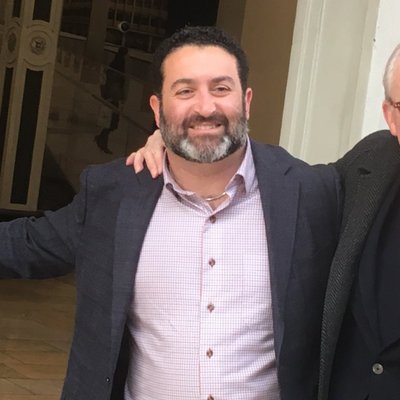
Responding to popular request, we are now sharing transcripts of our investor podcast interviews in this new series. The following interview with Navid Alipour was recorded in January 2019.
Navid Alipour, Co-Founder and Managing Partner at Analytics Ventures, talks about their AI-focused venture studio in San Diego.
Sramana Mitra: Tell us about Analytics Ventures and yourself. What are you looking at? What is your investment thesis? Let’s get acquainted.
Navid Alipour: We are based here in San Diego, California. I like to describe Analytics Ventures as a three-legged platform. One leg is our fund, which is a dedicated fund. The mandate from our investors is to invest in companies that we co-found with other scientists for academic entrepreneurs or other public or private corporations under the venture studio model. >>>
1Mby1M Virtual Accelerator Investor Forum: With Alireza Rahnema of 7 Gate Ventures (Part 5)
Sramana Mitra: How are people thinking about this unicorn versus non-unicorn versus niches? How is the Canadian investment in general thinking about this?
Alireza Rahnema: I’ve work about this when it comes to different scene between startup the ecosystem. I’ve spent half of my time here and half of my time down San Francisco. When it comes to talent, there’s no shortage of talent in Canada with its very strong education system and extremely strong technical focus. >>>
Best of Bootstrapping: Bootstrap First and Raise Money Later
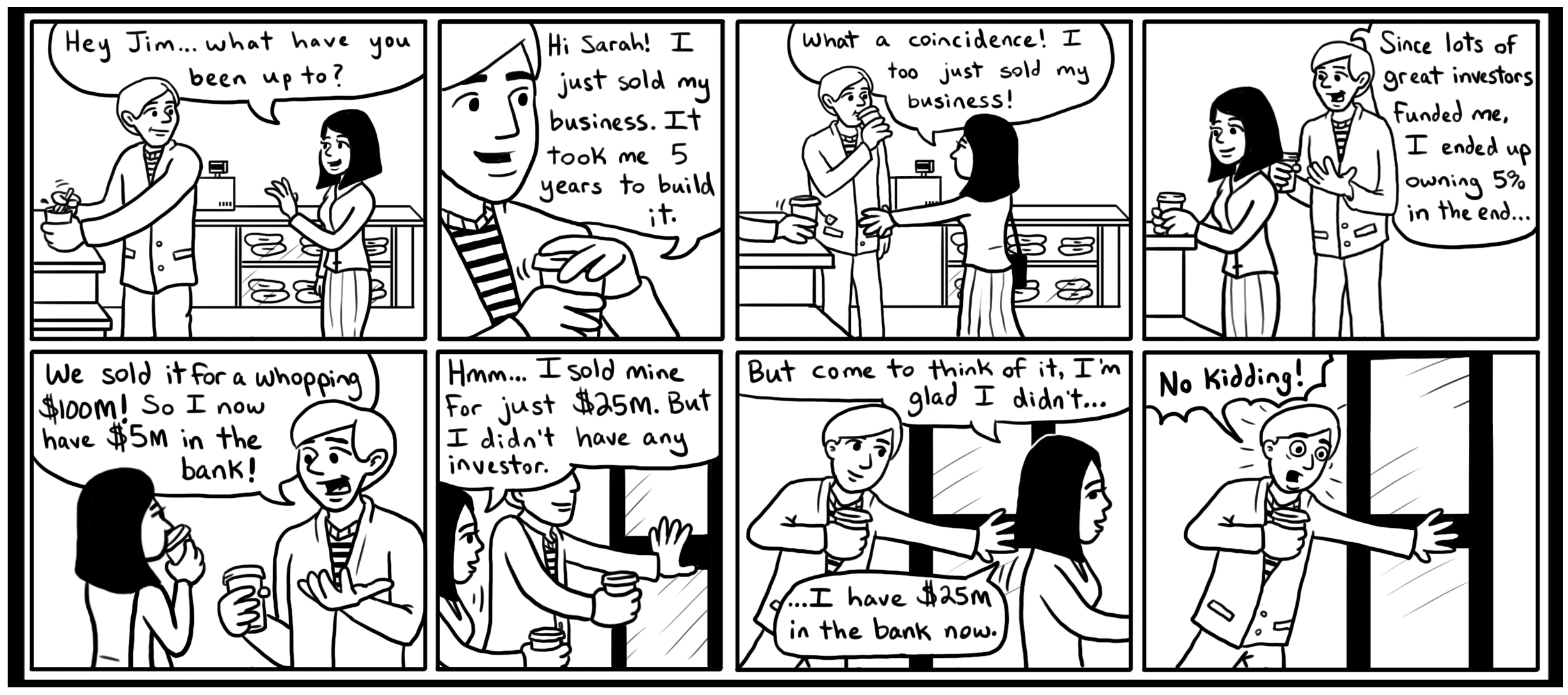
I wrote a book called Billion Dollar Unicorns a few years back. Writing this book took me through the extensive process of talking to entrepreneurs who have built tech companies with valuations above a billion dollars. While there is a tremendous amount of serendipity involved in any extraordinary success story, one recurring theme comes up in these case studies. I am particularly excited to share this nugget because it applies broadly to all classes of entrepreneurial ventures.
Bootstrap first, raise money later.
That’s what Fred Luddy did when he founded ServiceNow back in 2005. Leveraging his domain knowledge and expertise in IT ServiceDesk software, he rapidly acquired 12 customers before raising funding. Initially, he started charging $25 per seat and the 12 customers paid up. He raised $2.5 million in venture capital WITH 12 customers, and ample validation.
1Mby1M Virtual Accelerator Investor Forum: With Alireza Rahnema of 7 Gate Ventures (Part 4)
Sramana Mitra: Let’s do another company.
Alireza Rahnema: Another company that has a very interesting background is Spocket. Spocket is one of the top three service providers on the Shopify platform. They help e-commerce retailers acquire products to sell and help find the right products based on desires and the location. The backbone is what makes it interesting for us.
The founder is of Iranian descent. He was attending medical school when he started dabbling in drop shipping. A few months on, he created the first version of Spocket which we tracked. He came to us on hearing about 7 Gate. He was invited to attend a Tech Stars program while working at Spocket. >>>
1Mby1M Virtual Accelerator Investor Forum: With Alireza Rahnema of 7 Gate Ventures (Part 3)
Sramana Mitra: Would it be fair to say that you’re comfortable with pre-seed investment?
Alireza Rahnema: Absolutely! Over 50% of those are pre-seeds. So far, a significant portion stay. Almost 90% have gone on to a seed and we have invested on as they grow up.
Sramana Mitra: Talk about the types of companies that you like to invest in – B2B, B2C, hybrid? What’s your comfort zone? >>>
1Mby1M Virtual Accelerator Investor Forum: With Sumner Douglas of BoomStartup (Part 3)
Sramana Mitra: Would you want to do another case study of companies that you’ve invested in and that you particularly think highly of?
Sumner Douglas: I’ll do one that I got involved in. A couple of years ago, I made the cardinal sin as the Managing Director and left to join one of our portfolio companies called Vutiliti. They create a device that enables you to hack the smart meter in infrastructure In smart cities and in residential areas and see real-time consumption of electricity, water, and natural gas. We can see that in a much more granular functionality back to the power companies or the utility companies as well as the end residence. >>>
