
categories
HOT TOPICS
- The Accelerator Conundrum
- The Startup Velocity Question
- Platform as a Service
- Man and Superman
- Web 3.0 = (4C + P + VS)
- The Future: End of Capitalism
- Capitalism 2.0

Funding for a Business
1Mby1M Virtual Accelerator Investor Forum: With Sarbvir Singh of WaterBridge Ventures (Part 4)
Sramana Mitra: The second question I have is what is your analysis of the trend of small funds like yourself that are doing the early-stage investments exiting into the later rounds. Do you see that happening a lot in the Indian ecosystem right now?
Sarbvir Singh: We look at it in two ways. It is a trend. After the emergence of Reliance, it brought a lot of this access revolution in India. This is the second most important VC. I think it’s a global trend to some extent.
>>>1Mby1M Virtual Accelerator Investor Forum: With Michael Smerklo of Next Coast Ventures (Part 3)
Sramana Mitra: Talk about some examples of what you have really invested in and more about the ones that are conviction investment.
Michael Smerklo: I’ll give you one example. I’m on the Board of a company called EverlyWell in Austin, Texas. This was an idea that we were looking at. This is disrupting the lab testing business.
If you’re a consumer, you want to get a lab test. You drive to a clinic. You submit the test. Your doctor gets the result and hopefully, you get some form of information from that. Today’s consumers, especially millennials, want more control over their health. They want to understand things at a deeper level.
>>>1Mby1M Virtual Accelerator Investor Forum: With Sarbvir Singh of WaterBridge Ventures (Part 3)
Sramana Mitra: Let’s double-click down on some of the companies that you have funded. As you talk about them, talk about what situation were they in when you got involved.
What did they have by way of proof points that you resonate with. Let’s start with the one that you already exited.
Sarbvir Singh: The company that we already exited is Unacademy. It’s continuing to grow rapidly. It’s a platform. There’s a lot of content creators in India and there are a lot of people who want to access that content, but they don’t have a platform to access that.
>>>1Mby1M Virtual Accelerator Investor Forum: With Sarbvir Singh of WaterBridge Ventures (Part 2)
Sramana Mitra: In the case where people have raised some money before, just raising money doesn’t qualify people for another round of funding. There need to be metrics. I was more interested in what those are.
Sarbvir Singh: In those situations, they have the resources to build something out there. There are customers. In some cases, they may be paying customers. In a B2C situation, they might not be paying but we look for high engagement.
>>>1Mby1M Virtual Accelerator Investor Forum: With Michael Smerklo of Next Coast Ventures (Part 2)
Sramana Mitra: What is the current fund size? $50 million is a small fund size to do $5 million to $10 million checks.
Michael Smerklo: We ended up being way oversubscribed for fund one. We ended up being just under $90 million for fund one. It was twice larger than we expected.
Sramana Mitra: To write those checks, what are you looking for? If you are doing a B2B SaaS deal, what kind of MRR or ARR metric are you looking for?
>>>1Mby1M Virtual Accelerator Investor Forum: With Michael Smerklo of Next Coast Ventures (Part 1)
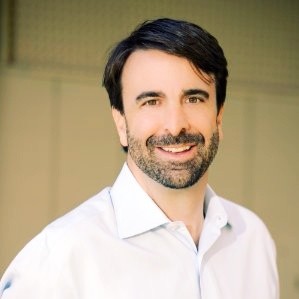
Responding to a popular request, we are now sharing transcripts of our investor podcast interviews in this new series. The following interview with Michael Smerklo was recorded in April 2019.
Michael Smerklo, Co-Founder and Managing Director at Next Coast Ventures, talks about some of the ventures his firm has invested in and the philosophy in general.
Sramana Mitra: Let’s start by getting to know you and introducing you to our audience. Tell us a bit about yourself as well as about Next Coast.
>>>1Mby1M Virtual Accelerator Investor Forum: With Sarbvir Singh of WaterBridge Ventures (Part 1)

Responding to a popular request, we are now sharing transcripts of our investor podcast interviews in this new series. The following interview with Sarbvir Singh was recorded in April 2019.
Sarbvir Singh, Managing Partner at WaterBridge Ventures, talks about the firm’s India-focused investment thesis.
Sramana Mitra: Tell us about WaterBridge Ventures. What are your activities? Where are you positioning this fund? How big is this fund?
>>>1Mby1M Virtual Accelerator Investor Forum: With Taylor Greene of Collaborative Fund (Part 5)
Sramana Mitra: The next question I have for you is a slightly broader question. Are you looking for unicorns?
Taylor Greene: I think the short answer is yes. I’m always looking for unicorns. Historically, when you look at the math of venture capital, you need a unicorn in a fund in order to be a top-performing fund. The good news is we put about 35 companies into a fund.
>>>