
categories
HOT TOPICS
- The Accelerator Conundrum
- The Startup Velocity Question
- Platform as a Service
- Man and Superman
- Web 3.0 = (4C + P + VS)
- The Future: End of Capitalism
- Capitalism 2.0

Funding for a Business
1Mby1M Virtual Accelerator Investor Forum: With Anirudh Suri of India Internet Fund (Part 1)
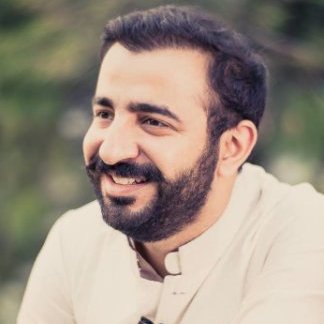
Responding to a popular request, we are now sharing transcripts of our investor podcast interviews in this new series. The following interview with Anirudh Suri was recorded in December 2017.
Anirudh Suri, Founding Partner at India Internet Fund, talks about the funding trends in the Indian startup market.
Sramana Mitra: Help us introduce you to our audience. Tell us about your fund and investment focus. How big is the fund? What size investments do you make?
Anirudh Suri: We are an early stage seed to Series A fund. We invest primarily in technology-based ventures. >>>
1Mby1M Virtual Accelerator Investor Forum: With Yanev Suissa of SineWave Ventures (Part 6)
Sramana Mitra: In this continuum of de-risking, where are you playing?
Yanev Suissa: All of these things are reasonable factors that any VCs would look at including us. But to build an investment thesis of only investing if certain factors exist is not logical.
We invest whether you have revenue or not, whether you have built the technology or not. It depends. If you’re a brilliant engineer in a space that you have expertise in and have worked in and we have either an existing relationship or a faith in your >>>
1Mby1M Virtual Accelerator Investor Forum: With Eva Ho of Fika Ventures (Part 3)
Sramana Mitra: How do you process the current investment climate where capital is moving further and further upstream with all these larger funds wanting to invest in much larger Series A deals, how does a seed investor or entrepreneur mitigate the Series A gap? There’s clearly a Series A gap. 50,000 to 70,000 seed-stage investments and only 1,200 to 1,500 Series A’s. How do you view that phenomenon?
Eva Ho: This is a real challenge. It’s a great question. I don’t have all the answers to this. We’re watching the market dynamics change on a month-to-month and year-to-year basis. When we started Susa five years ago, the seed market was quite different. We were able to get into deals easier. Back then, we weren’t writing large checks. We were writing checks for about $250,000. We could get >>>
1Mby1M Virtual Accelerator Investor Forum: With Yanev Suissa of SineWave Ventures (Part 5)
Sramana Mitra: There are plenty of VCs focusing heavily on revenue numbers in the seed stage right now.
Yanev Suissa: I remember I qualified it as who I know and who I respect.
Sramana Mitra: I think I’d beg to differ there. There’re plenty of good VCs who are also focusing on revenue numbers at the seed stage partly because there is a lot of bootstrapping going on. People are doing so because they can and because they’re getting access to deals. They are making a lot of progress on their own getting into serious ARR numbers before coming into financing. >>>
1Mby1M Virtual Accelerator Investor Forum: With Eva Ho of Fika Ventures (Part 2)
Sramana Mitra: In the 1,500 deals that you’ve seen this year, is this a trend that there are a lot of archaic industries getting heavy infusion in machine learning and artificial intelligence, and you’re seeing entrepreneurs emerge in those categories.
Eva Ho: Absolutely. When we were working on Factual in 2007, we were pitching big data and APIs to the larger Fortune 500. A lot of them were scratching their heads and not really seeing its importance. We’re early in trying to deliver the message of systemizing your data, having data as a core component in determining product opportunities, and basically affecting every function that you have. >>>
1Mby1M Virtual Accelerator Investor Forum: With Yanev Suissa of SineWave Ventures (Part 4)
Sramana Mitra: That was my conclusion when you prefaced the conversation that you are focusing on these government networks. You have a special unfair advantage in government relationships. I guess I’m a little bit thrown off by your comment that very niche funds is not where your bet is, which is a contrary to what you’re saying.
Yanev Suissa: Absolutely not. That would be 100% of a wrong impression. So let me explain who our strategic network is. The strategic network that we work with is an ecosystem of partners, investors, and people >>>
Thought Leaders in Financial Technology: Gina Taylor Cotter, SVP & GM, Global Commercial Financing, American Express (Part 4)
Sramana Mitra: Are any of the experiments in equity crowd financing for small businesses on your radar or are you exclusively focused on debt?
Gina Taylor Cotter: We’re not watching that too closely. What’s more interesting to me is seeing some of the bigger small business players evolve their model. You mentioned two – Kabbage and OnDeck. How are they evolving from being the lender to being a technology provider for others? I just wanted to make sure I mentioned the trend because I’m interested to see with all of those lenders, how are they thinking about making money over time? >>>
1Mby1M Virtual Accelerator Investor Forum: With Eva Ho of Fika Ventures (Part 1)

Responding to a popular request, we are now sharing transcripts of our investor podcast interviews in this new series. The following interview with Fika Ventures was recorded in December 2017. Eva Ho, General Partner at Fika Ventures, discusses their investment thesis.
Sramana Mitra: Tell us about the focus of the fund. How big is it? What are you focusing on? What size investments are you making?
Eva Ho: We launched Fika Ventures in February 2017. I came from another fund that I co-founded. This is my second fund. It’s a $40 million fund. It’s based in Los Angeles. We make investments in California and also other >>>
