
categories
HOT TOPICS
- The Accelerator Conundrum
- The Startup Velocity Question
- Platform as a Service
- Man and Superman
- Web 3.0 = (4C + P + VS)
- The Future: End of Capitalism
- Capitalism 2.0

Funding for a Business
1Mby1M Virtual Accelerator Investor Forum: With T.M. Ravi of The Hive (Part 1)

Responding to a popular request, we are now sharing transcripts of our investor podcast interviews in this new series. The following interview with T.M. Ravi was recorded in September 2016.
T.M. Ravi is Managing Director and Co-founder of The Hive, a venture studio. The discussion touches upon a couple of key issues: the prevalent incubator/accelerator model of 3-month classes, we agreed, is bogus; and Future of Work: Utopia or Dystopia?
Sramana Mitra: To set context, please introduce Hive to our audience. What kinds of companies do you incubate? What is the thesis around which you’re building this program? >>>
Thought Leaders in Corporate Innovation: Max Wessel, General Manager of SAP.io (Part 4)
Sramana Mitra: Our model is actually complete customer immersion. It’s a one-year program. Each person who gets to be part of the program has one year including side-by-side methodology training, customer immersion, customer validation, and TAM analysis. It’s not in vacuum at all. I’m sure your program is effective. I’m just comparing notes. That’s the whole point of these discussions – to understand the different processes that are working.
Let’s switch gears and talk about your external innovation methodology. When SAP launched HANA we
1Mby1M Virtual Accelerator Investor Forum: With Shomit Ghose of Onset Ventures (Part 3)
Sramana Mitra: Elon Musk has talked a lot more along the lines of what you’re talking about – the unintended consequences of AI or even AI running amok in an evil way. I dealt with more of the economic question. Machine learning is really at the absolute beginning. We’re probably talking about a 50-year cycle but machine learning being machine learning has an incredibly-fast capacity to become very powerful.
In the next 50 years, I’m positive that we’re going to see machine learning penetrating every aspect of the human endeavor. If that really starts to take over professions or shrink professions in huge numbers, then
Thought Leaders in Corporate Innovation: Max Wessel, General Manager of SAP.io (Part 3)
Sramana Mitra: When the team comes forward, is it required to present a business case analysis or a hackathon style development first?
Max Wessel: They tend to do a very light back-of-the-envelope business case – nothing substantive. We teach people to think by analogy. If you’re building a tool to get into the recruitment services market or start to automate what recruiters would otherwise do for a large organization, the question is, “What’s the scope of the businesses that have been launched like that before?”
You don’t have to develop an in-depth business plan but you have to have some conviction. We hope that you have some >>>
1Mby1M Virtual Accelerator Investor Forum: With Shomit Ghose of Onset Ventures (Part 2)
Sramana Mitra: Where do you think are the opportunities of building really interesting ventures right now? What’s your investment thesis?
Shomit Ghose: We can talk a long time about this. Hardware, software, and bandwidth are all commoditized. You can’t make money by selling any of those. For the past past 10 years, our investment thesis is all about the data. We continue to focus in areas that are based on extracting the semantics of the data and particularly in using data for business.
The future that lies before us is really vast. The companies that are most interesting to us are companies that are focused on Big >>>
Thought Leaders in Corporate Innovation: Max Wessel, General Manager of SAP.io (Part 2)
Max Wessel: From an intrapreneurship perspective, we have a program that we’ve been running for close to four years now. We have all sorts of ideation programs around the company for decades but four and a half years ago, we launched a program that’s aptly called Intrapreneurship.
At one point, we kicked off the campaign. That campaign started locally. We have a network of venture labs that operate in actual physical locations. SAP has development centers around the globe. Those labs will come to the employee base and will give them a series of challenges. They’ll say, “Here are the topics that are most interesting to us.” These could be cutting energy utilization >>>
1Mby1M Virtual Accelerator Investor Forum: With Shomit Ghose of Onset Ventures (Part 1)
If you haven’t already, please study our free Bootstrapping course and the Investor Introductions page.
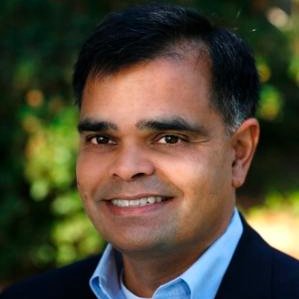
We are now sharing transcripts of our investor podcast interviews in this new series. The following interview with Shomit Ghose was recorded in December 2014.
Shomit Ghose, Partner at Onset Ventures, is also a veteran startup executive with multiple IPOs under his belt. He highlights the fact that 70,000 ventures received angel funding in 2014, but the number of companies receiving venture funding remains constant year over year at about 1,000 per year. Focusing on building value is of paramount importance, so that you can validate and prove your value proposition. >>>
Thought Leaders in Corporate Innovation: Max Wessel, General Manager of SAP.io (Part 1)

This interview explores the nuances of SAP’s Corporate Incubation strategy in great depth.
Sramana Mitra: Tell us about what SAP’s thinking is in the domain of corporate innovation. What are your goals, activities, strategies and structure? Let’s dig into the programs.
Max Wessel: Let me start off with the high level description of what SAP is for those who are not familiar with the organization. SAP is Europe’s largest software company. We also happen to be the largest enterprise applications business in >>>
