
categories
HOT TOPICS
- The Accelerator Conundrum
- The Startup Velocity Question
- Platform as a Service
- Man and Superman
- Web 3.0 = (4C + P + VS)
- The Future: End of Capitalism
- Capitalism 2.0

Funding for a Business
1Mby1M Virtual Accelerator Investor Forum: With Padmaja Ruparel of Indian Angel Network (Part 4)
Sramana Mitra: What is the size of the fund?
Padmaja Ruparel: $70 million. The IAN platform represents a way of raising money from $30,000 to almost $7 million. All they need to do is to keep performing and growing the company and money will be available. I think that this is the new gap that we have identified. This is the new gap where we have positioned the fund. The second that we have done is 60% of the fund is raised.
We started operations and investments in six companies all in a period of a quarter. Interestingly, the entire 60% has been raised in India. This is domestic money. It’s hard to raise money in India and therefore, they raise a lot of money overseas. We have >>>
1Mby1M Virtual Accelerator Investor Forum: With Sasha Mirchandani of Kae Capital (Part 1)
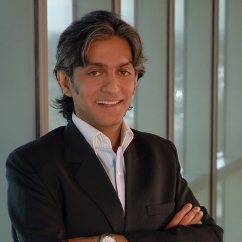
Responding to a popular request, we are now sharing transcripts of our investor podcast interviews in this new series. The following interview with Sasha Mirchandani was recorded in February 2016.
Sasha Mirchandani, Managing Partner of Kae Capital, an early stage venture fund, is also a co-founder of Mumbai Angels. Sasha re-emphasized that Indian VCs only invest in India-facing B-to-C ventures and global B-to-B startups. India-facing B-to-B is not a sector that gets any investment, with few exceptions. We discussed the lack of exits in India, as well as the missing late-stage funding for B-to-C ventures facing the Indian market. Those of you who are working out of India would do well to keep these key points in mind.
Sramana Mitra: If you could tell us a bit about our fund and your investment in recent years and how that dovetails with the trends in the Indian industry. >>>
1Mby1M Virtual Accelerator Investor Forum: With Sunil Bhargava of Tandem Capital (Part 5)
Sramana Mitra: I make a very clear distinction between real unicorns and pseudo-unicorns. The problem is there are a few unicorns in the market that are legitimate and it’s full of pseudo-unicorns.
Sunil Bhargava: I agree. It’s always interesting to hear those stories. They’re very educational into what is what for them. A friend of mine built a SaaS company, which made $5 million a year in revenue and then sold it. They have a very nice lifestyle. That’s not a bad thing to do.
Sramana Mitra: We have case study after case study of companies that have built incredibly good self-financed bootstrapped businesses at this point. >>>
1Mby1M Virtual Accelerator Investor Forum: With Padmaja Ruparel of Indian Angel Network (Part 3)
Sramana Mitra: Sapience was our portfolio company as well. What about the more recent ones? What have you invested in the last couple of years?
Padmaja Ruparel: There is LogiNext which is in the logistics space partnered with Sapience. If you look at FarEye, they are tracking logistics. This is a completely real-time tracking system. They partner not only with e-commerce players but a lot of other B2C players. There are companies in the agri space that have grown.
In India, the marginal farmers don’t have money for capital equipments. Companies are bringing the equipment on a lease model. The small farmers are able to rent out these equipments by the hour. It’s like Uberization of farming equipment. It’s very interesting >>>
1Mby1M Virtual Accelerator Investor Forum: With Sunil Bhargava of Tandem Capital (Part 4)
Sramana Mitra: There’s a lot going on in Vancouver, especially because the Visa situation is a much easier one in Canada. What are some of your notable companies? You’ve mentioned a few along the way. Have you had exits, for instance, that you want to discuss?
Sunil Bhargava: It’s too early for big exits. In fund two, Outdoorsy is going to go out and raise its Series B. They’re doing phenomenally well. One of the things exits and acquisitions are coming at much bigger valuations. Some of our companies are getting to the Series B level. A lot of them are getting to the Series A level.
In fund two, we had a company that was based out of India. Most of the team was in Bangalore. It’s in the gaming space. They >>>
1Mby1M Virtual Accelerator Investor Forum: With Susan Mason of Aligned Partners (Part 4)
Sramana Mitra: What you’re pointing out is the fact that even though people believe that entrepreneurship is about risk-taking, successful entrepreneurship is about calculated risk-taking and risk-mitigating.
Susan Mason: Absolutely. You have to decide what your objectives are – the risk versus the wealth equation. The early employees take the highest risk. You need to think carefully about as the company goes on, what are the risk impacts to those employees versus the later employees. We’ve been in a relatively high upturn here. That market will be changing. We go through the cycles. The economic cycle is coming up. Just understand the risk aspects of those economic cycles. You can have a fabulous company but in a down economic cycle, you’re just not going to realize that much cash on the outcome. >>>
1Mby1M Virtual Accelerator Investor Forum: With Padmaja Ruparel of Indian Angel Network (Part 2)
Sramana Mitra: Let’s talk a little bit about geography as it pertains to IT and IT-enabled services. That includes healthcare IT. Our audiences are focused on IT-enabled services. One core algorithm that we have picked up from the way Indian investors are operating by working with them is that they like all the SaaS, cloud, AI, and all of these companies to be facing the US market or the global market.
When it comes to those kinds of ventures, they prefer that these companies do not sell into the Indian B2B market. They want the B2B SaaS to be sold to the global market. Of course, there is the consumer B2C products that are India-facing that people are still interested in. >>>
1Mby1M Virtual Accelerator Investor Forum: With Sunil Bhargava of Tandem Capital (Part 3)
Sramana Mitra: The numbers that you quoted like $1 million to $2 million investment in a $5 million round, from the universe that we operate in, people are not ready to raise a $5 million round before a Series A usually. That’s what I find a bit confusing in how you position yourself as a fund.
Sunil Bhargava: $5 million is at the top end. We’ve invested in a company that ended up getting into YC. They raised $3 million when we put in some money. Now, they’re going to raise a $6 million round. The key thing is they didn’t have an operational system in place. They built some stuff. They got some prototype done, but they didn’t have a clear path to scale. >>>
