
categories
HOT TOPICS
- The Accelerator Conundrum
- The Startup Velocity Question
- Platform as a Service
- Man and Superman
- Web 3.0 = (4C + P + VS)
- The Future: End of Capitalism
- Capitalism 2.0

Funding for a Business
1Mby1M Virtual Accelerator Investor Forum: With Gus Tai of Trinity Ventures (Part 2)
Sramana Mitra: The reason why I ask this question is to explain how a VC looks at an investment opportunity. Mark Vadon had his own investment thesis but Trinity Ventures and Gus also had their own investment thesis. The two thesis merged for an investment to happen. I’ve said this many a time. Over 99% of businesses that go out to seek financing actually get rejected.
One of the best examples of that is the fact that Marc Benioff got rejected by 27 VCs and look what happened. It’s nobody’s fault really. If VCs refuse to invest in your company, it’s not like they’re malicious or anything. It’s just that their investment theses don’t align. The question is, how can you understand better what it is that the investors are looking for. >>>
1Mby1M Virtual Accelerator Investor Forum: With Julien Nguyen of IT Farm (Part 3)
Julien Nguyen: Alzheimer’s certainly is a huge problem. It’s very important for everybody. It’s even more important because drug development to go against Alzheimers has hit a huge wall. All the major drugs have failed so far. One of the key reasons they have failed is they don’t know exactly how the patients are doing while they are taking the drug. They don’t know the progression of the disease. With Darmiyan, they would know if the brain has progressed or stabilized. You can do that before you have any symptom.
Sramana Mitra: Very interesting. I’m going to ask you some trend questions on what’s happening in the industry and how you process those. How do you process the current investment climate where capital is moving further and further upstream? How does a seed investor or an entrepreneur mitigate the Series A gap? >>>
1Mby1M Virtual Accelerator Investor Forum: With Gus Tai of Trinity Ventures (Part 1)
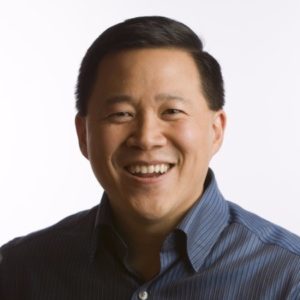
Responding to a popular request, we are now sharing transcripts of our investor podcast interviews in this new series. The following interview with Gus Tai was recorded in September 2014.
Gus Tai, General Partner at Trinity Ventures, discusses their investment thesis around e-commerce over the years – from BlueNile in 1999, to Zulily, Dot, and Bo, and Callisto Media more recently, and what he anticipates for the future.
Sramana Mitra: An outrageous e-commerce business that Gus and the firm invested in is a company called Blue Nile way back in 1999.
Gus Tai: Yes, we made the initial investment in 1999. >>>
1Mby1M Virtual Accelerator Investor Forum: With Julien Nguyen of IT Farm (Part 2)
Sramana Mitra: We’ve seen a bunch of unicorns come out of that part of the ecosystem. There’s Veeva and athenahealth on the payment side.
Julien Nguyen: That is just the beginning. There are deeper problems that can be solved. The number two part is using technology to increase the efficacy of current practices. For example, precision medicine is one of them. How do you pick the right cocktail of drugs for a cancer patient depending on their RNA?
This is not about inventing new drugs and finding new molecules. You’re just applying the ones we already have in a better way. Then you see a new area, which is the blue sky thing on aging, which everybody talks about. We feel that the first two areas are really >>>
1Mby1M Virtual Accelerator Investor Forum: With Mark Achler of MATH Venture Partners (Part 5)
Sramana Mitra: I’m reflecting on what you said in answer to my question. Blockchain is expensive stuff to build. How do you mitigate the need for doing things in a capital-efficient manner and doing Blockchain deals?
Mark Achler: We haven’t done one.
Sramana Mitra: You agree that Blockchain is capital-intensive.
Mark Achler: We are conservative Midwest VCs. I like to build real businesses with real revenue and with real customers. It’s early days for Blockchain. We’re paying close attention. We’re getting as educated as we possibly can. I’m concerned about it. That said, there seem to me some applications of Blockchain that make a lot of sense. >>>
1Mby1M Virtual Accelerator Investor Forum: With Julien Nguyen of IT Farm (Part 1)

Responding to a popular request, we are now sharing transcripts of our investor podcast interviews in this new series. The following interview with Julien Nguyen was recorded in October 2017.
Julien Nguyen is General Partner at IT Farm, a seed-stage fund focused on Digital Health. We explore trends in the industry, as well as what IT Farm’s sixth fund likes to invest in.
Sramana Mitra: Tell us about IT Farm. What is the focus of the firm? How big is your fund? What sized investments do you make?
Julien Nguyen: IT Farm is a seed level VC firm. We started in Tokyo and we have an office in Palo Alto. Most, if not all, of our >>>
1Mby1M Virtual Accelerator Investor Forum: With Mark Achler of MATH Venture Partners (Part 4)
Sramana Mitra: We started observing the social media trend in the 2003 to 2004 timeframe. In 2007 of course, iPhone came about. The Big Data trend really picked up in the late 2000’s as well. We zeroed in on AI in just about a couple of years ago. There’s a lot of machine learning and AI.
Of course, the cyber security thread is running all the way through and will continue to run. Especially with IoT, the vulnerabilities have magnified. There is no escape from a lot of cyber security threats.
Mark Achler: We’re also seeing a lot in Blockchain. There’s an awful lot of conversation right now in all the various aspects of Blockchain. We’re working hard to get our arms around that as well. >>>
1Mby1M Virtual Accelerator Investor Forum: With Ho Nam of Altos Ventures (Part 4)
Ho Nam: There are some specific reasons why we like Korea. It’s an interesting overlooked opportunity. There are a lot of VC dollars taking on opportunities in places like China, India, and Israel. No one’s really focused on Korea. It’s only one of six countries in the entire world with a high per capita GDP in a population that’s more than 50 million people.
50 million is tiny compared to India and China, but it’s a pretty significant population, especially if you multiply with a high GDP and a population with a very high propensity to buy things online. They have the world’s most advanced broadband and mobile infrastructure. You could actually create pretty significant companies.
Korea has produced more Internet unicorns than any other country outside of US and China. We have some competitive >>>
