
categories
HOT TOPICS
- The Accelerator Conundrum
- The Startup Velocity Question
- Platform as a Service
- Man and Superman
- Web 3.0 = (4C + P + VS)
- The Future: End of Capitalism
- Capitalism 2.0

Funding for a Business
2025 Resolution: Make VCs Pursue YOU to Fund Your Startup
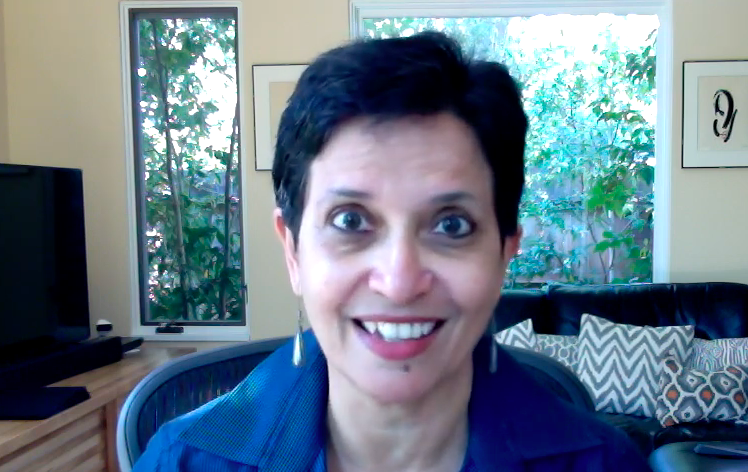
Please post this on your wall in 2025:
“Startups: Do NOT Go to VCs as Beggars. Go as Kings.”
This is the 1Mby1M mantra and it works.
Over 99% of founders chase funding before they are fundable.
2025 Resolution: Make Your Startup Fundable
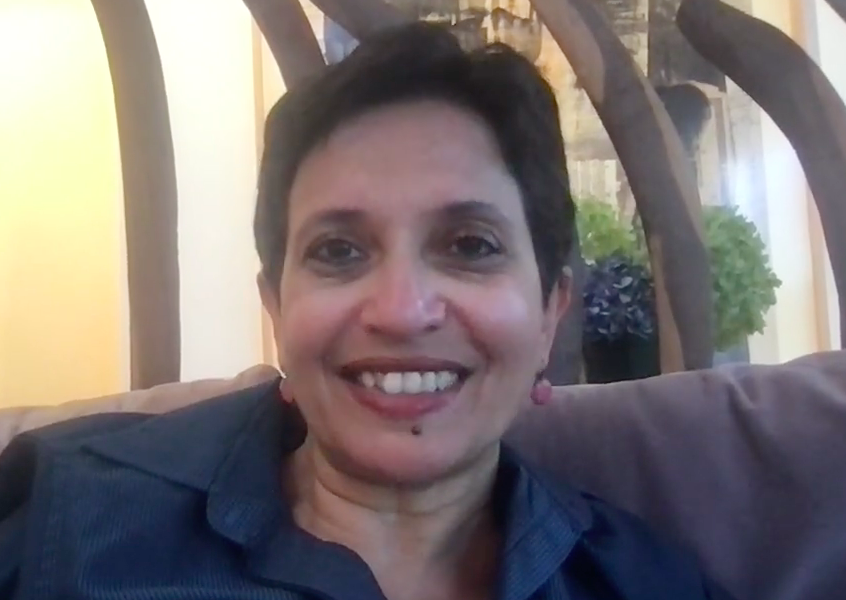
As you know, I categorically support bootstrapped entrepreneurs.
There are numerous startups now that have achieved some revenue without any external funding.
However, it has taken time. Sometimes, it has taken 5-7 years to get there.
VCs, however, are looking for velocity.
Their goal is to achieve $100M in 5-7 years.
AI Investor Forum: Gus Tai on AI in Healthcare (Part 6)
Sramana Mitra: Some of you here would remember, Gus would definitely remember that many years ago, I came up with a formula for the future of the web. It was called Web 3.0 = (4C + P + VS).
>>>AI Investor Forum: Gus Tai on AI in Healthcare (Part 5)
Sramana Mitra: So, Gus, could you also discuss Joanna Strober’s company that you have invested in and have been tracking for a while? I think it’s a good case study to discuss in this context.
Gus Tai: Absolutely. The company is called Midi Health, and I was a seed investor with Midi. That company is a good illustration of how entrepreneurs, regardless of how they want to think about raising money, can approach industries. There was a latent need and a discontinuity in being able to serve that latent need.
>>>AI Investor Forum: Gus Tai on AI in Healthcare (Part 4)
Sramana Mitra: Yes. On the process side, we’ve had a company become quite successful in the program. It is bootstrapped. We looked at raising money, but eventually, it was going fine as a bootstrapped company. I think it continues to bootstrap. It’s called CliniOps.
>>>AI Investor Forum: Gus Tai on AI in Healthcare (Part 3)
Sramana Mitra: Now, let’s shift to medical imaging, which is another area where AI is having lots of impact. There are lots of companies working in this field, and lots of entrepreneurial efforts going on in this field. The question that I’m of thinking about is that, are these going to be unicorn style opportunities?
>>>AI Investor Forum: Gus Tai on AI in Healthcare (Part 1)
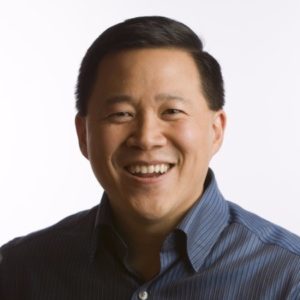
Gus Tai, Investor, Board Member and Retired General Partner at Trinity Ventures, discusses AI in Healthcare startups. Fascinating, comprehensive discussion with concrete pointers.
>>>AI Investor Forum: Gus Tai on AI in Education (Part 3)
Sramana Mitra: There is one other vector we need to consider in this – the human centric element. The history of education is that the human provides all the content. For a rural India teacher to teach English as a second language, he or she has to know English as a second language from that particular vernacular in the region first. But in this model, we are eliminating that requirement. Or are we eliminating that requirement? Does the teacher need to not know, know? What is the role of the teacher in this?
>>>