
categories
HOT TOPICS
- The Accelerator Conundrum
- The Startup Velocity Question
- Platform as a Service
- Man and Superman
- Web 3.0 = (4C + P + VS)
- The Future: End of Capitalism
- Capitalism 2.0

Entrepreneurship
Bootstrapping a Virtual Company to $10 Million from Atlanta: Field Pros Direct CEO Matt Anderson (Part 2)
Sramana Mitra: You took a two-step journey into entrepreneurship. You did something that was slightly lower risk. Somebody else gave you clients and profit-sharing but without equity. But you were preparing to go into the full entrepreneurship model.
By the time you were ready to leave, did you have something worked out in your mind about the company that you were going to go full blast into?
>>>Bootstrapping with a Paycheck and Scaling in Coimbatore: Kovai CEO Saravana Kumar (Part 2)
Sramana Mitra: Before you continue, talk to me about the first five customers while you were still at Fidelity. How did you find them? Who were they? What kind of deal sizes did you have?
Saravana Kumar: Since 2004, I have been writing blogs – technology articles about BizTalk Server. I was always passionate about technology and I was writing a lot of deep articles about the study of technology. When I launched the product, I already had followers of over 15,000 readers at that time.
>>>Bootstrapping a Virtual Company to $10 Million from Atlanta: Field Pros Direct CEO Matt Anderson (Part 1)

We’re big fans of bootstrapping, virtual companies, and domain knowledge. Matt’s story has all those ingredients.
Sramana Mitra: Let’s start at the beginning of your journey. Where are you from? Where were you born and raised? What kind of background did you have?
>>>Can You Succeed as a Solopreneur?

Yes. Without a doubt.
You ALWAYS start alone.
And in these days of virtual companies, you can get lots of help as a solopreneur and get very far in your quest for product-market fit, validation, even traction.
You can even Bootstrap with a Paycheck.
Can a Solopreneur Raise Funding?
You don’t need a full executive team for seed funding.
However, solo entrepreneurs typically have difficulty in raising seed funding.
Bootstrapping with a Paycheck and Scaling in Coimbatore: Kovai CEO Saravana Kumar (Part 1)
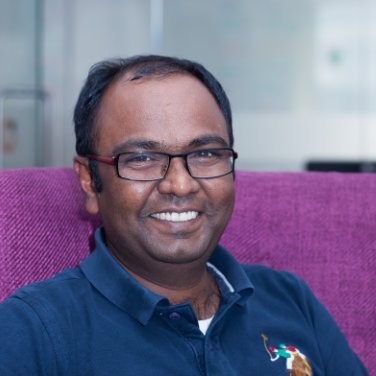
If you haven’t already, please study our Bootstrapping Course and Investor Introductions page.
I love doing stories of entrepreneurs who are long-time readers of the 1Mby1M blog. Saravana is one. A wonderful story of how this entrepreneur is scaling a SaaS company from Coimbatore!
Sramana Mitra: Let’s start at the beginning of your journey. Where were you born and raised? What kind of background did you have?
>>>Are You Facing Layoffs and Want to Start a Business of Your Own?

In the post-Covid world, some tech employers are downsizing.
Are you facing layoffs?
The best time for developing your own business is while you are still employed, not when you are out of a job.
How Do You Know It’s Time to Quit Your Job and Start Your Own Business?

If you want to raise funding, you would need to quit your job and go full-time, because investors generally don’t fund companies that are led by part-time founders.
But it often takes several years of bootstrapping before you’re ready to go to investors.
At 1Mby1M, we support Bootstrapping with a Paycheck. You can find some case studies within my Bootstrapping Course: Bootstrap Using a Paycheck. This video lecture will provide you with important perspective.
It is invaluable to have a job that pays the bills while you’re validating your ideas, getting your strategy together, etc.
Building an Analytics Company to $10M+ in Revenue: Mode Analytics CEO Derek Steer (Part 7)
Sramana Mitra: What use cases did you find the most success in? Were there dominant use cases?
Derek Steer: Mode is a horizontal platform for analysis and so we are useful for whatever an analyst or data scientist wants to do with Mode. We get used for all kinds of stuff, for all kinds of companies of different sizes around the world.
>>>