
categories
HOT TOPICS
- The Accelerator Conundrum
- The Startup Velocity Question
- Platform as a Service
- Man and Superman
- Web 3.0 = (4C + P + VS)
- The Future: End of Capitalism
- Capitalism 2.0

Entrepreneurship
From Solo Entrepreneur to $65 Million in Revenue: Brazilian Entrepreneur Daniel Scandian, CEO of MadeiraMadeira (Part 3)
Sramana Mitra: You were almost like a solo entrepreneur with your brother helping you out.
Daniel Scandian: Yes. My brother took care of the company while I looked for investors. Then I had to talk to some investors in Brazil. In 10 months, I had a very nice investor from Brazil and from Argentina. I was also lucky to get help from Boston. Both the CEO and Founder of the two biggest companies that were in home improvement came in. In the middle of 2012, we got $4 million investment.
A Pilot’s Heroic Journey: Jonny Nicol, CEO of Stratajet (Part 2)
Sramana Mitra: I’m interested in success from a financial point of view. What kind of revenues were you able to generate with that company and what happened to it?
Jonny Nicol: In the first month, revenues were $100. In month 11, it was $238,000. I actually disagree that you measure the success of a company solely by its revenues.
Sramana Mitra: From One Million by One Million perspective, we are trying to build businesses. The way we evaluate businesses or study businesses is based on revenue growth and growth metrics. You can have whatever belief system you have, but the reason we are doing your story is we care about how you grew your revenues. How long did it take you to reach $1 million in revenue with the first company? >>>
From Solo Entrepreneur to $65 Million in Revenue: Brazilian Entrepreneur Daniel Scandian, CEO of MadeiraMadeira (Part 2)
Sramana Mitra: You were targeting this business to customers in North America or in Latin America?
Daniel Scandian: Only in Brazil.
Sramana Mitra: Was it Google AdWords that helped you recruit the customers? What was working in terms of marketing?
Daniel Scandian: It was 100% Google AdWords in the beginning. I had this agency that had a few years’ experience. They did a turnkey project where they got a commission >>>
A Pilot’s Heroic Journey: Jonny Nicol, CEO of Stratajet (Part 1)

Jonny is a pilot. He literally flew around to build Stratajet through many storms. Read his fascinating story!
Sramana Mitra: Let’s start at the very beginning of your journey. Where are you from? Where were you born, raised, and in what kind of background?
Jonny Nicol: I was born in England near London. I went to state school. When I was a kid, I decided that I wanted to be a fighter pilot. I dedicated my life to that. I did three operations when I was in the military. I ended up coming back to the UK when I was about 26 years old. I decided I had enough of the military. I was in touch with a friend who had an idea for a staffing agency. The idea was that this industry that had always functioned with filing cabinets can >>>
From Solo Entrepreneur to $65 Million in Revenue: Brazilian Entrepreneur Daniel Scandian, CEO of MadeiraMadeira (Part 1)
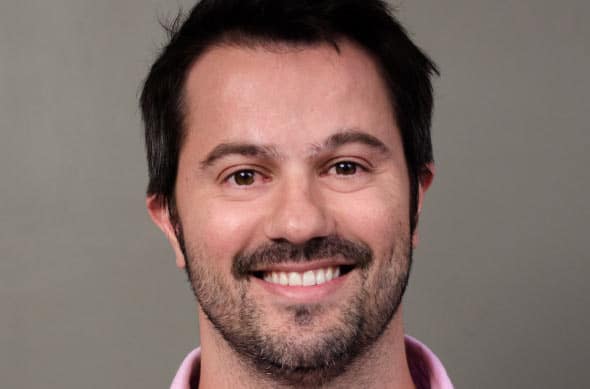
Daniel had fully validated his business to significant revenue before going to investors. The result is spectacular! Read on…
Sramana Mitra: Let’s start at the very beginning of your journey. Where are you from? Where were you born, raised, and in what kind of background?
Daniel Scandian: I’m from Rio de Janeiro. I started my career a little bit different from other entrepreneurs. I was 14 years old when I started with Go Carting. My dream was to be a Formula One driver. I won the Formula 3 South America in 2001. That’s why I started late because I could get sponsors to go to GP2. I then came >>>
Learning From Mistakes: Roy Peleg, CEO of Firstimpression.io (Part 7)
Sramana Mitra: Once you made these vital switches, what happened? In terms of revenue, how did you do in 2015?
Roy Peleg: We ended with gross revenue of $1.3 million. In the month of December, we generated $185,000. The trajectory was great. We quadrupled the revenue in 2015. Then we took on a few more employees. We actually raised the bar even more. When it came to publishers, a million to two million page views a month was considered an adequate publisher to pursue. Most of 2015 and 2016 we focused on publishers with 5 million page views a month. In 2016, we actually tripled the revenue. In 2016, I’m talking about $3.9 million in gross revenue and for the first time, we were profitable. Our current revenue run rate is more than $6 million a year.
Sramana Mitra: This is $6 million in gross revenue right? Your revenue is more like $2 million. >>>
Building Multiple Bootstrapped Education Software Companies: Lane Rankin, CEO of Illuminate Education (Part 4)
Sramana Mitra: What did you learn? Was the threshold one salesperson per state? How were you calculating your expansion strategy?
Lane Rankin: Just about every time we would go and meet with the district, we would win a sale. If we have a presentation, 80% of the time we are winning the business. We were growing so fast that we literally weren’t doing any marketing. It was mostly inbound calls and information.
The problem I was having was trying to make sure that my underlying infrastructure could handle the amount of business we were bringing in. We were always right on the edge of not being able to support the customers out there. Customer support and implementation are very important to us. Those times involved 20-hour days. >>>
Learning From Mistakes: Roy Peleg, CEO of FirstImpression.io (Part 6)
Sramana Mitra: Was this was a 3-month acceleration program?
Roy Peleg: No, it was a 4-month program.
Sramana Mitra: Then you went back to Israel?
Roy Peleg: Yes. The business started growing a bit, but not too much. With the feedback that we got and the additional focus on our business model, we gradually added more people to the team. Every time the revenue increased, we just took on another employee. We were breaking even every month. >>>
