
categories
HOT TOPICS
- The Accelerator Conundrum
- The Startup Velocity Question
- Platform as a Service
- Man and Superman
- Web 3.0 = (4C + P + VS)
- The Future: End of Capitalism
- Capitalism 2.0

Entrepreneurship
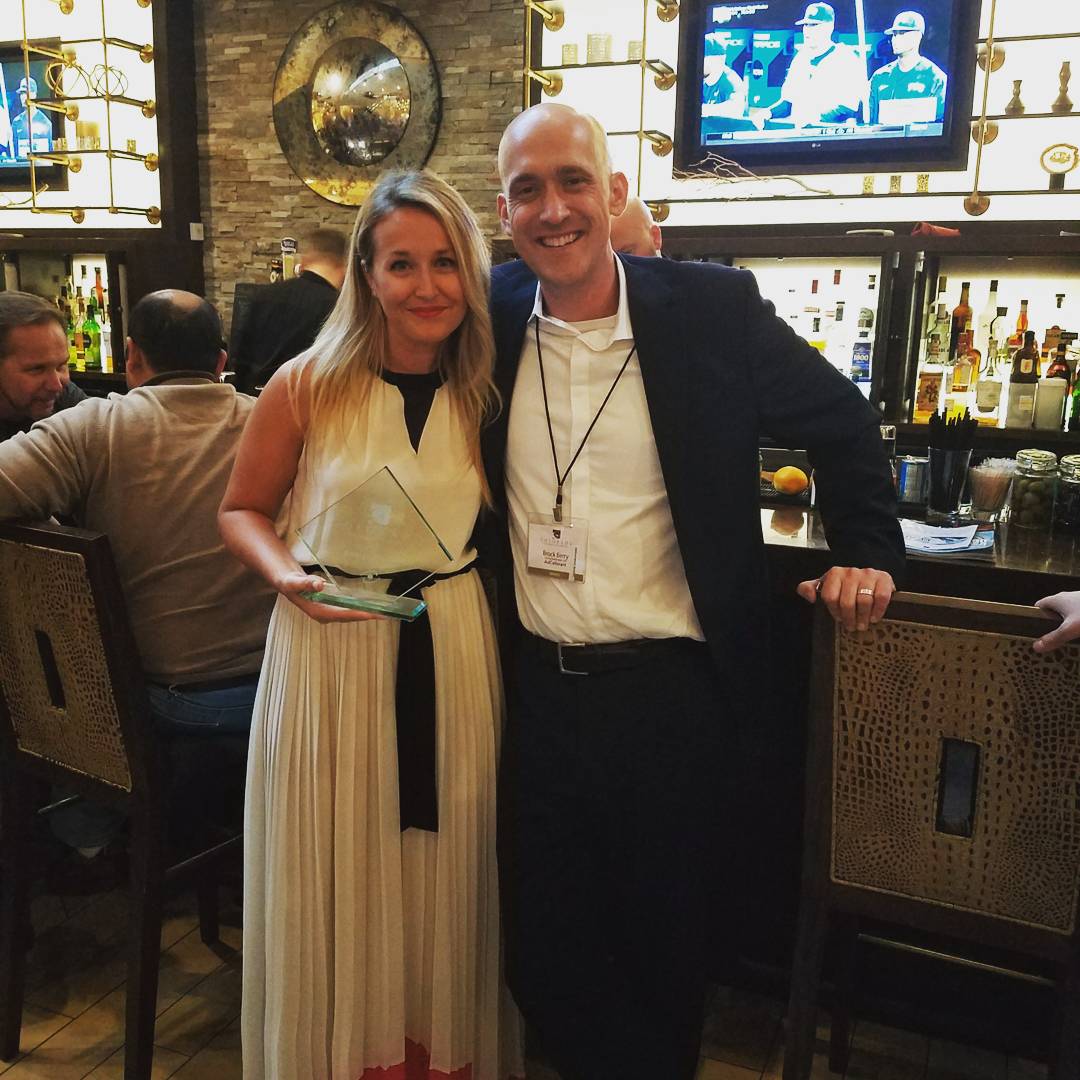
Entrepreneur Couple Bootstrapping to $10M from Colorado: AdCellerant Co-Founders Brock Berry and Shelby Carlson (Part 1)
If you haven’t already, please study our Bootstrapping Course and Investor Introductions page.
Love and startups go hand in hand for Brock and Shelby who are helping media companies generate seven-figure revenue streams.
Sramana Mitra: Whoever wants to start, let’s start at the very beginning of your personal journey. Where are you from? Where were you born, raised, and in what kind of background?
Brock Berry: Thanks for having us. I’m the Founder and CEO of AdCellerant. I’m from Indiana >>>
10 Founders and VCs Discuss Building Capital-Efficient Startups in Podcasts

Entrepreneurs starting out with little or no financing, as most do, will find inspiration and sound advice from each of the following founders and venture capitalists discussing how building a capital efficient business can pay off in this series of 30-minute podcast interviews.
Ricky Joshi, Saatva – As a Co-founder at Saatva, Ricky shares the story of growing his company from 0 to over $150 million in seven years. This is pretty much venture-scale growth. The best part of the story is that the company has raised no VC money at all. Wonderful conversation about a capital-efficient, deeply disciplined company.
>>>
Bootstrapping to $80 Million from Canada: Rob Purdy, CEO of Power2Motivate (Part 7)
Sramana Mitra: What was the first year of that product being revenue-generating?
Rob Purdy: It would have started generating a little bit of revenue in 2012. At that point in time, we had 20 licensees for Power2Motivate. The only people using the reward component was us and our direct customers. The other 19 licensees were not using our reward platform. We had $20 million revenue in rewards.
Sramana Mitra: What did that do to your business in 2013 and 2014? >>>
Bootstrapping to $80 Million from Canada: Rob Purdy, CEO of Power2Motivate (Part 6)
Rob Purdy: It is. It has worked very well. It has been a good ride for all the shareholders who came in at that time because they’ve been receiving dividends for the last three and a half years. The valuation of the business has grown significantly in six years.
Sramana Mitra: These are people that you knew. You basically used personal relationships.
Rob Purdy: Yes. This was a combination of employees as well as business partners that we had built up over the years. Ben, out of Australia, bought 10% of the company. We had another partner do the same thing. Then we had some external people >>>
Bootstrapping to $80 Million from Canada: Rob Purdy, CEO of Power2Motivate (Part 5)
Sramana Mitra: Can you bring these inflection points together for us and help us understand how this impacted revenue?
Rob Purdy: When we signed the contract, the company business was, in aggregate, about $5 million. We doubled our business in the next couple of years. We grew the business to around $10 million. By 2010, we were about $10 million. We had a certain amount of profitability. Most of what we made went back to product development. At the end of any given year, we probably never made any money. >>>
Bootstrapping to $80 Million from Canada: Rob Purdy, CEO of Power2Motivate (Part 4)
Sramana Mitra: What happened in 2008?
Rob Purdy: There was a turning point in 2007. We went to our first ever trade show and unveiled the product in April. At that show, we had more international people asking about the product. There were a lot of companies that wanted to resell the product in their countries. We were pretty quick to realize that we had something in terms of a product and its appeal.
What was interesting is these companies wanted to take this into their country and resell it. We actually closed a contract at that show with an Australian whose family had started an employment law firm. They had over 18,000 companies in Australia that they provided employment legal services for. They were branching out into >>>
Bootstrapping to $80 Million from Canada: Rob Purdy, CEO of Power2Motivate (Part 3)
Sramana Mitra: How long did it take you to get a first version of this product out?
Rob Purdy: We started development for the Power2Motivate platform in late 2005. It took all of 2006 to complete the first phase. Phase one was the employee engagement component. That was enough to allow us to take that to market in April of 2007. By the end of 2007, we had probably 30 customers on the platform.
Sramana Mitra: What were you charging them? >>>
Bootstrapping to $80 Million from Canada: Rob Purdy, CEO of Power2Motivate (Part 2)
Sramana Mitra: In 1989, you launched this company. What happened between 1989 and 2006? Did the business succeed? Were you able to get clients? What scale were you operating at?
Rob Purdy: The business did okay. Unless marketing services companies have a very solid unique point of difference, it’s really challenging to continually grow the business. You are falling prey to the next big idea that the company falls in love with. If it’s not yours, you can lose those clients fairly quickly. The clients aren’t as sticky as they would be in a technology environment.
In those years, we had lots of successes. We landed a lot of different clients and we did a lot of interesting projects, but they >>>
