
categories
HOT TOPICS
- The Accelerator Conundrum
- The Startup Velocity Question
- Platform as a Service
- Man and Superman
- Web 3.0 = (4C + P + VS)
- The Future: End of Capitalism
- Capitalism 2.0

Entrepreneurship
Bootstrap First with Services, Raise Money Later: John Stewart, CEO of MapAnything (Part 1)
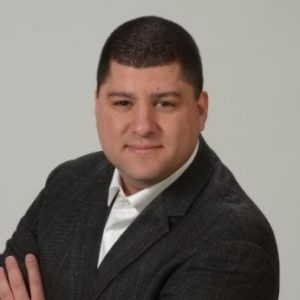
If you haven’t already, please study our Bootstrapping Course and Investor Introductions page.
John and his co-founder have built MapAnything from Charlotte, North Carolina and Atlanta, Georgia. They have now raised over $40 million in funding, proving that you can build sizable VC-funded SaaS businesses from anywhere.
Sramana Mitra: Let’s start at the very beginning of your journey. Where are you from? Where did you grow up? Give us some early story.
John Stewart: I’m from upstate New York. I’m from a middle class background. My mother was a stay-at-home mom. My father was in >>>
Bootstrapping a Global E-Commerce Company: SmartBuyGlasses CEO David Menning (Part 7)
Sramana Mitra: How big is your team now?
David Menning: 150.
Sramana Mitra: What percentage of that is in Australia?
David Menning: We actually don’t have any staff in Australia at the present time.
Sramana Mitra: That’s interesting. How did that happen? >>>
Woman Entrepreneur Building a Successful, VC Funded Business: Olivia Skuza, CEO of NuORDER (Part 6)
Sramana Mitra: Is the business all in LA now?
Olivia Skuza: We have 80 team members today in four offices. A majority of that team is in Los Angeles. We have an office in New York. We have customer service and sales in London. We now have customer service in Australia too.
Sramana Mitra: Excellent company. I’m thrilled to hear your story. I’m going to ask you the last set of questions on a slightly different topic. What has it been like to be a women entrepreneur in the technology industry for you in California? >>>
Bootstrapping a Global E-Commerce Company: SmartBuyGlasses CEO David Menning (Part 6)
Sramana Mitra: In terms of customer acquisition, what has been the driving narrative? What strategies worked for you?
David Menning: It really comes down to the discipline of how one runs the business and how one runs a marketing team. There’s discipline and then as a result of that, how you apply marketing efforts to different marketing channels. First and foremost, it really is the principle of how you actually apply the logic internally to analyzing the marketing channels and the marketing opportunities.
Let’s say you go sell a $100 product. You have 40% gross margin. If you want to be profitable and have 5% to 10%, you may want >>>
Woman Entrepreneur Building a Successful, VC Funded Business: Olivia Skuza, CEO of NuORDER (Part 5)
Sramana Mitra: What’s the next major inflection point in your business?
Olivia Skuza: So far, we’ve raised $25 million. We did a $3.6 million seed in 2012. Then we did Series A in 2013 for $7.5 million. New partners joined that one. Then we did an interim round in 2015 and a Series B in late 2016. We did that with Argentum, we were excited about them.
In terms of the inflection point, early on it was about proving that product market fit and trying to get that traction in the market. The most recent round of funding has been very critical for us in terms of focusing on people and leadership. If I look at lessons >>>
Bootstrapping a Global E-Commerce Company: SmartBuyGlasses CEO David Menning (Part 5)
Sramana Mitra: Let’s go back a little bit to the chronological story. In 2007, did you open up all of these English-speaking markets?
David Menning: It was a step-by-step approach. In 2007, we were still trying to improve the Australian market. We were trying to improve the experience of the customer. Eyeglasses is quite a complex product. It has a complex part in the checkout process where the customer has to put in their lens details. This is something which we continued to do in 2007.
I think it was 2008 when we actually started moving into other English markets. That was also very successful. Then on the back of that, we then started moving into non-English markets. In 2008 to 2009, we started translating our website and localizing >>>
Woman Entrepreneur Building a Successful, VC Funded Business: Olivia Skuza, CEO of NuORDER (Part 4)
Sramana Mitra: How much of this thesis did you get validated before you went to raise money? What was in the business by the time you went to raise money?
Olivia Skuza: We had a prototype that worked. In August of 2011, we used a trade show environment as the first way to validate that product. People do most of their buying and selling at trade shows. They are able to use our product in that environment. At that time, it was only a web application that was used on laptops. We have a mobile app today.
At that time, you’ll be using our product to process orders, show them your product catalog online, and essentially do a presentation with a retailer. Before we decided to go out and raise money, we probably had tens of customers >>>
Bootstrapping a Global E-Commerce Company: SmartBuyGlasses CEO David Menning (Part 4)
Sramana Mitra: Google AdWords did exist already. Google AdWords was easier because it wasn’t as competitive and the prices of keywords was lower.
David Menning: That was the main marketing channel in that initial period. There were also a few marketing channels that existed. You may recall comparison shopping was also a big thing back then. You could actually type in a product and see different sellers comparing their products. eBay was also quite strong. It was really through analysis, discipline, and focus on listing and measuring that allowed us to grow over a period of years.
Quite quickly, we also identified that the same demand also existed in other English markets in the world. It was at that point that >>>
