
categories
HOT TOPICS
- The Accelerator Conundrum
- The Startup Velocity Question
- Platform as a Service
- Man and Superman
- Web 3.0 = (4C + P + VS)
- The Future: End of Capitalism
- Capitalism 2.0

Entrepreneurship
Building a New Insurance Company From Scratch: Clearcover CEO Kyle Nakatsuji (Part 2)
Sramana Mitra: What year does that bring us up to?
Kyle Nakatsuji: Now, it’s 2012. I’ve finished both of the degree programs and I’m looking for a job. I ended up getting a job as an attorney. I was working at a firm that exclusively did tech startup work. I didn’t think I was going to be a lawyer.
I fell into that through a contact who was great and brought me on even though he probably knew I wasn’t going to last long. I was practicing law for about a year and wasn’t enjoying it as much as I thought I should. I wasn’t all that good at it.
>>>Building a New Insurance Company From Scratch: Clearcover CEO Kyle Nakatsuji (Part 1)

The insurance industry is archaic and offers much room for re-engineering. Kyle discusses how he is going about it.
Sramana Mitra: Let’s start at the very beginning of your journey. Where are you from? Where were you born and raised? What kind of background?
Kyle Nakatsuji: I was born in Milwaukee, Wisconsin. I was born and raised in the Midwest. I went to undergrad at a college in Wisconsin and then got a law degree and an MBA at the University of Wisconsin-Madison.
>>>Building a Virtual Company to $20 Million: Rob Cheng, CEO of PC Pitstop (Part 6)
Sramana Mitra: How were you addressing the blacklist issue? How were you detecting if something wasn’t blacklisted but was a problem? How were you figuring that out?
Rob Cheng: What we’re doing is the opposite. We’re creating a white list of everything that’s good. We’re looking for every single good program that we can find that our customers are running. Then if it’s not on that list, we don’t let it execute.
>>>Building a Virtual Company to $20 Million: Rob Cheng, CEO of PC Pitstop (Part 3)
Sramana Mitra: It was a software-driven diagnostic tool. You were running a piece of software from the internet onto that machine.
Rob Cheng: Yes. It was using a technology by Microsoft called ActiveX. It was quite similar to cloud computing. We stored all the results there. We were able to track which type of computers were slower.
>>>Building a Virtual Company to $20 Million: Rob Cheng, CEO of PC Pitstop (Part 2)
Rob Cheng: I got to know Ted very well throughout that period of time. Ultimately, I introduced him to my friend in Colombia. They started to do business together. Another thing that happened that was very interesting was that Texas Instruments decided to go and stop the production of the PC.
I’ve become friends with people in Dallas. That created a lot of problems for our IT because the entire company was based on the TI PC. They’ve written a lot of custom software. Now they didn’t have any more TI PC’s.
>>>Building a Virtual Company to $20 Million: Rob Cheng, CEO of PC Pitstop (Part 1)
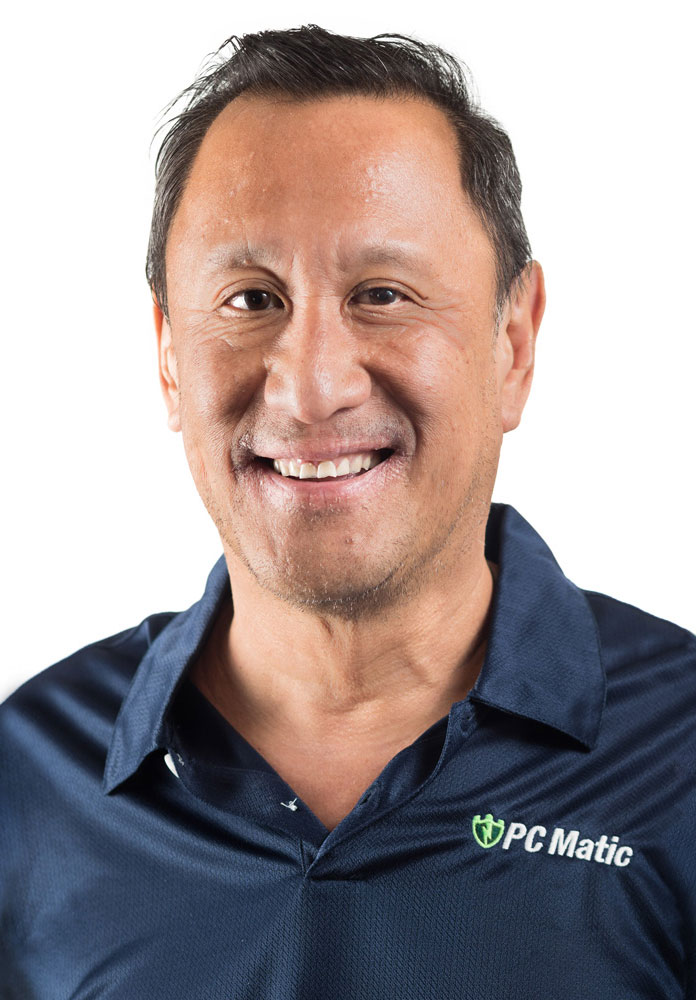
If you haven’t already, please study our free Bootstrapping course.
Rob figured out the joys of virtual companies back in 1999. Today, he runs a 65-person virtual company that makes $20 million in revenue. Wonderful story.
Sramana Mitra: Let’s start at the very beginning of your journey. Where are you from? Where were you born, raised, and in what kind of background?
>>>Taking on Giants in the Contact Center Space: UJET CEO, Anand Janefalkar (Part 7)
Sramana Mitra: Can you talk a bit about your pricing model? How did you come up with that pricing model?
Anand Janefalkar: For a lot of companies in this sector, innovation is very rare. Their revenue models were based on trying to fit in one-time fees or maintenance fees and all of that to service that technical debt. We decided that we don’t have any of these hidden fees. >>>
Taking on Giants in the Contact Center Space: UJET CEO, Anand Janefalkar (Part 6)
Sramana Mitra: In terms of positioning, there are obviously a lot of enterprise contact software players and there are some leaders. Right now, Suite within Oracle is a major player and has been around with deep integrations and a deep presence in the industry. Once you sorted out your positioning, whom do you consider as potential partners? Whom do you consider as direct competitors? What did the positioning shake out to be?
Anand Janefalkar: We figured out that we wanted to focus on real-time customer support. We didn’t try to do everything. We didn’t want to be a ticketing system as well as an FAQ system as well as real-time. We thought that the real-time aspect is where it’s broken. That’s the part where if there’s a bad customer experience, customers leave and that causes churn. >>>
