
categories
HOT TOPICS
- The Accelerator Conundrum
- The Startup Velocity Question
- Platform as a Service
- Man and Superman
- Web 3.0 = (4C + P + VS)
- The Future: End of Capitalism
- Capitalism 2.0

Entrepreneurship
Capital Efficient Entrepreneurship: Bongo CEO Josh Kamrath (Part 4)
Sramana Mitra: How did you sell? Selling faculty-by-faculty and direct door-to-door is not a viable scalable model. How did you actually get to market?
Josh Kamrath: To answer your question directly, we were selling direct door-to-door. Then we evolved into selling more enterprise-oriented deals. Instead of going to individual faculty, we would go to directors of technology.
>>>Capital Efficient Entrepreneurship: Bongo CEO Josh Kamrath (Part 2)
Sramana Mitra: We’re avid users of Upwork. We really believe in that whole virtual staffing model.
Josh Kamrath: For a big and long part of our history, we used Upwork to get the first iteration of our products to market. We found some developers in Ukraine. We did a bake-off. I had three different teams do the same project and picked the best team to become our core developers and those guys took us very far away with our products.
>>>Capital Efficient Entrepreneurship: Bongo CEO Josh Kamrath (Part 1)

If you haven’t already, please study our Bootstrapping Course and Investor Introductions page.
Bongo has turned a ~$1M investment into $6M+ in annual revenue with a compelling growth projection in the next couple of years.
Sramana Mitra: Let’s start at the very beginning of your journey. Where are you from? Where were you born and raised? What kind of background?
Josh Kamrath: I was born in Phoenix, Arizona. I lived there until I was 12. Then my family moved to Colorado, which I consider my home. I grew up there and went to college at Colorado State University where I met my wife Josie. She’s from California. I graduated a year ahead of her.
>>>Scaling a Robust Enterprise Software Company from Chicago: FourKites CEO Matthew Elenjickal (Part 4)
Sramana Mitra: You’re still selling completely direct? You’re not working with any of the major system integrators?
Matthew Elenjickal: We do. We’re partners with almost every system integrator that you can think of. We work with almost every system integrator out there including Accenture and Genpact .
We work with a lot of big software companies like JDA, Oracle, and SAP. Our solution is integrated into their systems. These are all the different channels that we are working on.
>>>Scaling a Robust Enterprise Software Company from Chicago: FourKites CEO Matthew Elenjickal (Part 3)
Sramana Mitra: What is the process of customer acquisition? Where you reaching out to these customers? Were they reaching out to you? What was the inbound and outbound? What was the go-to-market strategy?
Matthew Elenjickal: For those early days, it was still outbound. You go through your Rolodex and some of the companies you work with in the past. You reach out to them and many of them saw the value and signed up. It was mostly outbound, and some inbound of course. But I would say 80% of that was outbound.
>>>Scaling a Robust Enterprise Software Company from Chicago: FourKites CEO Matthew Elenjickal (Part 2)
Sramana Mitra: You said you did the startup right after your MBA. So did you then bootstrap it to launch this? Whom did you launch it with?
Matthew Elenjickal: I started the MBA program fully aware that I wanted to start a company. I was laying the foundation, if you will, when I was doing my MBA. I got a lot of free help. A lot of courses helped me really build a network of local venture capitalists. I got a lot of free money through competitions and stuff like that.
>>>Scaling a Robust Enterprise Software Company from Chicago: FourKites CEO Matthew Elenjickal (Part 1)
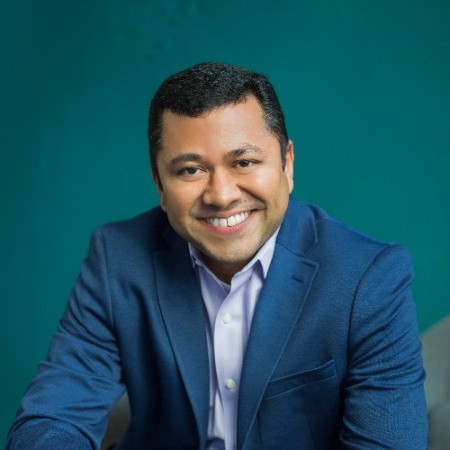
If you haven’t already, please study our Bootstrapping Course and Investor Introductions page.
This is a terrific case study of smart execution on a complex domain by an entrepreneurial team. Read on !
Sramana Mitra: Let’s go back to the very beginning of your journey. Where are you from? Where were you born and raised? What kind of background?
Matthew Elenjickal: I was born in the south of India in a state called Kerala. I did my undergrad in Chennai and then moved here to Chicago for grad school. I went to Northwestern and took Industrial Engineering and Management Science. It’s a two-year program.
>>>Bootstrapping a Niche E-Commerce Company: Modded Euros CEO Sean Dawes (Part 7)
Sramana Mitra: Where are you now? How far along? What’s the revenue level?
Sean Dawes: We’re doing millions in revenue. It’s about focusing on capturing as much market share as possible. There are still a handful competitors that are larger than us. For us, it’s growing as fast as possible while focusing on profitability.
My motivation is that I want to enjoy what I do, but I also want to ensure that my family’s future is taken care of. That’s what wakes me up every day. My father and grandfather worked all their lives.
>>>