
categories
HOT TOPICS
- The Accelerator Conundrum
- The Startup Velocity Question
- Platform as a Service
- Man and Superman
- Web 3.0 = (4C + P + VS)
- The Future: End of Capitalism
- Capitalism 2.0

Entrepreneurship
Bootstrapping With A Paycheck to YCombinator and $10M Series A: Ryan Chan, CEO of UpKeep (Part 3)
Sramana Mitra: What did you do when that aha moment came?
Ryan Chan: I hadn’t talked to this friend of mine in almost three years. He said, “Ryan, I will give you a little bit of money if you quit your job today and start working on Upkeep.” I did.
I quit my job working as an iOS developer. Literally that same day, I sent in my two weeks’ notice. I said, “Okay. I’m going to dive and head in for this company called UpKeep.” I had basically a little bit of money saved up. But other than that, I was pretty much dirt poor living with my mom.
>>>Bootstrapping With A Paycheck to YCombinator and $10M Series A: Ryan Chan, CEO of UpKeep (Part 2)
Sramana Mitra: So you started building. Did you still have your day job? Was this on the side?
Ryan Chan: This was a hobby on the side. I did this from 6PM to 10 PM, three times a week. I love learning things. I love building. For me, it was fun. I loved doing this. I loved not only working as a process engineer that I spent four years in college learning about but also expanding my horizons and learning how to program and code.
>>>Bootstrapping With A Paycheck to YCombinator and $10M Series A: Ryan Chan, CEO of UpKeep (Part 1)
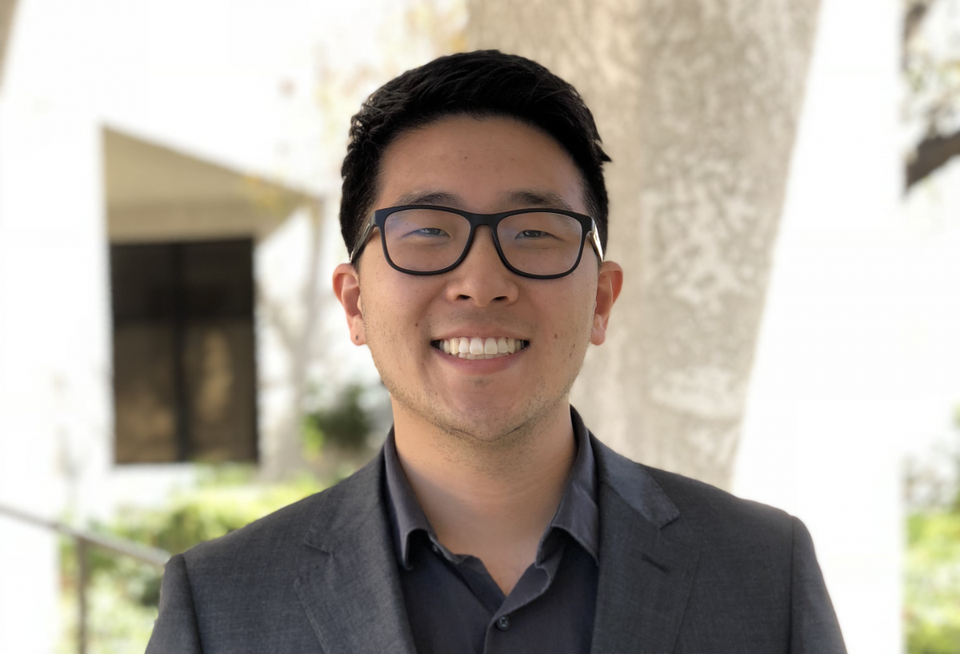
If you haven’t already, please study our Bootstrapping Course and Investor Introductions page.
Ryan took a hobby project that he bootstrapped with a paycheck and managed to get into YCombinator.
From there, he raised a $10M Series A from a top-tier Silicon Valley firm, Emergence Capital.
Excellent execution thus far.
Sramana Mitra: Let’s start from the very beginning of your journey. Where are you from? Where were you born and raised? What kind of background?
>>>Bootstrapping From a Small Town in Denmark to $12 Million: Sebastian Petersen, CEO of TrendHim (Part 5)
Sramana Mitra: I’ll tell you one thing though. You made this comment that outsourcing is bullshit. That’s absolutely false. There are a lot of ways of succeeding. You have succeeded in one way. There are a lot of other people who have succeeded in other ways.
We have case studies of virtual companies with 140 people in different companies. What is wonderful is you have built a wonderful company in a very offbeat part of the world. It’s not Copenhagen. It’s a small city in Denmark. You’ve created jobs. You’ve created excitement. That’s really fantastic.
Taking a Capital Efficient Company Public and Beyond: Medidata CEO Tarek Sherif (Part 7)
Sramana Mitra: I remember we talked about it a little bit the last time we spoke. So Veeva has its eyes obviously on the clinical data management space. They have one big customer this year. I think that’s their first big pharmaceutical customer. Can you analyze that deal for us?
Tarek Sherif: I can’t analyze it for you because it’s their customer. I can tell you that it wasn’t a competitive process that involved an RFP because we are aware of every RFP that comes to market.
>>>Bootstrapping From a Small Town in Denmark to $12 Million: Sebastian Petersen, CEO of TrendHim (Part 4)
Sebastian Petersen: If you want to start an ecommerce company today, it’s very difficult to do it without a lot of funding and thinking big from the very beginning. Today, buying visitors and customers is four times the price it was 10 years ago. You have to think more creatively today.
Sramana Mitra: I’d say yes and no. The game has switched more to unique merchandise. All the generic stuff, you can buy on Amazon. You can’t really compete against Amazon.
Taking a Capital Efficient Company Public and Beyond: Medidata CEO Tarek Sherif (Part 6)
Sramana Mitra: In 2009 when you went public, what was the market share situation vis a vis you versus FaceForward?
Tarek Sherif: They had a larger market share when we went public. They were larger, certainly, in terms of revenue and market share, but we were growing much faster.
Sramana Mitra: Were they public?
Tarek Sherif: They were public. Why would anybody in their right mind go public in 2009? We went public in June of 2009 where our second tech company went out the door. It was a terrible time. The worst market you had in a century short of a depression. Why would you go public?
>>>Bootstrapping From a Small Town in Denmark to $12 Million: Sebastian Petersen, CEO of TrendHim (Part 3)
Sramana Mitra: What country did you first go into outside Denmark?
Sebastian Petersen: Norway and Sweden. Then we started going south into Germany and France.
Sramana Mitra: Was there something different that Norway and Sweden wanted?
Sebastian Petersen: Only simple things. Once we started moving out of Scandinavia to Germany and France and especially Eastern Europe, we really had to start tweaking our websites to the local community.
>>>