
categories
HOT TOPICS
- The Accelerator Conundrum
- The Startup Velocity Question
- Platform as a Service
- Man and Superman
- Web 3.0 = (4C + P + VS)
- The Future: End of Capitalism
- Capitalism 2.0

Entrepreneur Interviews
Raising Money From Eighty Investors and Steering to a Successful Exit: Ludovic Huraux, CEO of Attractive World (Part 3)
Sramana Mitra: How did the community decide who was going to be in versus not?
Ludovic Huraux: Because you have thousands of people who decide, it’s difficult to tell you exactly. Most of the time, they want to make sure that the profile is fully completed. It’s a proof of commitment. The picture is important as well. People want to make sure that they will allow people who have the same lifestyle and who are committed to meet someone important in their life.
Sramana Mitra: Why would that be a manual process? I don’t understand why it has to be a manual process.
Capital Efficient Entrepreneurship from Utah: Ben Dilts, Founder and CTO of Lucid Software (Part 2)
Sramana Mitra: We’re now in mid-2009?
Ben Dilts: That’s right. At this point, it was still very much a one-man show. I may have collected a grand total of a few hundred dollars in revenue from some users. It was a product but it was in no way a company at that point. When I came down to return to school, I immediately sought out the entrepreneurial clubs to try to get in contact with people who could help build this up into a real company. I started meeting a lot of people in the local community here in Utah in an effort to gather a team.
Pretty soon, I ran into Karl Sun. He was a longtime Googler. He joined Google when there was a few hundred people there. He was their first patent attorney. >>>
Raising Money From Eighty Investors and Steering to a Successful Exit: Ludovic Huraux, CEO of Attractive World (Part 2)
Ludovic Huraux: Because the concept was very different, we had a lot of journalists who wrote about how attractive we are. There were a lot of bloggers who covered us. We got traction very quickly in France. A lot of our users organized events. I raised money. The first round was €500,000 with private investors. Then I made another mistake because I tried to outsource the website to Indonesia.
This was the biggest mistake I ever made because it was our core business. >>>
Capital Efficient Entrepreneurship from Utah: Ben Dilts, Founder and CTO of Lucid Software (Part 1)
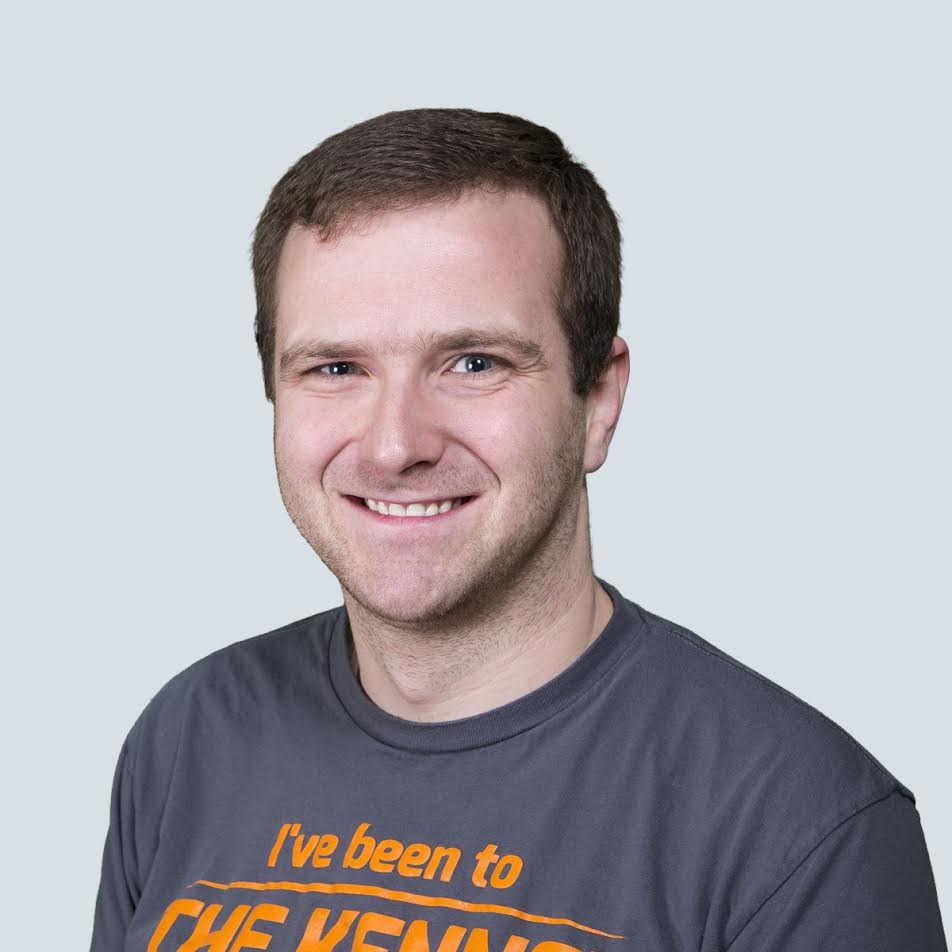
If you haven’t already, please study our Bootstrapping Course and Investor Introductions page.
Utah is becoming a wonderful hub for capital efficient technology entrepreneurship. People are not as delusional about artificial Unicorns, gratuitous fundraising, and high burn rates. They focus, instead, on fundamentals.
Sramana Mitra: Let’s start at the very beginning of your journey. Where are you from? Where were you born, raised, and in what kind of background?
Ben Dilts: I was actually born here in Salt Lake City, but my parents moved to Pennsylvania. I grew up just outside of Harrisburg, Pennsylvania since I was about two years old until I left for college. I came out to Utah again to go to school. I came out to Brigham Young University to study Computer Science. I fell in >>>
Raising Money From Eighty Investors and Steering to a Successful Exit: Ludovic Huraux, CEO of Attractive World (Part 1)
If you haven’t already, please study our Bootstrapping Course and Investor Introductions page.
Entrepreneurs have done crowd funding before the term crowd funding existed. Ludovic’s story is a very interesting case in point.
Sramana Mitra: Let’s start by going to the very beginning of your personal journey. Where are you from? Where were you born, raised, and in what kind of background?
Ludovic Huraux: I was born in Paris in 1982. I’m almost 34 years old. I’ve worked in finance with a private equity firm. I was very lucky to be involved in a fund. I was only 22 years old back then and I had a lot of responsibilities. I was a Board Member of a company with hundreds of employees. I just wanted to create my own company. >>>
Scaling a Cloud-Based Disaster Recovery Business in Silicon Valley: Axcient CEO Justin Moore (Part 7)
Sramana Mitra: You had $6 million in funding. What happens next?
Justin Moore: The 2008 financial meltdown happened a week later.
Sramana Mitra: But your money was in the bank before the financial meltdown.
Justin Moore: One week before—September 8, I believe. About a week later, you had the financial meltdown. You can imagine trying to recruit people into a three or four-person startup when you’ve got no experience in storage enterprise infrastructure. Enterprise is not hot at all. No one was interested in enterprise in 2008. It was all about consumer and eyeballs. >>>
Scaling a Cloud-Based Disaster Recovery Business in Silicon Valley: Axcient CEO Justin Moore (Part 6)
Sramana Mitra: Can you walk us through the progression of how many partners you had in year one and so on. How did that number ramp up?
Justin Moore: I couldn’t tell you what the actual numbers were, but it grew rapidly and exponentially. We went from signing two partners a month in the first year to probably 20 partners a month in year three. Eventually, we got to the point where we had over a thousand service provider partners.
Sramana Mitra: What was the incentive structure? What was your pricing model? >>>
Scaling a Cloud-Based Disaster Recovery Business in Silicon Valley: Axcient CEO Justin Moore (Part 5)
Sramana Mitra: Where were you positioning this? Was this for small businesses? Was this for mid-sized businesses? Where was the sweet spot?
Justin Moore: In the early days, the sweet spot was sub-20-employee companies. We had this concept of trying to empower small businesses to run with the resilience of an enterprise. How do we empower the little guys to have the same level of IT confidence as the big guys?
Sramana Mitra: What was the customer acquisition strategy to get to these sub-20 customers?
Justin Moore: First, it was direct. Then we realized that it was going to be far too expensive. As we approached small businesses directly, we found out that a lot of them were working with Managed Service Providers. These are outsourced IT professionals who are effectively the IT department for small companies that can’t afford to have a dedicated IT team. >>>
