
categories
HOT TOPICS
- The Accelerator Conundrum
- The Startup Velocity Question
- Platform as a Service
- Man and Superman
- Web 3.0 = (4C + P + VS)
- The Future: End of Capitalism
- Capitalism 2.0

Entrepreneur Interviews
Entrepreneur Couple Bootstrapping to $10M from Colorado: AdCellerant Co-Founders Brock Berry and Shelby Carlson (Part 1)
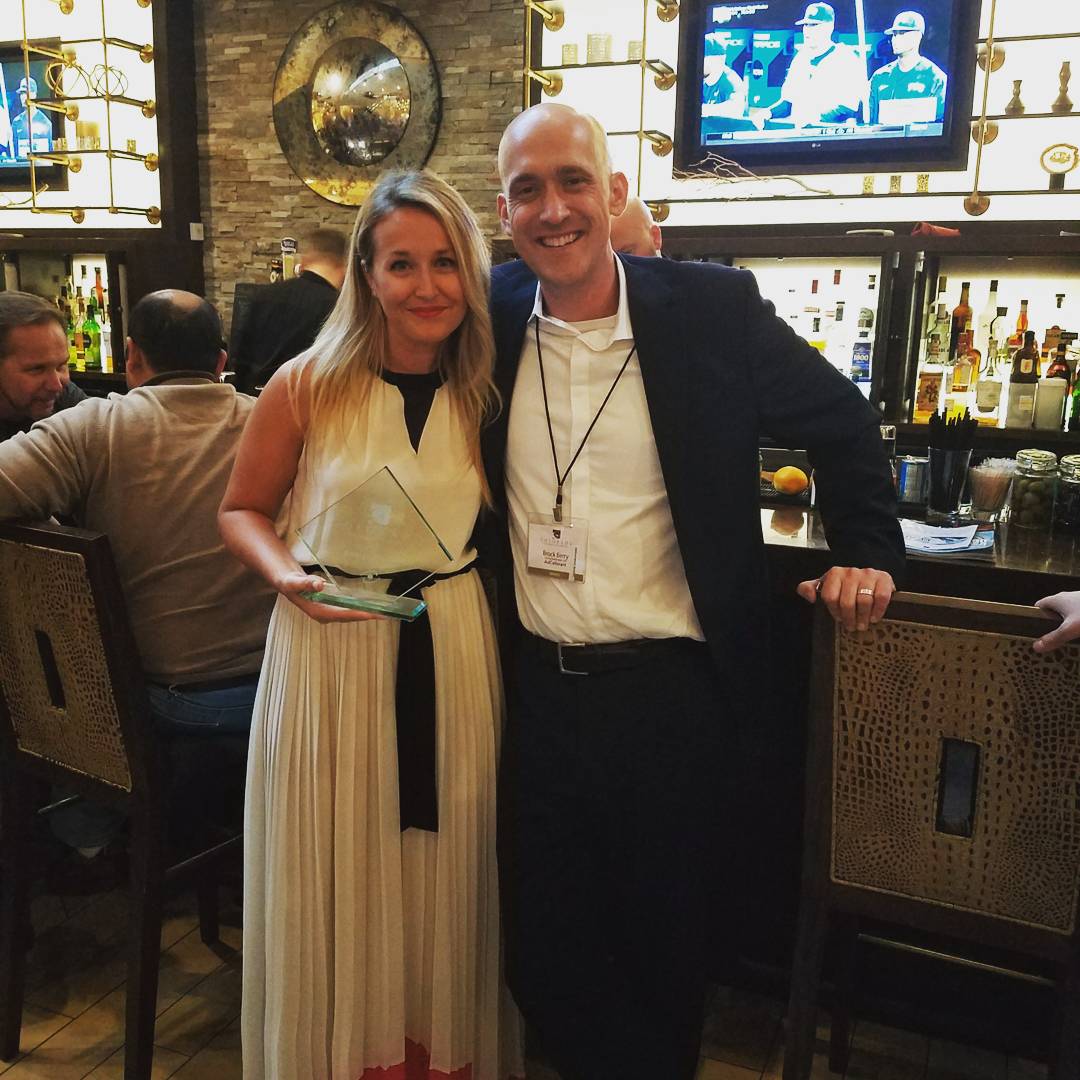
If you haven’t already, please study our Bootstrapping Course and Investor Introductions page.
Love and startups go hand in hand for Brock and Shelby who are helping media companies generate seven-figure revenue streams.
Sramana Mitra: Whoever wants to start, let’s start at the very beginning of your personal journey. Where are you from? Where were you born, raised, and in what kind of background?
Brock Berry: Thanks for having us. I’m the Founder and CEO of AdCellerant. I’m from Indiana >>>
Thought Leaders in E-Commerce: Devin Johnson, CEO of FirstMile (Part 5)
Sramana Mitra: If you were starting a company today focusing on the domain of logistics in e-commerce, what kind of a company would you start? Where do you see open problems and white spaces?
Devin Johnson: When someone asks you when you’re a little kid what you want to do when you grow up, you never say you want to be in shipping. It’s not a sexy profession. Now that I’m so immersed in what I do, I feel very lucky. If I could pick any job in the world, it would probably be doing what I’m doing. I feel very fortunate. It’s hard for me to conceive doing anything else.
Sramana Mitra: The question I’m asking is more from the perspective of pointers and assistance to young >>>
Thought Leaders in E-Commerce: Devin Johnson, CEO of FirstMile (Part 4)
Devin Johnson: When we pull back to the answer to your question, when a call comes in and Amazon says, “If you sell this product, the category for shipping you’ve determines means that this package has to be delivered in three to five days.” One of our clients can send a request for us saying, “FirstMile, ship this with your expedited product.”
Within milliseconds, our technology looks at where it’s going from and where it’s going to and it makes the determination based on historical data, who can get that data in three to five days, and who can do it for the least amount of money. Our technology knows that based on a package going in this network, it needs this label and it’s going to cost this much. Over the course of the >>>
Thought Leaders in E-Commerce: Devin Johnson, CEO of FirstMile (Part 3)
Devin Johnson: Technology has really come a long way to help support that. It’s made things very efficient. That’s where it’s ended. You now have five carriers that say, “We’ll deliver your packages to these parts of the country and you have the software to make it really easy to use.”
Now you have five trucks that have to come to the same two dock doors everyday between 4PM and 6PM. You now have five different invoices that come in every single week. You now have five customer service departments to deal with. You now have five different claims departments to deal with.
Over the last six to eight years, things have become very efficient in the multi-carrier shipping technology environment and there >>>
Thought Leaders in E-Commerce: Devin Johnson, CEO of FirstMile (Part 2)
Sramana Mitra: Let’s double-click down on those two points and explore them further. Obviously, there are smaller merchants who are selling on Amazon. Some of them are using Amazon’s own logistics capabilities.
To your point that they’re working with Amazon, yes they’re working with Amazon. What is it that you are bringing to the party where you are supplementing Amazon’s capabilities? What do you mean when you say work with Amazon? >>>
Bootstrapping to $80 Million from Canada: Rob Purdy, CEO of Power2Motivate (Part 7)
Sramana Mitra: What was the first year of that product being revenue-generating?
Rob Purdy: It would have started generating a little bit of revenue in 2012. At that point in time, we had 20 licensees for Power2Motivate. The only people using the reward component was us and our direct customers. The other 19 licensees were not using our reward platform. We had $20 million revenue in rewards.
Sramana Mitra: What did that do to your business in 2013 and 2014? >>>
Bootstrapping to $80 Million from Canada: Rob Purdy, CEO of Power2Motivate (Part 6)
Rob Purdy: It is. It has worked very well. It has been a good ride for all the shareholders who came in at that time because they’ve been receiving dividends for the last three and a half years. The valuation of the business has grown significantly in six years.
Sramana Mitra: These are people that you knew. You basically used personal relationships.
Rob Purdy: Yes. This was a combination of employees as well as business partners that we had built up over the years. Ben, out of Australia, bought 10% of the company. We had another partner do the same thing. Then we had some external people >>>
Bootstrapping to $80 Million from Canada: Rob Purdy, CEO of Power2Motivate (Part 5)
Sramana Mitra: Can you bring these inflection points together for us and help us understand how this impacted revenue?
Rob Purdy: When we signed the contract, the company business was, in aggregate, about $5 million. We doubled our business in the next couple of years. We grew the business to around $10 million. By 2010, we were about $10 million. We had a certain amount of profitability. Most of what we made went back to product development. At the end of any given year, we probably never made any money. >>>
