
categories
HOT TOPICS
- The Accelerator Conundrum
- The Startup Velocity Question
- Platform as a Service
- Man and Superman
- Web 3.0 = (4C + P + VS)
- The Future: End of Capitalism
- Capitalism 2.0

Entrepreneur Interviews
$200 Million in Revenue Catering to the Bottom of the Pyramid: Issa Asad, CEO of Q Link Wireless (Part 3)
Sramana Mitra: How long did the model go on?
Issa Asad: I did that in 2007. Then I sold my company to a company called Blackstone. They wanted it for the technology. They were able to take it to a new level, which was beyond my reach. At that point, I took a new venture. I started looking at how to do Internet marketing.
Sramana Mitra: What year did you sell?
Issa Asad: 2007. >>>
$200 Million in Revenue Catering to the Bottom of the Pyramid: Issa Asad, CEO of Q Link Wireless (Part 2)
Sramana Mitra: How did you get around those limitations?
Issa Asad: I turned around and I started working with some of them. I said, “If I print my own cards and make my own brand, then I would only have to pay for usage.” I went to the carriers and I made contracts with them. I would only pay for the usage. I was able to take $10,000 and instead of only buying 500 $20 cards, I was able to buy cards for five cents and I was able to go to a lot more stores because I only had to pay for the cost of printing.
$200 Million in Revenue Catering to the Bottom of the Pyramid: Issa Asad, CEO of Q Link Wireless (Part 1)
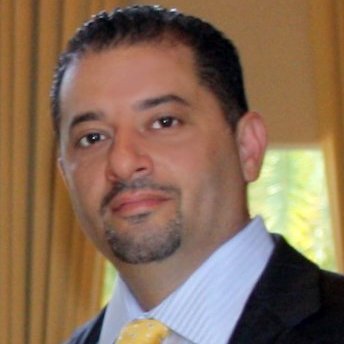
If you haven’t already, please study our Bootstrapping Course and Investor Introductions page.
This is a fascinating journey of an entrepreneur who has bootstrapped a $200 million business catering to poor people in the United States selling cellular phones and connections, and monetizing the data through advertising. In India, Reliance Jio has a similar strategy, by the way, for those interested in bottom-of-the-pyramid businesses.
Sramana Mitra: Let’s start at the very beginning of your journey. Where are you from? Where were you born, raised, and in what kind of background?
Issa Asad: I was born and raised in the United States. I am of Palestinian descent. I am one of 12 brothers and sisters. My >>>
Bootstrapping From Romania: Marius Hanganu, CEO of Tremend (Part 2)
Sramana Mitra: How did you get the company off the ground? How were you acquiring customers? What was the genesis of the story?
Marius Hanganu: For years, it was a Sequoia-based startup. Before it came to be known as IoT, it was called Big Data. The technical challenges around it are quite amazing. It was about custom hardware. It was about the portal. Back then, it was a solution designed for Nokia. It involved some embedded pieces of work. >>>
Bootstrapping From Romania: Marius Hanganu, CEO of Tremend (Part 1)
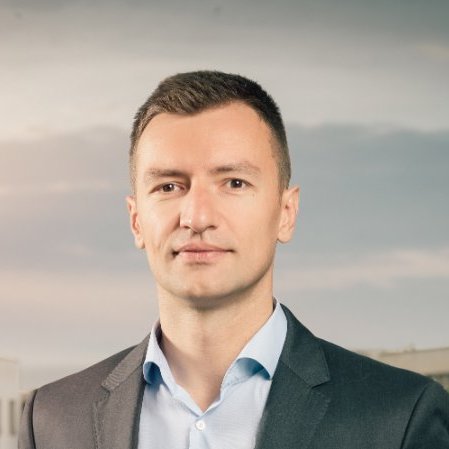
If you haven’t already, please study our Bootstrapping Course and Investor Introductions page.
Marius has built a services company from Romania to over $5 million in revenue. Now, he is trying to bootstrap a product using the services business.
Sramana Mitra: Let’s start at the very beginning of your personal journey. Where are you from? Where were you born, raised, and in what kind of background?
Marius Hanganu: I’m from Romania. I was born near the seaside. At an early age, we moved to the capital city of >>>
Genesis to Acquisition: Mike Morris, CEO of Topcoder (Part 6)
Sramana Mitra: What happens after that?
Mike Morris: I can’t be specific about revenue after this point. This is where it gets interesting. At this point, we were cash-flow conscious. We weren’t doing all the things that we needed to do to grow more rapidly. We needed outside capital at this point. We had a few failed rounds mostly because we couldn’t come to agreement on the terms. It was difficult to give up the control.
I didn’t necessarily agree with where we were so I left in 2011. I went to go work for Appirio. My plan was to go out and start >>>
Genesis to Acquisition: Mike Morris, CEO of Topcoder (Part 5)
Sramana Mitra: At what point did you find a monetization model that was meaningful and that could carry the business?
Mike Morris: 2004 was when we found the monetization model.
Sramana Mitra: What was that model?
Mike Morris: The model was going to customers, finding custom software development projects that needed to be built, and then using the community to build them through competitions. >>>
Genesis to Acquisition: Mike Morris, CEO of Topcoder (Part 4)
Sramana Mitra: By this time, you’re one year into the project. Did you figure out monetization already or was that still open?
Mike Morris: That was my job. I would say we probably started on that about halfway through the first year. My responsibility was to figure out how to build a software company on top of this community. I read every book on agile coding, waterfall, and all the different methodologies to manage developers and was trying to apply that to this completely remote group of people. >>>
