
categories
HOT TOPICS
- The Accelerator Conundrum
- The Startup Velocity Question
- Platform as a Service
- Man and Superman
- Web 3.0 = (4C + P + VS)
- The Future: End of Capitalism
- Capitalism 2.0

Entrepreneur Interviews
Building a Fast Growth, Cutting-Edge Insurance Brokerage: Karn Saroya, CEO of Cover (Part 3)
Sramana Mitra: You got an offer to join YCombinator. What was your acqui-hire deal? Was it an earn-out deal?
Karn Saroya: We didn’t completely vest. It was okay with us largely because we had quite a bit of conviction around what we wanted to do next. The team was most comfortable building products at the pace of a startup. The beauty of running a startup is you can be extremely high-leveraged. You can make a huge impact quickly and you can scale very quickly, which is what we wanted to do. >>>
Capital Efficient Entrepreneurship: Neil Vaswani, CEO of Corestream (Part 2)
Sramana Mitra: What year did you start Corestream?
Neil Vaswani: In 2005, I realized that there was this inefficiency in the market. Then in 2005, I sought capital. In 2006, we closed capital. In 2008, we went to market.
Sramana Mitra: Talk to me a little bit about what was the idea. What prompted Corestream?
Neil Vaswani: I remember getting angry with myself every day when I was 24 or 25. I was getting frustrated with myself that I hadn’t started a company yet. It was this burning desire. I knew I would be miserable for the rest of my life if I didn’t start a company. It was >>>
Building a Fast Growth, Cutting-Edge Insurance Brokerage: Karn Saroya, CEO of Cover (Part 2)
Karn Saroya: Ultimately, we were acqui-hired at Shopify. We got to build all sorts of interesting things. We worked on the Facebook Messenger chat bot for commerce. We got to work with Toby a little bit. Having been there for a couple of months, we still had the itch. We decided that we wanted to build something else because we had this rare skill set where we could build beautiful products.
Stylekick was featured in 80 countries and translated into 14 languages. It’s fairly rare to find folks who can build meaningful consumer products to some scale. We started building a set of apps that we thought we couldn’t get to scale. We settled on Cover as an insurance app simply because I had a background in insurance.
Sramana Mitra: You built this app that went to a million users. Was that a bootstrapped product? >>>
Capital Efficient Entrepreneurship: Neil Vaswani, CEO of Corestream (Part 1)
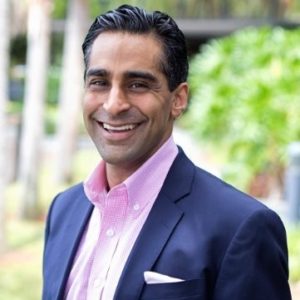
If you haven’t already, please study our Bootstrapping Course and Investor Introductions page.
Neil has turned a $3M investment into a ~$10M annual revenue company by addressing a cumbersome piece of workflow in benefits management. Read on to learn how.
Sramana Mitra: Let’s start at the very beginning of your journey. Where are you from? Where were you born, raised, and in what kind of background?
Neil Vaswani: I was born in New York and lived there for a part of my life. My parents are from India. I did live in India for a while and spent some time in Europe. I went to school at Babson College and then moved back to New York City right around 2000. I started Corestream probably about 2006. >>>
Building a Fast Growth, Cutting-Edge Insurance Brokerage: Karn Saroya, CEO of Cover (Part 1)

If you haven’t already, please study our Bootstrapping Course and Investor Introductions page.
This is a terrific story of a team that has tremendous expertise in building and acquiring customers for consumer apps, and how they applied that unfair advantage to disrupt a domain (insurance).
Sramana Mitra: Let’s start at the very beginning of your journey. Where are you from? Where were you born, raised, and in what kind of background?
Karn Saroya: I’m a Canadian living in Silicon Valley. I was born in Canada in Vancouver. I was born and raised there. I went to Queens and eventually MIT. >>>
Building a VC-Funded B2C CRM Company From Virginia: Zaius Founder and CTO Spencer Pingry (Part 5)
Sramana Mitra: What is the distribution? Is Boston engineering?
Spencer Pingry: The Engineering team is split between Boston and Virginia. It’s pretty even right now. All of our sales and marketing and CS employees are in Boston.
Sramana Mitra: You now started getting your team more organized in terms of functionality. What happens next?
Spencer Pingry: We’ve been in growth mode for the last 12 months where we’ve been scaling quite quickly. >>>
Thought Leaders in Big Data: Marc Alacqua CEO and Steve Davis CTO of Signafire (Part 4)
Sramana Mitra: It’s not usually easy to sell pure horizontal. In the world of complex queries, what is missing? If you look at the universe, what are the specific things or capabilities that are missing from the ecosystem that would help you and help your customers, and that could be opportunities for new companies to be born?
Marc Alacqua: It seems that the competitors have dumbed down the ability to do complex searches. In our experience, we’ve always been tightly tied to the users in the end. We try to create a user interface that serves a variety of users. From what we’ve seen, the ability to do both separates us from a lot of the other products out there. >>>
Building a VC-Funded B2C CRM Company From Virginia: Zaius Founder and CTO Spencer Pingry (Part 4)
Spencer Pingry: In early 2016, we decided to launch a freemium product. We offered our entire product for free primarily to get as many interactions with as many customers as possible in the shortest time possible. For about five to six months, we hired some new go-to market people. We did a ton of SEM and spent a ton to really figure out which set of people we can get through the door.
We probably did 250 to 300 integrations in that short period of time. >>>
