
categories
HOT TOPICS
- The Accelerator Conundrum
- The Startup Velocity Question
- Platform as a Service
- Man and Superman
- Web 3.0 = (4C + P + VS)
- The Future: End of Capitalism
- Capitalism 2.0

Entrepreneur Interviews
Bootstrapping from Denmark: Camilla Ley Valentin, Co-Founder of Queue-It (Part 4)
Sramana Mitra: Was your first customer from Denmark?
Camilla Ley Valentin: Yes, it was. It was a government company and that was the first customer. It was a company called Nature Agency and they manage all the hunters in Denmark. The hunters have to register all the animals that they shoot in a complicated legacy system that’s managed through a web interface by all the hunters individually.
This was quite tricky because they all do it at the same time. The site will be unresponsive. They use Queue-it for protecting it against crashing. This was the first use case which is not one of the ones that we predicted when we did the business plan. >>>
Bootstrapping from Denmark: Camilla Ley Valentin, Co-Founder of Queue-It (Part 3)
Sramana Mitra: How do you get things off the ground?
Camilla Valentin: We made a business friend. All three of us had many years of business experience. We had some idea of what was needed. This was our first own startup. We found some good templates online that we applied to generating the business plan and started the architectural design of the solution in parallel. It was not overly comprehensive, but we covered most of the things that we found later that we needed to operate the business. >>>
Bootstrapping from Denmark: Camilla Ley Valentin, Co-Founder of Queue-It (Part 2)
Camilla Ley Valentine: I moved into a company called EDS at that time. Now, it’s been acquired by HP. I managed a bunch of projects. A lot of them had to with the transportation industry. Going from there, I went into the company and met Niels and Martin, my two Co-Founders of Queue-it. This was a software and consulting company.
In that company, we’re mainly dealing with very big and complicated software solutions for government companies and ministries. We developed solutions based on EU tenders. I was the Director for Business Development and Software Architecture. I handled the whole process of winning the deals in close collaboration with my two co-foundersr. We worked together in that company for six or seven years. >>>
Bootstrapping from Denmark: Camilla Ley Valentin, Co-Founder of Queue-It (Part 1)
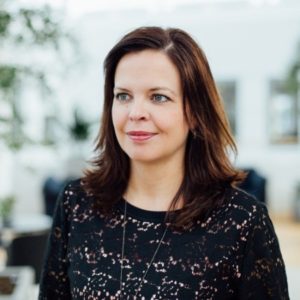
Camille tells a wonderful story of capital-efficient entrepreneurship, including scaling a company born in Denmark that now has 40% of its business in the US.
Sramana Mitra: Let’s start at the very beginning of your journey. Where are you from? Where were you born and raised? What kind of background?
Camilla Ley Valentin: I come from a creative family. My father was a child TV star back in the 70’s and 80’s, which was when I was born in 1973. At that time, you can imagine that there weren’t many TV stations in Denmark where I’m from. We were part of a mini celebrity family and worked a lot in the entertainment industry. >>>
A Fat Startup from Virginia: Andrew Rose, CEO of Compare.com (Part 7)
Sramana Mitra: What were the strategic nuggets of building that business? 2012 to now, what were some of the inflection points of the business?
Andrew Rose: One of the early inflection points was that we had to show success.We had to prove to consumers. I’ll give you a couple of indicative examples, and you can imagine how this started the ball rolling. As we got new employees here, they were inclined to check their own insurance. >>>
A Fat Startup from Virginia: Andrew Rose, CEO of Compare.com (Part 6)
Sramana Mitra: You said there was a chicken and egg situation. Can you double-click down on that? How did you address the chicken and egg situation?
Andrew Rose: Part of it was for the early insurance companies that took the leap with us saying, “We’ll come on as your initial insurance companies.” It was that we had to back up the fact that we would go out there and spend millions of dollars on advertising. This was a big leap from those early investors. >>>
A Fat Startup from Virginia: Andrew Rose, CEO of Compare.com (Part 5)
Sramana Mitra: Your first round of funding was from foreign investors for $100 million?
Andrew Rose: That is correct.
Sramana Mitra: Who were these investors? >>>
A Fat Startup from Virginia: Andrew Rose, CEO of Compare.com (Part 4)
Sramana Mitra: In what capacity did you start that company? Were you just a regular entrepreneur or were you doing this in an intrapreneurship mode?
Andrew Rose: It’s a bit of both. The UK office provided the capital. I was employee one and I hired up to hundreds from that point. It is intrapreneurship, but it felt much more like entrepreneurship. You didn’t have a safety net underneath you with a corporate structure around you. You have to do everything. >>>
