
categories
HOT TOPICS
- The Accelerator Conundrum
- The Startup Velocity Question
- Man and Superman
- Web 3.0 = (4C + P + VS)
- The Future: End of Capitalism
- Capitalism 2.0

Entrepreneur Case Studies
Featured Videos
Bootstrap First with Services, Raise Money Later: John Stewart, CEO of MapAnything (Part 5)
Sramana Mitra: Let me double-click down a little bit on the team issue. You have built this company from North Carolina?
John Stewart: Yes, from the ground up.
Sramana Mitra: Talk a little bit about what is the consideration of your company today. What has worked and not worked in building this company from North Carolina? How is the company architected organizationally today? >>>
Bootstrap First with Services, Raise Money Later: John Stewart, CEO of MapAnything (Part 4)
Sramana Mitra: What is the pricing model?
John Stewart: It’s based on per user per month.
Sramana Mitra: What is the average deal size when you’re selling to one of your clients?
John Stewart: It varies by segment. We have as little as a single license at a non-profit to as many as thousands at a global 50 brand. It’s everything in between. >>>
Bootstrap First with Services, Raise Money Later: John Stewart, CEO of MapAnything (Part 3)
Sramana Mitra: Was there a specific channel through which you were acquiring customers? Where were you getting the leads from?
John Stewart: We built relationships at the ground level at Salesforce. As they were selling deals, especially in the small business segment, they needed integrators who were willing to take those deals and roll out Salesforce.
Sramana Mitra: Between the time when you started putting out these four apps on the App Exchange and when you actually identified that MapAnything is the one that is starting to resonate with customers, what was the time window? >>>
Bootstrap First with Services, Raise Money Later: John Stewart, CEO of MapAnything (Part 2)
Sramana Mitra: Why build on top of Salesforce?
John Stewart: We had built our MRP system on top of it when I had the manufacturing company. Salesforce’s ecosystem was really starting to explode. It was everywhere. I knew how to build a services business very well. It seemed to be that it was less specialized than the hardcore engineering services we were doing, which very much fluctuated with the state of the economy versus something like Salesforce, which is constantly in demand.
We went out and specialized in doing SI services for small manufacturers. We were just doing project work. In mid-2011, one of >>>
Bootstrap First with Services, Raise Money Later: John Stewart, CEO of MapAnything (Part 1)
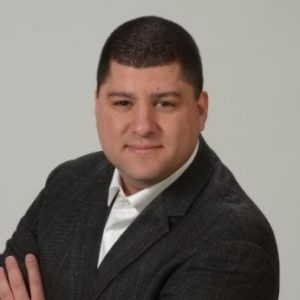
If you haven’t already, please study our Bootstrapping Course and Investor Introductions page.
John and his co-founder have built MapAnything from Charlotte, North Carolina and Atlanta, Georgia. They have now raised over $40 million in funding, proving that you can build sizable VC-funded SaaS businesses from anywhere.
Sramana Mitra: Let’s start at the very beginning of your journey. Where are you from? Where did you grow up? Give us some early story.
John Stewart: I’m from upstate New York. I’m from a middle class background. My mother was a stay-at-home mom. My father was in >>>
Bootstrapping a Global E-Commerce Company: SmartBuyGlasses CEO David Menning (Part 7)
Sramana Mitra: How big is your team now?
David Menning: 150.
Sramana Mitra: What percentage of that is in Australia?
David Menning: We actually don’t have any staff in Australia at the present time.
Sramana Mitra: That’s interesting. How did that happen? >>>
Woman Entrepreneur Building a Successful, VC Funded Business: Olivia Skuza, CEO of NuORDER (Part 6)
Sramana Mitra: Is the business all in LA now?
Olivia Skuza: We have 80 team members today in four offices. A majority of that team is in Los Angeles. We have an office in New York. We have customer service and sales in London. We now have customer service in Australia too.
Sramana Mitra: Excellent company. I’m thrilled to hear your story. I’m going to ask you the last set of questions on a slightly different topic. What has it been like to be a women entrepreneur in the technology industry for you in California? >>>
Bootstrapping a Global E-Commerce Company: SmartBuyGlasses CEO David Menning (Part 6)
Sramana Mitra: In terms of customer acquisition, what has been the driving narrative? What strategies worked for you?
David Menning: It really comes down to the discipline of how one runs the business and how one runs a marketing team. There’s discipline and then as a result of that, how you apply marketing efforts to different marketing channels. First and foremost, it really is the principle of how you actually apply the logic internally to analyzing the marketing channels and the marketing opportunities.
Let’s say you go sell a $100 product. You have 40% gross margin. If you want to be profitable and have 5% to 10%, you may want >>>
