
categories
HOT TOPICS
- The Accelerator Conundrum
- The Startup Velocity Question
- Platform as a Service
- Man and Superman
- Web 3.0 = (4C + P + VS)
- The Future: End of Capitalism
- Capitalism 2.0

ej_temp
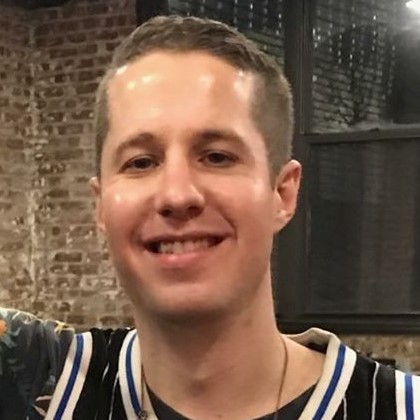
An Animal Lover’s Beautiful Journey: Elephant Pants CEO Nathan Coleman (Part 2)
Nathan Coleman: We reached out to different elephant organizations, one of which was the African Wildlife Foundation. We wanted to find a way to help these elephants. I don’t think they thought we could do much about it.
When we sent them a check for $1,500, that’s when we they realized we were serious. Our core product is the harem pants. They sell it all over Southeast Asia and Asia in general. We brought a whole bunch of pairs back for friends and family and everybody loved them. >>>
An Animal Lover’s Beautiful Journey: Elephant Pants CEO Nathan Coleman (Part 1)
If you haven’t already, please study our Bootstrapping Course and Investor Introductions page.
Nathan is a true animal lover, and has built a wonderful niche e-commerce company with the mission of helping elephants. Beautiful story.
Sramana Mitra: Let’s start at the very beginning of your personal journey. Where are you from? Where are you born, raised, and in what kind of background?
Nathan Coleman: I grew up in Westchester County, which is right outside New York City. I am 29 years >>>
Bootstrapping from the UK to Over $10 Million: Roger Hale, Co-Founder of Linguamatics (Part 5)
Sramana Mitra: What is the geographical spread of your business? How have you gone about approaching the geographical expansion?
Roger Hale: It is predominantly US. Something like 70% of our sales is in the US.
Sramana Mitra: When did you start selling in the US?
Roger Hale: Right away. Astra Zeneca was US. >>>
Bootstrapping from the UK to Over $10 Million: Roger Hale, Co-Founder of Linguamatics (Part 4)
Sramana Mitra: What’s the next major strategic move in the company’s evolution?
Roger Hale: I’m not sure there was an inflection point around that time. We were continuing to develop the product. We had customers. They were quite demanding customers. They wanted new features in the product. There was a lot of work just to support that. The next major revenue point was around about 2007 when we sold our first deal in excess of a million dollars. That was quite a significant point.
Sramana Mitra: All these other deals until 2007 almost served as pilots. Then you got to these larger deals starting 2007. >>>
Bootstrapping from the UK to Over $10 Million: Roger Hale, Co-Founder of Linguamatics (Part 3)
Sramana Mitra: How long did it take you to build a product that you could service the pharmaceutical industry with?
Roger Hale: The business was formed in 2001, but we started in 2002. We immediately started working on the product. We had some prototypes available within the year. We , in fact, sold our first prototype in 2003 to Astra Zeneca.
Sramana Mitra: What size contract was that?
Roger Hale: It was a five-figure contract. >>>
Bootstrap to $25 Million from Utah, Raise Money Later to Scale to $100 Million: John Pope, CEO of Jive (Part 7)
Sramana Mitra: What did this $21 million, which you raised, enable you to do that you couldn’t have done organically?
John Pope: Not all of it was direct. We had some secondary in there. Out of respect to the guy who moved on, I won’t say exactly how much. The funding that we used as a company went mostly towards building out a world-class platform. In communications, even more so in a lot of other cloud services, uptime is paramount. If a website isn’t available for a few minutes, people don’t stress too much.
If you’re on a phone call and there’s a disruption, that is a potential revenue killer. We realized that our service is incredibly >>>
Bootstrapping from the UK to Over $10 Million: Roger Hale, Co-Founder of Linguamatics (Part 2)
Sramana Mitra: What year did you start Linguamatics?
Roger Hale: In 2001, right after the dot-com bubble. I had always been interested in starting a company. I don’t really like working for other people. The key moment in starting Linguamatics was SRI deciding to wind down and shut down its Cambridge lab. We felt that there was a potential for a novel approach which could make text mining and natural language processing technology more readily applicable to commercial problems.
The novelty was to make very precise natural language processing-based text mining results available interactively to non-expert >>>
Bootstrap to $25 Million from Utah, Raise Money Later to Scale to $100 Million: John Pope, CEO of Jive (Part 6)
Sramana Mitra: Great. How far does this bring us to? You mentioned that you went up to $25 million with no outside financing. Would these two major strategic approaches cover that 0 to $25 million journey?
John Pope: That gets us to $25 million. We’ve always had a broad appeal. Our product works for 99% of the businesses out there. The vertical and the channel program really helped us to get to that $25 million mark.00
Sramana Mitra: You introduced this in about 2010? >>>
