
categories
HOT TOPICS
- The Accelerator Conundrum
- The Startup Velocity Question
- Platform as a Service
- Man and Superman
- Web 3.0 = (4C + P + VS)
- The Future: End of Capitalism
- Capitalism 2.0

ej_temp
Bootstrapping with Paycheck to $15 Million from Tennessee: Gene Caballero, CEO of GreenPal (Part 1)
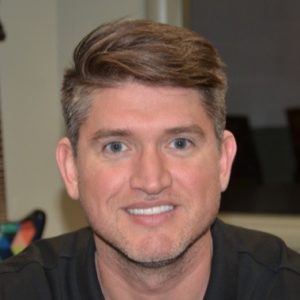
If you haven’t already, please study our Bootstrapping Course and Investor Introductions page.
This is a fantastic story of a founder duo bootstrapping with a paycheck, now growing from $5M to $15M in one year, with a virtual team of freelancers. Your classic 21st century internet business. No outside financing whatsoever!
Sramana Mitra: Let’s start at the very beginning of your journey. Where are you from? Where were you born, raised, and in what kind of background?
Gene Caballero: I was born in Lima, Peru. My dad’s side of the family are all entrepreneurs. My grandfather had his own propeller business. We >>>
Capital Efficient Entrepreneurship: Neil Vaswani, CEO of Corestream (Part 7)
Sramana Mitra: Besides the roughly $2 million you raised, did you raise any other funding?
Neil Vaswani: We had some angel funding throughout the way at different points.
Sramana Mitra: What is the total amount of money that you’ve raised?
Neil Vaswani: Probably around $3 million or so.
Sramana Mitra: What kind of revenue run rate are you at? What would you finish 2018 at? >>>
Building a Fast Growth, Cutting-Edge Insurance Brokerage: Karn Saroya, CEO of Cover (Part 7)
Sramana Mitra: Can you explain to me how this works? Is this a completely online process? Are people making full decisions online or at some point, somebody on the phone is talking to the customers?
Karn Saroya: The average basket size at Cover is $1,700. That can be a meaningful part of somebody’s after-tax income. We do allow our customer to transact without engagement with an agent but rarely does that happen. At that price point, the customer wants to go back and forth and ask questions. >>>
Capital Efficient Entrepreneurship: Neil Vaswani, CEO of Corestream (Part 6)
Sramana Mitra: These are large enterprises?
Neil Vaswani: All sizes. ADP typically plays in the middle market. The business unit that we’re partnered with has a sweet spot of 1,000 to 10,000, but really, 3,000 to 7,000 is where most of the groups come in. Thus began the next part of our journey – third party integration with that technology provider, which already has scale and controls its sales force. >>>
Building a Fast Growth, Cutting-Edge Insurance Brokerage: Karn Saroya, CEO of Cover (Part 6)
Sramana Mitra: You raised $3.1 million. You finished Y Combinator and you’re walking out with a great network. What happens next?
Karn Saroya: From there on, it was about proving out the model and removing dependencies. When we left Y Combinator, we were a lead generation business. All we wanted to show was that significant volumes of customers can be acquired via native mobile channels. We quickly realized that us selling leads is not going to work. >>>
Capital Efficient Entrepreneurship: Neil Vaswani, CEO of Corestream (Part 5)
Sramana Mitra: The point at which it makes sense to take a lot more money is if you know that if you put in $10, you’re going to make $100. There are certain companies that figure out the product-market fit and the customer acquisition strategy. If it’s something that will yield a deterministic return on that investment, then it makes sense to raise more money. If you don’t have that equation figured out, tinkering with a lot of money is a very bad idea.
Neil Vaswani: There’re two sides to that coin. It depends on your goals and how much you can bootstrap. Do you want to go for boom or bust, or are you trying to build a real business. I agree with you. That’s the path I took. Having to constantly raise capital is a bit of a distraction. >>>
Building a Fast Growth, Cutting-Edge Insurance Brokerage: Karn Saroya, CEO of Cover (Part 5)
Karn Saroya: When it comes to segmentation, it’s exactly what you would expect. 80% of our customers are under the age of 35. A quarter of those are homeowners. We tend to get the types of folks who are accumulating assets over time. They may start with getting an auto insurance policy but very quickly graduate to getting a home policy. >>>
Capital Efficient Entrepreneurship: Neil Vaswani, CEO of Corestream (Part 4)
Sramana Mitra: How many enterprise clients got you to 75,000 end users?
Neil Vaswani: Maybe 10.
Sramana Mitra: What kind of average deal sizes were you closing?
Neil Vaswani: We had some big ones that were 20,000 to 30,000 employees. On average, it was something like 6,000 to 7,000 employees. We had 75,000 end users that were payroll-deducted. We also had more that were not payroll-deducted. We probably had 150,000 that were not payroll-deducted. The important metric for us is, how many payroll slots did we have access to. >>>
