
categories
HOT TOPICS
- The Accelerator Conundrum
- The Startup Velocity Question
- Platform as a Service
- Man and Superman
- Web 3.0 = (4C + P + VS)
- The Future: End of Capitalism
- Capitalism 2.0

Bootstrapping
Bootstrapping to $30 Million from Czech Republic: Vaclav Muchna, CEO of YSoft (Part 2)
Sramana Mitra: What year are we in now?
Vaclav Muchna: That was 2000. It was a month after my 20th birthday. We started the company together. We really didn’t have any vision, we just wanted to be rich and famous. We wanted to succeed and we had no idea how. We had no education. We had no background.
The only thing we knew was that we are not afraid to work. We did different things. We wanted to participate in projects and build something. We had no idea what. What happened was we were often hired as developers to participate in a project that was funded by a business angel. We were paid >>>
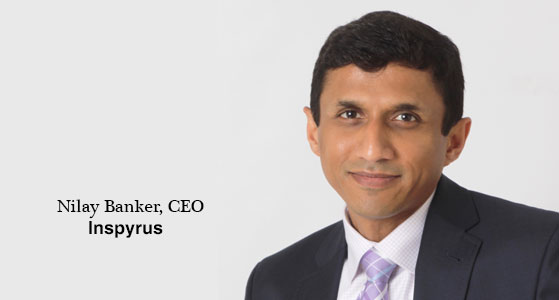
Bootstrapping Using Services to an Awesome Business Model: Inspyrus CEO Nilay Banker (Part 2)
Sramana Mitra: How long did you stay at Oracle?
Nilay Banker: I was at Oracle for 10 years. On the first day of my 11th year, I decided it was enough. I had a lot of fun. I actually had a great opportunity to work with Larry Ellison for an extended period of time. At that time, I was responsible for the development of oracle.com for our portal product. I got to meet with Larry Ellison on a weekly basis.
Sramana Mitra: What happens next? What’s the next career move?
Nilay Banker: That’s when I decided that I need to figure out how things happen on the other side, which is not the software provider but more of a software >>>
Bootstrapping Using Services to an Awesome Business Model: Inspyrus CEO Nilay Banker (Part 1)
If you haven’t already, please study our Bootstrapping Course and Investor Introductions page.
We’ve shared many Bootstrapping Using Services case studies with you here, as well as in the book on that topic. This one is particularly interesting because of the absolutely awesome business model that Nilay and his team have implemented. Read on!
Sramana Mitra: Let’s go to the beginning of your personal journey. Where are you from? Where were you born, raised, and in what kind of background?
Nilay Banker: I’m from India, born and brought up in Ahmedabad, which used to be a sleepy town when I was born and growing up. It has now blossomed into a sprawling metro. It’s one of the five largest cities in India. I had a very interesting childhood. I grew up in a family of professionals. My father is an architect. My mother is a doctor. Pretty much, every person in my family is a professional with very few people who are not doctors. I consider myself a black sheep in the >>>
Bootstrapping to $30 Million from Czech Republic: Vaclav Muchna, CEO of YSoft (Part 1)

This is a wonderful story of a Czech entrepreneur, who at 22, at a time when his country was far from ready to support entrepreneurs, struggled through immense odds and has built a global business. Read on for inspiration and excellent lessons from the trenches.
Sramana Mitra: Let’s start at the very beginning of your journey. Where are you from? Where were you born, raised, and in what kind of background?
Vaclav Muchna: I was born in Czech Republic. I studied electronics in high school, which I didn’t like. It was not possible back then that would parlay into the software industry. Because the country was not so developed, access to technologies was limited. I really didn’t like the school. I was born and raised in Prague >>>
Long Road to Product-Market Fit: Allan Wille, CEO of KlipFolio (Part 3)
Sramana Mitra: Your company seemed to have somehow found its stride, but you left. When you left that company, what did you do next?
Allan Wille: It’s a long story. I’ll put out some of the highlights. We started Klipfolio in the fall of 2001. At that time, since all I knew was the funding scenario, the idea was we’re going to go out and raise money. That’s what we did with the first company. Of course, there was no angel and VC in their right mind who was going to invest in a pre-revenue startup. That was a very good lesson for me. >>>
Long Road to Product-Market Fit: Allan Wille, CEO of KlipFolio (Part 2)
Sramana Mitra: Very typical overfunding, lack of discipline story.
Allan Wille: It really is. I don’t think we’ve seen that kind of feverish pitch to the same degree. We saw IoT and Big Data, and now we’re seeing the same thing with AI. I think there’s a lot of money being thrown at some of these companies, perhaps, prematurely.
Sramana Mitra: There’s plenty of money being thrown around, especially in this whole unicorn phenomenon. You may have seen it already since you follow my work. We’re doing this Debt by Overfunding series right now.
Allan Wille: I’m a big believer that funding at the wrong time can be a kiss of death. >>>
How to Increase Your Odds of Getting into TechStars
TechStars rejects 98% of all applications.
Is there a strategy for raising your odds of getting into TechStars?
The short answer is yes.
Watch this 1 minute 22 second video on how Nevin Shetty, CEO of Blueprint Registry, bootstrapped to validation, traction in fact, before applying.
Can You Bootstrap a Unicorn with Your Paycheck?

Let’s say you have a great idea for a startup and you have the ambition of building a billion dollar company — a Unicorn. Should you immediately quit your job and jump in with both feet?
Or should you bootstrap this idea with a paycheck to validation? May be to profitability? Is it even possible to bootstrap a Unicorn startup with a paycheck? Has anyone ever bootstrapped a Unicorn with a paycheck?
>>>
