
categories
HOT TOPICS
- The Accelerator Conundrum
- The Startup Velocity Question
- Platform as a Service
- Man and Superman
- Web 3.0 = (4C + P + VS)
- The Future: End of Capitalism
- Capitalism 2.0

Bootstrapping
Bootstrapping Using Services to $40 Million: ActiveCampaign CEO Jason VandeBoom (Part 3)
Sramana Mitra: How did you tackle that change?
Jason VandeBoom: We made the decision to make the switch. This was a big change, but we did it very slowly.
Sramana Mitra: When was this?
Jason VandeBoom: Around 2012. We started offering this recurring option and we just put it in the background and then we started to slowly surface it for our existing customer base. It was really important to me that we don’t damage our brand during this process. I was committed, for years in the future, to supporting the customers and ensuring that they’re still able to run with >>>
Bootstrapping Using Services to $40 Million: ActiveCampaign CEO Jason VandeBoom (Part 2)
Sramana Mitra: This is an entrepreneur’s journey that we are trying to capture. When you started, what did you start with?
Jason VandeBoom: I started with the bare bones of just communicating with customers. Think of a system that brings in customer names and email addresses and you can send a campaign to them. I got that out there and then a couple of people started buying it, which was surprising. Using that customer feedback, I was able to iterate and add on different features and different functionalities. >>>
Bootstrapping Using Services to $40 Million: ActiveCampaign CEO Jason VandeBoom (Part 1)
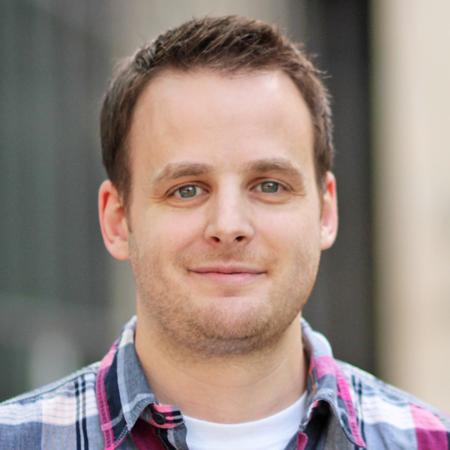
If you haven’t already, please study our Bootstrapping Course and Investor Introductions page.
Jason has built a disciplined, profitable business and scaled it to $40 million in 2017 revenue. The company was first bootstrapped using services, and later raised ~$20 million in funding.
Sramana Mitra: Let’s start at the very beginning of your journey. Where are you from? Where were you born, raised, and in what kind of background?
Jason VandeBoom: I was born and raised in a small town in Wisconsin about an hour out of Milwaukee, and started in >>>
How Startup Founders Bootstrap First, Raise Money Later in Podcasts

Writing the book Billion Dollar Unicorns a few years ago took me through the extensive process of talking to entrepreneurs who have built tech companies with valuations above a billion dollars. While there is a tremendous amount of serendipity involved in any extraordinary success story, one theme came up repeatedly: Bootstrap first, raise money later. I was particularly excited to share this nugget because it applies broadly to all classes of entrepreneurial ventures. The bottom line is that this strategy gives entrepreneurs more control over their destinies. Thus, even serial entrepreneurs often use this strategy, not just first-time entrepreneurs. Entrepreneurs, please have a listen to the following selection of inspiring and instructive 30-minute podcast interviews with the Founders of some of my favorite “bootstrap first, raise money later” success stories.
Fred Luddy, Founder, ServiceNow – Fred is Founder of one of the most successful companies in the history of enterprise software. Founded in 2003, ServiceNow is valued at over $12 billion in the public market. This is a truly wonderful discussion, marked with Fred’s warmth, humility and wit.
Bootstrapping to $10 Million: Gesture CEO Jim Alvarez (Part 5)
Sramana Mitra: As you have built this business, are you selling through the charities directly or are there channel partners? You brought up Ritz-Carlton. Ritz-Carlton holds a lot of charity events in its ballroom and so do many other luxury hotels on behalf of major charities.
Jim Alvarez: Most of our business is gained directly through the charity. We do have some channel partners and some live auctioneers throughout the nation. We talk about it internally all the time. The Hyatt Regency in Chicago does 200 auctions a year. We handle about 20 of them. We have not figured out a way to break into the venues to become a preferred vendor. It’s something on our list of things to do in 2018. We mainly have feet-on-the-street salespeople. >>>
Bootstrapping to $10 Million: Gesture CEO Jim Alvarez (Part 4)
Sramana Mitra: The two of you got this product going. How did you find your customers?
Jim Alvarez: I literally went door to door. I said, “I have this idea to help you manage the whole fundraising process during the event. Will you take a shot?” This was a pretty big pain point that charities had. A few charities took a chance and hired me. I sit on all these panels all the time.
They always ask me, “When was the aha moment?” For me it was right in the very beginning when we did an event for a big hospital. We didn’t have real-time dashboards. We didn’t know how much the charity had raised. After the event, Katie Lu from >>>
Bootstrapping to $10 Million: Gesture CEO Jim Alvarez (Part 3)
Sramana Mitra: You basically built this on your father’s farm?
Jim Alvarez: Yes.
Sramana Mitra: You turned it into a theme park kind of thing?
Jim Alvarez: Yes. This is our 8th year and we are still growing strong. It’s a really big operation. I’ve got eight people in the parking lot, three police officers, and two paramedics every night. We have upwards of a hundred kids who come and act and scare people. We have professional makeup artists. I’ve been doing that every year since 2010. >>>
Bootstrapping to $10 Million: Gesture CEO Jim Alvarez (Part 2)
Sramana Mitra: It was not e-commerce. You were getting golf clubs made in China and wholesaling them to retailers.
Jim Alvarez: Yes, I did have an e-commerce site as well but majority of our business was from wholesaling it to big golf retailers.
Sramana Mitra: How long did that go on?
Jim Alvarez: I did that for three years. Natalie Gulbis, a famous golfer played with our product on her tour. She won a tournament only once >>>
