
categories
HOT TOPICS
- The Accelerator Conundrum
- The Startup Velocity Question
- Platform as a Service
- Man and Superman
- Web 3.0 = (4C + P + VS)
- The Future: End of Capitalism
- Capitalism 2.0

Bootstrapping
$200 Million in Revenue Catering to the Bottom of the Pyramid: Issa Asad, CEO of Q Link Wireless (Part 2)
Sramana Mitra: How did you get around those limitations?
Issa Asad: I turned around and I started working with some of them. I said, “If I print my own cards and make my own brand, then I would only have to pay for usage.” I went to the carriers and I made contracts with them. I would only pay for the usage. I was able to take $10,000 and instead of only buying 500 $20 cards, I was able to buy cards for five cents and I was able to go to a lot more stores because I only had to pay for the cost of printing.
$200 Million in Revenue Catering to the Bottom of the Pyramid: Issa Asad, CEO of Q Link Wireless (Part 1)
If you haven’t already, please study our Bootstrapping Course and Investor Introductions page.
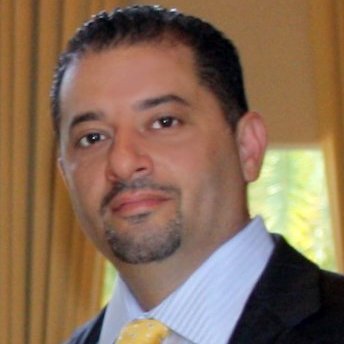
This is a fascinating journey of an entrepreneur who has bootstrapped a $200 million business catering to poor people in the United States selling cellular phones and connections, and monetizing the data through advertising. In India, Reliance Jio has a similar strategy, by the way, for those interested in bottom-of-the-pyramid businesses.
Sramana Mitra: Let’s start at the very beginning of your journey. Where are you from? Where were you born, raised, and in what kind of background?
Issa Asad: I was born and raised in the United States. I am of Palestinian descent. I am one of 12 brothers and sisters. My >>>
Bootstrapping From Romania: Marius Hanganu, CEO of Tremend (Part 2)
Sramana Mitra: How did you get the company off the ground? How were you acquiring customers? What was the genesis of the story?
Marius Hanganu: For years, it was a Sequoia-based startup. Before it came to be known as IoT, it was called Big Data. The technical challenges around it are quite amazing. It was about custom hardware. It was about the portal. Back then, it was a solution designed for Nokia. It involved some embedded pieces of work. >>>
Bootstrapping From Romania: Marius Hanganu, CEO of Tremend (Part 1)
If you haven’t already, please study our Bootstrapping Course and Investor Introductions page.
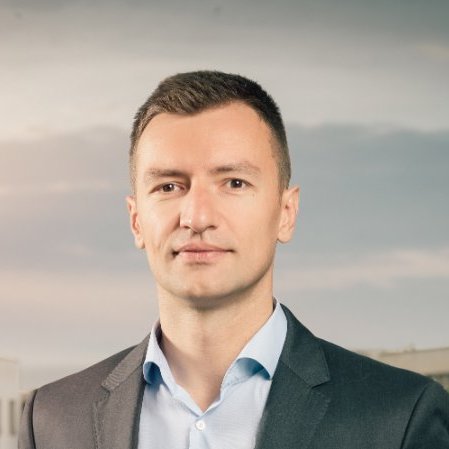
Marius has built a services company from Romania to over $5 million in revenue. Now, he is trying to bootstrap a product using the services business.
Sramana Mitra: Let’s start at the very beginning of your personal journey. Where are you from? Where were you born, raised, and in what kind of background?
Marius Hanganu: I’m from Romania. I was born near the seaside. At an early age, we moved to the capital city of >>>
Thought Leaders in Healthcare IT: Prashant Srivastava, CEO of Evive (Part 4)
Prashant Srivastava: That business would get better over time because it would learn from what works for each person and adapt whereas as we got bigger in a human capital business, the labor pool gets progressively less in quality. This would be something they would learn over time and be more effective at scale and deliver something at a very cost effective price point that would still be very comparable to what a human touch was doing at that time.
Sramana Mitra: It’s very interesting. The framing of the problem that you’ve done is interesting. I think there’s a lot to learn from that. How big a company are you today?
>>>
Thought Leaders in Healthcare IT: Prashant Srivastava, CEO of Evive (Part 3)
Sramana Mitra: How do you charge?
Prashant Srivastava: Employers invest about $50 a person a year in our technology to help get the right benefit to the right person and get value for their $10,000 investment.
Sramana Mitra: Can you look at the benefits infrastructure and comment on what are the trends that you see? What are open problems that you would steer entrepreneurs to look into?
>>>
Thought Leaders in Healthcare IT: Prashant Srivastava, CEO of Evive (Part 2)
Sramana Mitra: Can you also explain how the money flows in this situation? You’re talking about employers and employees who are using these benefits.
Prashant Srivastava: We’ve been very fortunate to build a win-win-win model. The first winner is the individual who gets to know of the right benefit that is already in their package. W tell users that they have this free service and can get a second opinion for their treatment or that they can save money by switching to a generic.
The person wins by getting the right information at the right time without keeping track of all the things that’s available to them. >>>
Thought Leaders in Healthcare IT: Prashant Srivastava, CEO of Evive (Part 1)
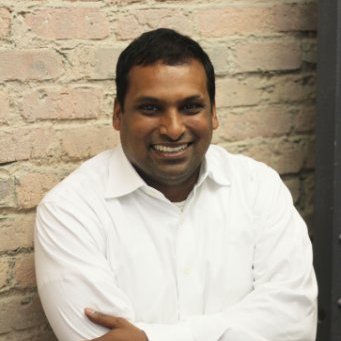
Prashant has built a very interesting benefits optimization company to over $30 million in revenue. He shares insights on how he sees the benefits optimization space is evolving with the application of predictive analytics. Very cool conversation!
Sramana Mitra: Tell us about Evive. What are you doing? What trends are you aligning with?
Prashant Srivastava: Think of Evive as Amazon meets Google meets Benefits. Like Amazon, we’re creating a recommendation for the end user based on a record on transaction or interaction that they have done in the past. Like Google, we are using ad >>>
