
categories
HOT TOPICS
- The Accelerator Conundrum
- The Startup Velocity Question
- Platform as a Service
- Man and Superman
- Web 3.0 = (4C + P + VS)
- The Future: End of Capitalism
- Capitalism 2.0

Bootstrapping
Solo Entrepreneur, Bootstrapping with a Paycheck and a Virtual Company: Cedric Savarese, CEO of FormAssembly (Part 4)
Sramana Mitra: When you started, which competitors did you see most in deals?
Cedric Saverese: When I started, there was not a lot of competitive deals. We didn’t have a sales team. It was more like, “Here’s a product. If you want it, buy it.” We didn’t have a lot of visibility into our customers’ purchasing process. We didn’t know who else they were talking to. At that time, it’s not like there were a lot of other options. The competition was developers and people building it themselves.
Sramana Mitra: Did you raise any money? >>>
Bootstrapping to Exit: TimeSlips CEO Mitch Russo (Part 4)
Mitch Russo: We started running classified ads in Legal Tech and other journals. We were tracking these very carefully. If we spend $50 on an ad and if we got six or seven orders, we knew that the ad was great. We just kept doing it every week. We knew what was working and what was not. It was nine months after the company had started.
In the first month of the company’s history, I went to a show called COMDEX. >>>
Solo Entrepreneur, Bootstrapping with a Paycheck and a Virtual Company: Cedric Savarese, CEO of FormAssembly (Part 3)
Sramana Mitra: What happens next? You’ve got this hundred or so customers. You’ve got some validation. Were you ready to quit the job?
Cedric Savarese: Yes, we moved to a slightly bigger town but were still in the same area. I was hoping to find other people to help me grow the company. At this point, just by talking to existing customers and getting their input and feedback, I had seen some demand for Salesforce. I was vaguely aware of it, but it wasn’t as huge as it is today.
Salesforce, today, is probably the largest SaaS company in the world. I had some customers who talked to me about it. I looked >>>
Bootstrapping to Exit: TimeSlips CEO Mitch Russo (Part 3)
Mitch Russo: All of a sudden, my whole business was gone. There was no longer a reason to be in business. Neil and I sat down together and we brainstormed. Where else can we use this technology that we created? We came up with the idea that there are other people who bill by their time. Why don’t we adopt the system so we can help other people like lawyers bill by the hour and send bills to their clients. We went back to work.
It was another 90 days of changing the software, modifying the documentation, and reprinting much of it. It was then that we came out with TimeSlips. TimeSlips was the product that took us from 0 to $10 million. >>>
Solo Entrepreneur, Bootstrapping with a Paycheck and a Virtual Company: Cedric Savarese, CEO of FormAssembly (Part 2)
Sramana Mitra: What was the concept? What were you trying to do with this company when you started?
Cedric Savarese: The original idea was to make the data acquisition process more accessible to stakeholders. As an IT professional, I had built quite a few forms and surveys from scratch. I was very familiar with the concept of creating those forms and creating the data. Throughout my career, I had seen people needing those tools but always being dependent on IT and developers. I wanted to build a service that would allow them to, essentially, design those forms and services themselves without needing the technical skills. >>>
Bootstrapping to Exit: TimeSlips CEO Mitch Russo (Part 2)
Mitch Russo: As soon as I had the idea that I wanted to start my own company, I really started thinking about it. I would open up The New York Times every Friday and look at the opportunities section to see if there were companies I could invest in or buy. Opportunities started to show up in my life. Some of them were silly.
What ended up happening was the house next door to me was vacant. It was, all of a sudden, occupied by a young couple. I went over to visit. I got to know this very cool guy named Neil. Neil and I had a lot in common. We both loved electronics and computers. We both played guitar, but he was a programmer. I shared with him some of my frustrations of using my new PC. This is 1985.
Solo Entrepreneur, Bootstrapping with a Paycheck and a Virtual Company: Cedric Savarese, CEO of FormAssembly (Part 1)

If you haven’t already, please study our Bootstrapping Course and Investor Introductions page.
Cedric’s story is a textbook case study of the kind of entrepreneur we want to see emerge and grow in every corner of the world: a solo entrepreneur who is a developer and a product guy capable of getting to validation while holding onto a day job. Today, Cedric has almost 50 employees spread around the world, and while it maintains a small office of fewer than 10 people in Indiana, the bulk of the company has scaled as a virtual workforce. Excellent model, and I encourage aspiring entrepreneurs to read this carefully.
Sramana Mitra: Let’s start at the very beginning of your journey. Where are you from? Where were you born, raised, and in what kind of background? >>>
Bootstrapping to Exit: TimeSlips CEO Mitch Russo (Part 1)
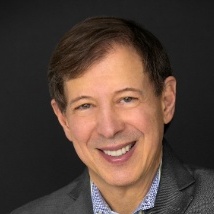
If you haven’t already, please study our Bootstrapping Course and Investor Introductions page.
Mitch tells the story of how he built TimeSlips and sold it to Sage. Very entertaining as well as instructive.
Sramana Mitra: Let’s start at the very beginning of your journey. Where are you from? Where were you born, raised, and in what kind of background?
Mitch Russo: I was born in New York. I was raised in a small community called Manhattan Beach, Brooklyn. It was there that we basically started a rock band. Using the idea of how to build an entertainment platform as a rock band in high school, I learned a lot about entrepreneurship and I learned a lot about what it takes to make money and how to promote and share content. >>>
