
categories
HOT TOPICS
- The Accelerator Conundrum
- The Startup Velocity Question
- Platform as a Service
- Man and Superman
- Web 3.0 = (4C + P + VS)
- The Future: End of Capitalism
- Capitalism 2.0

Bootstrapping
Bootstrapping from Arizona to $10 Million: Joshua Strebel, CEO of Pagely (Part 2)
Sramana Mitra: What were some of the mistakes?
Joshua Strebel: Not really knowing how to market. For designers and developers, I think it’s so easy to build a product. It’s really hard to get that product into the hands of your customers. If you recall in that time period, when Twitter and Facebook were new, the only way to get your product out there was PPC ads or the TechCrunch way if you’re taking VC.
So we just tried our best with social media to get out the door and going. It still took us a long time to dial in our value proposition in our messaging and understand how to talk to our target market. >>>
Bootstrapping from Arizona to $10 Million: Joshua Strebel, CEO of Pagely (Part 1)

We recently did a Spotlight on Entrepreneurship in Arizona. Here is one more terrific story of bootstrapping success from Arizona.
Sramana Mitra: Let’s start at the very beginning of your journey. Where are you from? Where were you born and raised? What kind of background?
Joshua Strebel: I was born in a little town in Idaho called Soda Springs. I’m the youngest of nine children. I grew up primarily in Las Vegas, Nevada and was splitting time within Salt Lake City, Utah. My parents were divorced when I was younger, so I went back and forth between households. I finished high school in Salt Lake City and ended up in Arizona where I went to college at Northern Arizona University. >>>
Best of Bootstrapping: Some Bootstrapping to Exit Case Studies
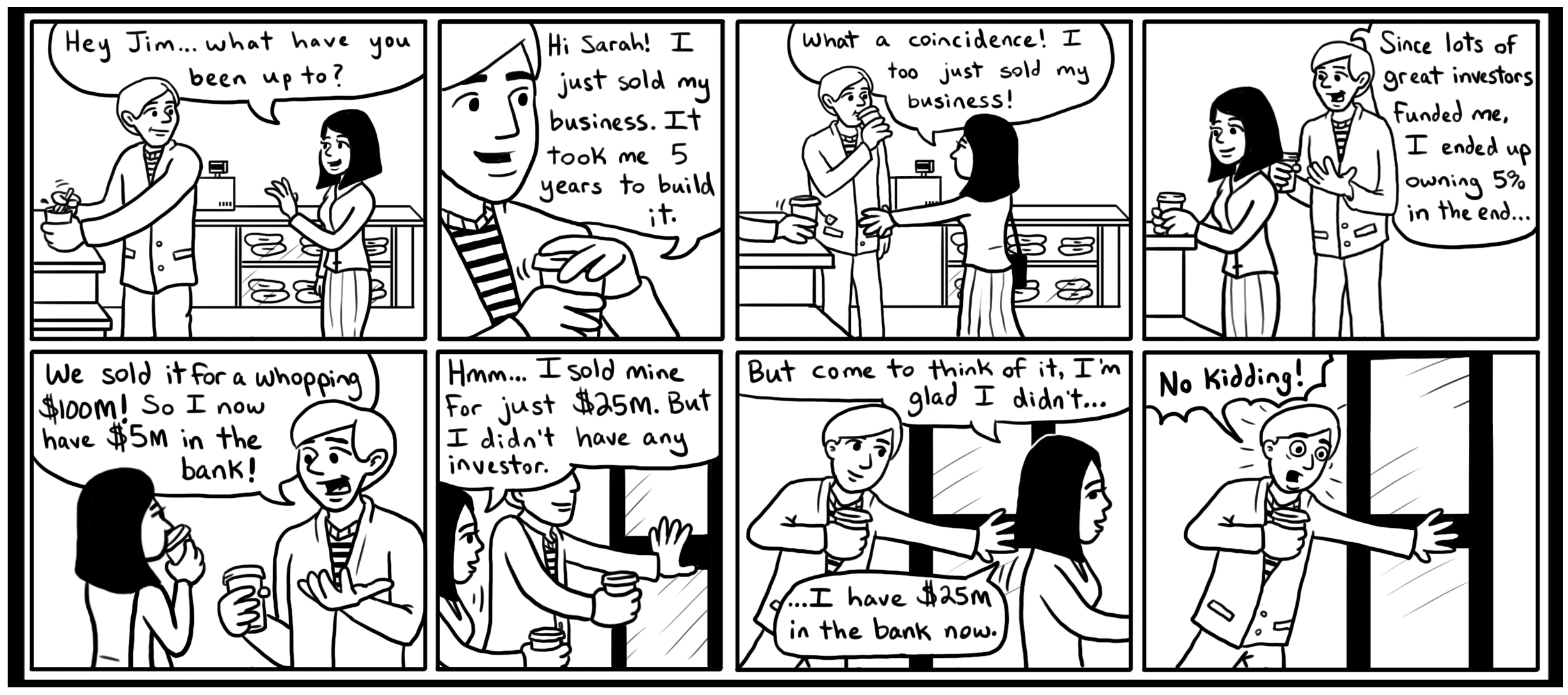
You have, presumably, read my recent article Bootstrapping to Exit. As a follow-up, let me offer you some case studies.
From Freshworks Has Acquired Nine Capital Efficient Startups:
All the nine acquisitions by Freshworks have been for undisclosed amounts. Cloud-based video collaboration platform 1CLICK, acquired in 2015, was founded in 2012 and had raised an undisclosed seed round from Blume Ventures and The Chennai Angels in 2014.
Bootstrapping from Denmark: Camilla Ley Valentin, Co-Founder of Queue-It (Part 7)
Sramana Mitra: How much money have you raised?
Camilla Ley Valentin: Original funding from the seed/incubator ended up around $500,000 to $600,000 depending on the currency rate. We bought those shares back from the fund and then we actually turned around and sold them to a number of business angels here. Then we’ve added a little bit of funding from additional individuals on top of that.
Sramana Mitra: How much? Like $5,000,000 or under $5,000,000 in total funding?
Camilla Ley Valentin: No, that’s it. It’s what I just said. We have revenue. >>>
Bootstrapping from Denmark: Camilla Ley Valentin, Co-Founder of Queue-It (Part 6)
Sramana Mitra: At what point did the US business start happening in your evolution? You started in 2010. At what time did the US business take off?
Camilla Ley Valentin: I would say two to three years into the company.
Sramana Mitra: What strategic nuance did you make to catalyze the growth of the US business?
Camilla Ley Valentin: One of our growth enablers is the queue page – the page that people see when they’re in the waiting room. This is the main enabler for us. As soon as we have a couple of customers in a certain geography, that bridges into a new country. What we’ve done, specifically to cater to the US, is we’ve decided early on that we want to keep it simple and keep all our communication in English only. That alone makes some countries less interested in what we do because everything is provided in English.
We also make it easy for American companies to contact us as we created a US phone number early on. You can do that with services online so that people can easily get in touch with us without necessarily having the ability to call internationally. Some companies have a policy where a lot of their employees can’t dial international numbers.
In order to make that easy and to signal that we are interested in the US market space, we created a US number that people could call us on even before we had an office in the US. That was one thing we did on a more practical level to cater to the US market. When we talk about e-commerce and ticketing topics on our website and on our social media, we try to do it with a US angle.
As an example, we’ll talk a lot about Black Friday, which for a number of years has been a very American phenomenon. Now it’s spread to more parts of the world but it’s mainly a US thing. We do it now in our communication and also in the outreach that we do.
Sramana Mitra: Is your business mostly inside sales or do you have bag-carrying sales people as well?
Camilla Ley Valentin: It’s inside sales.
Sramana Mitra: The US inside sales business that you do, is that out of the US or out of Denmark?
Camilla Ley Valentin: Now it’s out of the US. We opened our US office in Minneapolis in the summer of 2017.
Sramana Mitra: Very interesting. In the subsequent rounds of financing that you’ve raised, did you raise that money in Europe or did you raise some money in the US as well?
Camilla Ley Valentin: The funding was raised in Copenhagen.
Sramana Mitra: So your entire funding is from Copenhagen?
Camilla Ley Valentin: We don’t have much funding. We’ve been very capital efficient.
Bootstrapping from Denmark: Camilla Ley Valentin, Co-Founder of Queue-It (Part 5)
Sramana Mitra: What is the average size of each customer? What is an average deal size? I’m trying to understand your business. Is it a business that generates $2,000 or $200,000 per customer?
Camilla Ley Valentin: What I can say is that our customers range. An example of a small case could be a university that provides student housing and you have the student apply for that. That’s typically low price. When we protect an iPhone by a major telecom company, then you can imagine that that’s quite a different revenue scenario. Most of our customers are in the enterprise range. We can’t disclose any specific numbers but it’s mainly large enterprise businesses.
Sramana Mitra: It’s mainly an enterprise software business, right? >>>
Bootstrapping from Denmark: Camilla Ley Valentin, Co-Founder of Queue-It (Part 4)
Sramana Mitra: Was your first customer from Denmark?
Camilla Ley Valentin: Yes, it was. It was a government company and that was the first customer. It was a company called Nature Agency and they manage all the hunters in Denmark. The hunters have to register all the animals that they shoot in a complicated legacy system that’s managed through a web interface by all the hunters individually.
This was quite tricky because they all do it at the same time. The site will be unresponsive. They use Queue-it for protecting it against crashing. This was the first use case which is not one of the ones that we predicted when we did the business plan. >>>
Bootstrapping from Denmark: Camilla Ley Valentin, Co-Founder of Queue-It (Part 3)
Sramana Mitra: How do you get things off the ground?
Camilla Valentin: We made a business friend. All three of us had many years of business experience. We had some idea of what was needed. This was our first own startup. We found some good templates online that we applied to generating the business plan and started the architectural design of the solution in parallel. It was not overly comprehensive, but we covered most of the things that we found later that we needed to operate the business. >>>
