
categories
HOT TOPICS
- The Accelerator Conundrum
- The Startup Velocity Question
- Platform as a Service
- Man and Superman
- Web 3.0 = (4C + P + VS)
- The Future: End of Capitalism
- Capitalism 2.0

Bootstrapping
Best of Bootstrapping: How RainmakerForce CEO Mack Sundaram Bootstrapped Decisively to $5 Million+
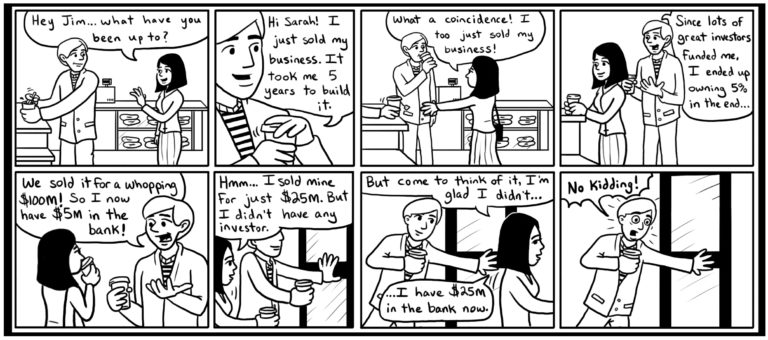
Mack has built a successful business optimized for autonomy and profitability. Excellent navigation!
Sramana Mitra: Let’s go to the very beginning of your journey. Tell us where you’re from. Where did you grow up? Where were you born and raised?
Mack Sundaram: I was born in South India in a village near Chennai. I spent some time of my childhood in Chennai and Pondicherry. I later went to school in New Delhi. Since then, I moved over to the United States where I had an opportunity to pursue a doctoral degree in Economics. That’s where the transition happened.
We’re a middle class family from India. There was a lot of support and pressure for doing well in education. I appreciate my parents for doing that, but there was always the push to find something that you really like to do. I still remember my parents telling me many times as a child that I’ve got to find something.
Bootstrapping With A Paycheck to YCombinator and $10M Series A: Ryan Chan, CEO of UpKeep (Part 4)
Sramana Mitra: What did you learn as you went through the customer base, started getting to know the customer base, understanding the customer base, and understanding who’s converting from free to premium?
What did you learn in terms of who were the ones that were really important for the business from a segment point of view?
Ryan Chan: I had this belief very early on that it is the technicians or the end users that we are building the products for. Our entire product is centered around the maintenance technician.
>>>Bootstrapping With A Paycheck to YCombinator and $10M Series A: Ryan Chan, CEO of UpKeep (Part 3)
Sramana Mitra: What did you do when that aha moment came?
Ryan Chan: I hadn’t talked to this friend of mine in almost three years. He said, “Ryan, I will give you a little bit of money if you quit your job today and start working on Upkeep.” I did.
I quit my job working as an iOS developer. Literally that same day, I sent in my two weeks’ notice. I said, “Okay. I’m going to dive and head in for this company called UpKeep.” I had basically a little bit of money saved up. But other than that, I was pretty much dirt poor living with my mom.
>>>Bootstrapping With A Paycheck to YCombinator and $10M Series A: Ryan Chan, CEO of UpKeep (Part 2)
Sramana Mitra: So you started building. Did you still have your day job? Was this on the side?
Ryan Chan: This was a hobby on the side. I did this from 6PM to 10 PM, three times a week. I love learning things. I love building. For me, it was fun. I loved doing this. I loved not only working as a process engineer that I spent four years in college learning about but also expanding my horizons and learning how to program and code.
>>>Bootstrapping With A Paycheck to YCombinator and $10M Series A: Ryan Chan, CEO of UpKeep (Part 1)
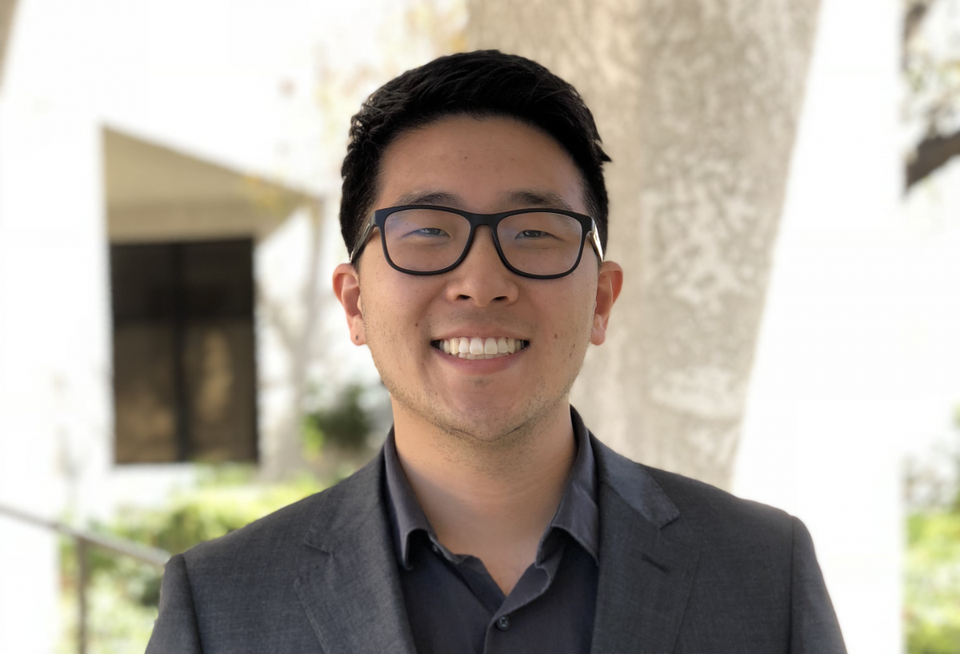
If you haven’t already, please study our Bootstrapping Course and Investor Introductions page.
Ryan took a hobby project that he bootstrapped with a paycheck and managed to get into YCombinator.
From there, he raised a $10M Series A from a top-tier Silicon Valley firm, Emergence Capital.
Excellent execution thus far.
Sramana Mitra: Let’s start from the very beginning of your journey. Where are you from? Where were you born and raised? What kind of background?
>>>Best of Bootstrapping: Death by Overfunding
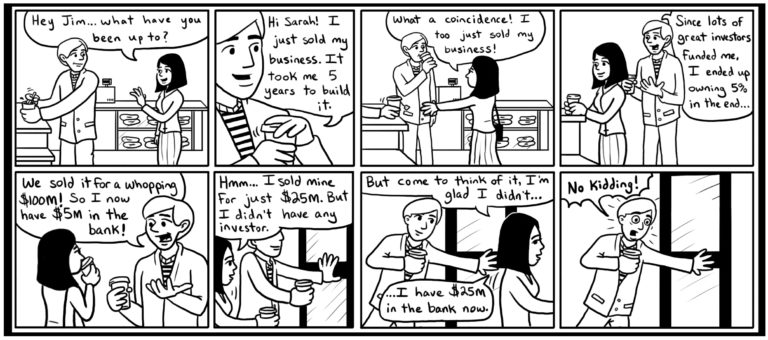
Funding = Success, right? I wish it did. But entrepreneurial tracks are littered with carcasses of dead startups that were very well funded, some to the tune of hundreds of millions. As a case in point, watch this 2 minutes 31 second video: Death By Overfunding.
Bootstrapping From a Small Town in Denmark to $12 Million: Sebastian Petersen, CEO of TrendHim (Part 5)
Sramana Mitra: I’ll tell you one thing though. You made this comment that outsourcing is bullshit. That’s absolutely false. There are a lot of ways of succeeding. You have succeeded in one way. There are a lot of other people who have succeeded in other ways.
We have case studies of virtual companies with 140 people in different companies. What is wonderful is you have built a wonderful company in a very offbeat part of the world. It’s not Copenhagen. It’s a small city in Denmark. You’ve created jobs. You’ve created excitement. That’s really fantastic.
Bootstrapping From a Small Town in Denmark to $12 Million: Sebastian Petersen, CEO of TrendHim (Part 4)
Sebastian Petersen: If you want to start an ecommerce company today, it’s very difficult to do it without a lot of funding and thinking big from the very beginning. Today, buying visitors and customers is four times the price it was 10 years ago. You have to think more creatively today.
Sramana Mitra: I’d say yes and no. The game has switched more to unique merchandise. All the generic stuff, you can buy on Amazon. You can’t really compete against Amazon.
