
categories
HOT TOPICS
- The Accelerator Conundrum
- The Startup Velocity Question
- Platform as a Service
- Man and Superman
- Web 3.0 = (4C + P + VS)
- The Future: End of Capitalism
- Capitalism 2.0

Bootstrapping
Best of Bootstrapping: Sourcing Global Ventures with Ann Winblad of Hummer Winblad
If you have been bootstrapping and think you are ready for investors, you need to learn how investors think. First, please study our free Bootstrapping course and Investor Introductions page. Then start looking for entrepreneur – investor fit. Today I introduce you to Ann Winblad.
Ann Winblad, Co-founder and Managing Director of Hummer Winblad Venture Partners, is one of the most successful women VCs in our industry, and as I mentioned in my introduction, I have never heard her whining about bias against women. One of the most encouraging things she discussed when we spoke in 2014 is how her firm is sourcing interesting ventures from all over the world, not just Silicon Valley. Mulesoft, one of their hot portfolio companies, had its CEO based in Malta, originally!
You can listen to the podcast interview here and the entire roundtable program here:
Surviving Covid with a Bootstrapped Venture: Kristi Herold, CEO of JAM (Part 4)
Sramana Mitra: What was your revenue in 2016 when you decided to switch gears?
Kristi Herold: We were doing $6.5 million in revenue.
Sramana Mitra: That is substantial for a word-of-mouth business.
>>>Best of Bootstrapping: Founder Mark Organ Bootstrapped Eloqua and Crowdfunded Influitive
If you haven’t already, please study our Bootstrapping Course and Investor Introductions page.
Raised in an entrepreneurial home, Founder CEO Mark Organ was encouraged to become a doctor or professor and delighted his parents when he went to Northwestern to earn his PhD in neurosciences. In no time he was incubating Eloqua from within Bain and Company during the Internet boom years. This is a unique and rare story of bootstrapping, crowdfunding, struggles and ultimate success.
Surviving Covid with a Bootstrapped Venture: Kristi Herold, CEO of JAM (Part 3)
Sramana Mitra: Give me the highlights of your strategy in growing this thing to that level. How long did it take you to achieve $1 million in revenue?
Kristi Herold: It took me 8 years to get to $1 million in revenue.
Sramana Mitra: In 1996, you started the business and then in 2004, you were up to $1 million in revenue?
>>>Best of Bootstrapping: Discussing Trends With Yanev Suissa, SineWave Ventures
If you have been bootstrapping and think you are ready for investors, you need to learn how investors think. First, please study our free Bootstrapping course and Investor Introductions page. Then start looking for entrepreneur – investor fit. Today I introduce you to Yanev Suissal.
Yanev Suissa is General Partner at SineWave Ventures out of Washington DC and Silicon Valley. The firm invests alongside some major firms like Andreessen Horowitz and NEA. Yanev talks about how they invest, and also the trends he sees. You can listen to the podcast interview here.
Sramana Mitra: So tell us about SineWave Ventures. What is the focus of your firm? How big is the fund? What size investments do you make?
Yanev Suissa: SineWave mainly works with enterprise technology startups similar to the ones in the 1Mby1M network. We look for commercial technologies where we can help them as a VC firm in navigating both commercial and public sector partnerships.
Surviving Covid with a Bootstrapped Venture: Kristi Herold, CEO of JAM (Part 2)
Kristi Herold: I called everyone in my address book. I would also say, “If you know anyone that you think might be interested, will you send me their contact info?” I had friends faxing me their address books and then I would go through their address books and call everyone and tell them my idea. I kept doing that until I had about 800 names on my list.
I wanted to send out a paper newsletter. I couldn’t afford enough stamps for 800 newsletters. I could only afford 400. Luckily, my then boyfriend who was a pro-cyclist became my business partner and he ended up delivering 400 of those newsletters.
>>>Surviving Covid with a Bootstrapped Venture: Kristi Herold, CEO of JAM (Part 1)
If you haven’t already, please study our free Bootstrapping course and the Investor Introductions page.
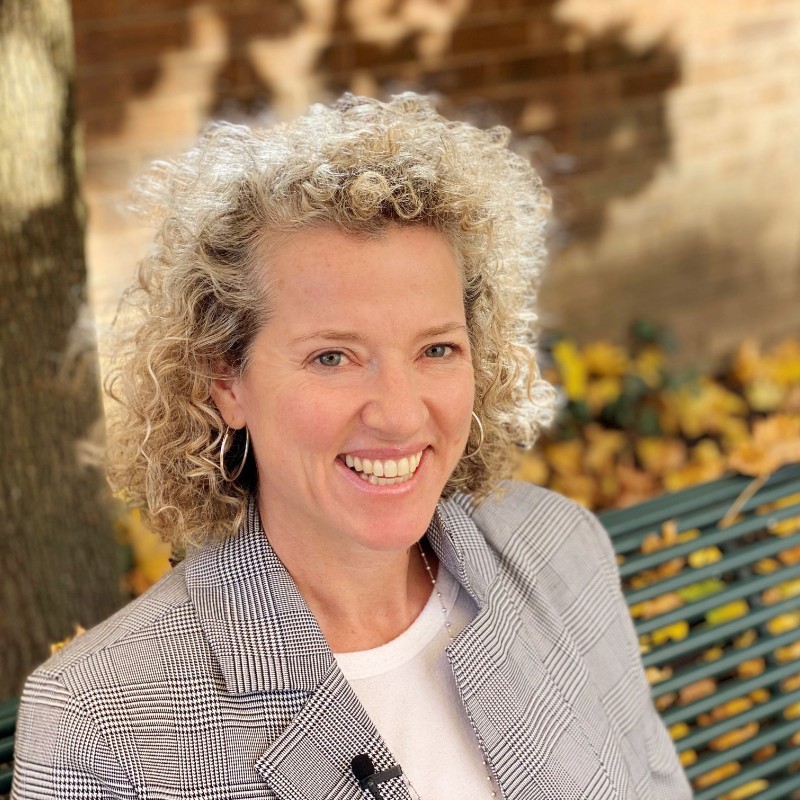
Kristi built a thriving bootstrapped business over twenty years until Covid hit. Read how she is surviving Covid.
Sramana Mitra: Let’s start at the beginning of your journey. Where are you from? Where were you born and raised? What kind of background did you have?
>>>Best of Bootstrapping: Founder Bootstrapped Category Leading E-commerce Company Shoplet
If you haven’t already, please study our Bootstrapping Course and Investor Introductions page.
The Shoplet case study, as shared by Founder CEO Tony Ellison in 2014, is interesting because it illustrates how an entrepreneur has bootstrapped a category leading e-commerce venture by trading off margins in favor of minimizing logistical challenges.
Sramana: Tony, let’s start with the beginning of your story. Where were you born and raised? What is the backstory of the Shoplet story?
Tony Ellison: I was born and raised in Israel. I came over to the US to study and I stayed here. The Shoplet story began as an accident out of my research. I have 7 years of experience on Wall Street and I realized from my time there that more and more companies were migrating to online e-commerce. I also realized that the Internet offered a level playing field for small and medium sized businesses, allowing them to compete with big businesses. That is where my journey began.
In 1994, I looked at different industries and wound up in the office product industry because of the sheer size of the market and the fact that it was a commodity-driven industry. There has not been a substantial change in it over the past 100 years and it was ready for a transition to an online platform.
