
categories
HOT TOPICS
- The Accelerator Conundrum
- The Startup Velocity Question
- Platform as a Service
- Man and Superman
- Web 3.0 = (4C + P + VS)
- The Future: End of Capitalism
- Capitalism 2.0

Bootstrapping
Bootstrap First, Raise Money Later: Ben Hodson, CEO of JobNimbus (Part 5)
Sramana Mitra: What period of time did you do that mode of existence of doing consulting to pay down your debt?
Ben Hodson: That was from about 2008 to 2012. During that time, I started a bunch of smaller companies that tried different things, but I made most of my money off of consulting. None of them went anyplace. They were ideas that weren’t to fruition. I think the big mistake that I made there was trying to run three or four different things at the same time.
>>>Bootstrap First, Raise Money Later: Ben Hodson, CEO of JobNimbus (Part 4)
Sramana Mitra: Let’s go back to the 2004 timeframe when you were leaving this company. When you left, what did you do?
Ben Hodson: I had the entrepreneur bug. I was saying, “Oh my gosh, I really want to do another company, but I need to find a problem that I believe in and care about.” I was doing some consulting while figuring things out. At the time, eBay was popular. My wife was really into eBay. I started looking at eBay and there were several times that fraud had happened. PayPal didn’t really solve it.
>>>Bootstrap First, Raise Money Later: Ben Hodson, CEO of JobNimbus (Part 3)
Sramana Mitra: Did you get the funding first before building the product or vice versa?
Ben Hodson: We built the product for the funding. It would not have gotten the funding if it weren’t for the product and the first customer. We had been raising money for a year and a half. I have probably done 30 to 40 pitches to venture capitalists and angels. No one was biting. They would say, “It sounds interesting, but I don’t understand encryption. Call me when you guys have something going on. I will be really interested.”
As soon as we closed that Verizon deal, that was when everything started to heat up. Everyone wanted to talk to us. It was easy to get meetings and we got much for favorable terms. We were able to pull a deal together about six months later.
>>>Bootstrap First, Raise Money Later: Ben Hodson, CEO of JobNimbus (Part 2)
Ben Hodson: Later, that code ended up evolving into something that could auto-rekey those servers without ever having any downtime. We dubbed it Encryption Management. We hadn’t come up with all of that at the time when we were doing this business plan competition, but that was the seed of that idea. The business plan competition was really fun. You would go into a giant auditorium at the University of Washington. You would have a little booth. They gave a bunch of people Monopoly money that was given by business leaders in the area. These were people from well-known companies. I remember the CTO of Chase bank was there. High-level people from Microsoft were there. They would walk around and you would get to your elevator pitch.
>>>177th 1Mby1M Entrepreneurship Podcast with James Cramer, Zimit
James Cramer, Founder and Co-CEO at Zimit, shares his journey of bootstrapping using services to $10 million in revenue. Among the biases of the Venture Capital industry that need to be categorically ignored, Bootstrapping Using Services happens to be on the top of the list. This is a fantastic textbook case study.
Podcast: Play in new window | Download
Subscribe: Apple Podcasts | TuneIn | RSS
Best of Bootstrapping: Bootstrapped Credit Card Processing Business Payscape

If you haven’t already, please study our Bootstrapping Course and Investor Introductions page.
Payscape CEO Adam Bloomston had scaled a very simple business diligently and systematically when we spoke in 2014. Have a look at how. Payscape was acquired by Payroc in 2019.
Sramana Mitra: I want to go to the very beginning of your personal story, where are you from, where were you born, raised, and what kind of background?
Adam Bloomston: I grew up in Birmingham, Alabama and studied at the University of Alabama. I moved to Atlanta, Georgia in 2000.
Bootstrap First, Raise Money Later: Ben Hodson, CEO of JobNimbus (Part 1)
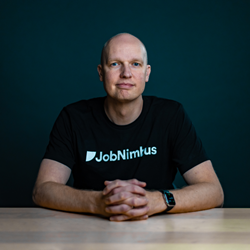
Ben is a serial entrepreneur with a long experience in bootstrapping and fundraising. Read on to see how he has navigated his journey.
Sramana Mitra: Let’s start at the very beginning of your journey. Where are you from? Where were you born and raised? What kind of background did you have?
>>>Best of Bootstrapping: Bootstrapped from London, Went Public and Scaled to $450M
If you haven’t already, please study our Bootstrapping Course and Investor Introductions page.
When we spoke with Founder Mark Lancaster in 2014, very few technology companies had been built from the UK. ARM and Autonomy come to mind. Here’s the story of a company called SDL.
Sramana: Mark, let’s start with the beginning of your personal story. Where are you from? What is the backstory of the SDL story?
Mark Lancaster: I was born and raised in the UK. I studied engineering and computer science at the university. I started my career as a software design engineer at Satchwell Control Systems and Lotus Development Company. Fairly early on, one of the biggest issues I saw at companies was the need for coders or programmers to engage effectively with management.
