
categories
HOT TOPICS
- The Accelerator Conundrum
- The Startup Velocity Question
- Platform as a Service
- Man and Superman
- Web 3.0 = (4C + P + VS)
- The Future: End of Capitalism
- Capitalism 2.0

12 Udemy Courses with Entrepreneurship Case Studies

Entrepreneurship is not a career. It is a way of life.
For me, this journey began as a graduate student at MIT in 1994. The world watched Netscape go public that spring, and the Internet swept over us like a virus. As I wrote my Masters thesis, I also wrote my first business plan. We were, as a generation, shaping the Internet during those early years, and, my degree in hand, I was ready to jump into the unknown – from then on really, I have been jumping into unknowns at every turn.
>>>Featured Videos
12 Udemy Courses on How To Build a Startup While Working Full Time

Most adult professionals have jobs, families, and other responsibilities. People working in the tech industry have big salaries to forego if they want to start a company.
>>>8 Udemy Courses on How To Build a Machine Learning Startup

There are over six million students enrolled in Machine Learning courses on Udemy. The most daring will try to start their own businesses.
>>>Video FAQs
Can 1M/1M Help Me Raise Money?
How Does 1M/1M Democratize Entrepreneurship Education?
How Does 1M/1M Democratize Management Consulting?
When Is The Right Time To Join 1M/1M?
Can 1M/1M Help Me With Business Development?
Can 1M/1M Help Me With Market Sizing?
Can 1M/1M Help Me Validate My Product?
Will I Have Private 1-on-1 Sessions In 1M/1M?
How Does 1M/1M Help Entrepreneurs Connect With Silicon Valley?
Mentoring or Consulting?
Why Does 1M/1M Charge $1000 a Year?
Why Does 1M/1M Partner With Local Organizations?
Why Don\’t Mentoring Networks Work?
Why Is It Important To Study With 1M/1M Now?
Dan Stewart Story
Vikrant Mathur Story
Entrepreneur Couple Bootstrapping an E-Commerce Business Using a Paycheck and Crowdfunding: Nomad Lane Co-Founders Kish Vasnani and Vanessa Jeswani (Part 1)


If you haven’t already, please study our Bootstrapping Course and Investor Introductions page.
Kish and Vanessa bootstrapped to multi-million dollars in revenue selling a private label product before quitting their job. In this story, you also get to see the nuances of running successful (and not so successful) crowdfunding campaigns. Very interesting journey and insights.
>>>Putting the Freshworks IPO in Context (Part 1)
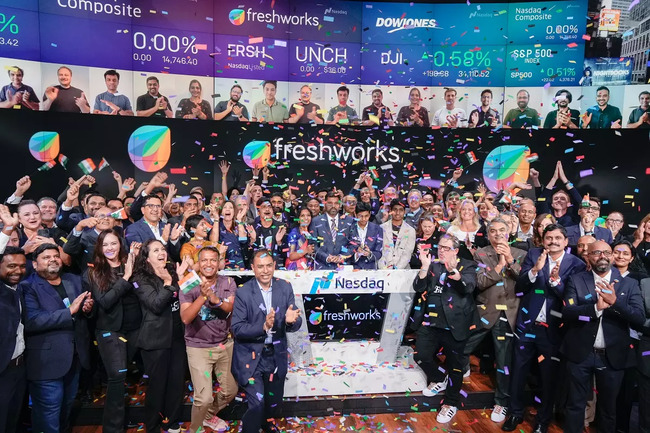
On Nov 13, 2009, I wrote an article in my Forbes column titled India’s Next Celebrities. It was a year after the financial crisis.
Never mind the recession. In India, entrepreneurial energy has continued to grow. It still exists only in small pockets. And the sophistication of the entrepreneurial ecosystem has a long way to go before it can resemble anything like Silicon Valley–or even Israel. In this evolution, the Indian media has an important role to play.
At the time, I was busy trying to turn Sridhar Vembu, CEO of Zoho, into a celebrity. Hardly anyone had heard of HIM until my 2007 profile.
I had not yet launched 1Mby1M.
Girish Mathrubootham, avid fan of celebrity Tamil film star Rajnikant, had not yet launched Freshdesk (now Freshworks). He was still working at Zoho, under Sridhar’s tutelage.
Both of those events happened in 2010.
>>>Roundtable Recap: September 23 – Spotlight on Exit Strategy
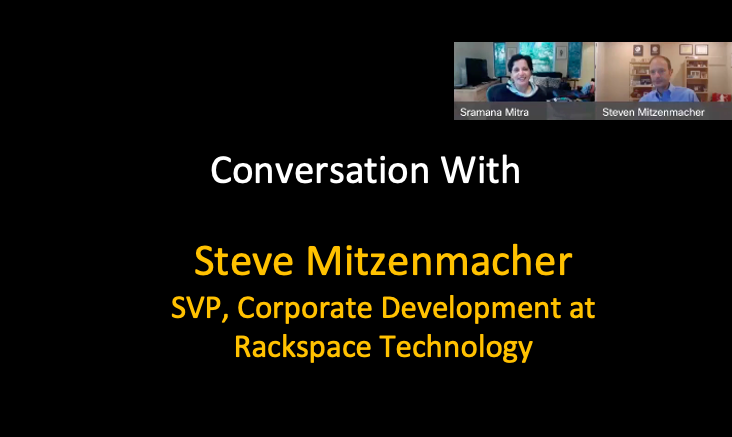
During this week’s roundtable, we had as our guest Steven Mitzenmacher, SVP of Corporate Development at Rackspace Technology, to discuss the Buy-side thought process on Exit Strategy.
i3systems
For the entrepreneur pitch, we had Piyusa Ranjan Prusti from Mumbai, India, pitch i3systems. The company has 15 paying customers, but needs a strategy to increase velocity.
You can listen to the recording of this roundtable here:
5 Udemy Courses on How to do a Startup as a Non-technical Founder

Ever since the 2008 financial crisis, intellectuals have had to ask themselves, ‘Does Capitalism Still Work?’ I have explored this question for several years now, beginning with a seminal column I wrote for Forbes: Capitalism’s Fundamental Flaw. Two particular problems stand out.
>>>8 Validated Enterprise Software Startup Ideas for the DataStax-1Mby1M Challenge

The DataStax-1Mby1M Fall 2021 Startup Challenge launched on September 9th. Here is the kick-off video with Chet Kapoor, CEO of DataStax, Ed Anuff, Chief Product Officer of DataStax discussing the program with me.
DataStax has significant enterprise customers that are using their Apache Cassandra-based database products to solve real world problems. They are putting these use cases out in the public domain for startups to build companies around. DataStax would be helping the startups on the technical and customer acquisition side, and 1Mby1M would be helping the startups on the positioning, mentoring, and financing side. $10,000 of grant money is also included in this challenge.
Let’s look at some of the use cases. They’re all related to the increasingly digital nature of most businesses. The ever-growing use of IoT is a good example. Verticals that manage many assets need real-time access to data for visibility and decision purposes. Organizations interacting directly with customers need to ensure they are engaged with the right customer, and they have a digital twin of the customer to drive services and experiences. These experiences and services are entirely digital and depend on real-time data access. Finally, organizations drive their intelligence and decisions by understanding and leveraging the increasingly vast amount of data they manage. Here are more details.
