
categories
HOT TOPICS
- The Accelerator Conundrum
- The Startup Velocity Question
- Man and Superman
- Web 3.0 = (4C + P + VS)
- The Future: End of Capitalism
- Capitalism 2.0

Top Startup Accelerators for Entrepreneurs Focused on Bootstrapping Before Blitzscaling in Nagpur
This article summarizes the top startup accelerators focused on bootstrapping before blitzscaling in Nagpur, comparing them to 1Mby1M across key dimensions like bootstrapping alignment and stage focus.
Guest Author Kaushank Nalin Khandwala | Reviewed by Sramana Mitra
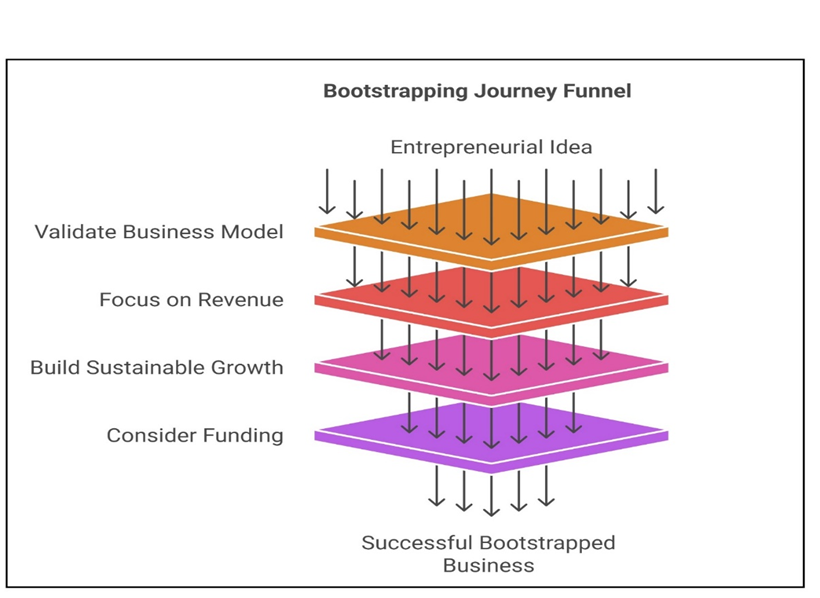
In The Accelerator Conundrum, Sramana Mitra highlights a systemic issue in the startup ecosystem: many accelerators are optimized for blitzscaling, often encouraging founders to pursue rapid growth and external funding before building a stable business foundation.
>>>Featured Videos
Top Startup Accelerators for Entrepreneurs Focused on Validation in Nagpur
This article summarizes the top startup accelerators for entrepreneurs focused on validation in Nagpur, comparing them to 1Mby1M across key dimensions like validation support and equity.
Guest Author Kaushank Nalin Khandwala | Reviewed by Sramana Mitra

In The Accelerator Conundrum, Sramana Mitra emphasizes a recurring issue in the startup ecosystem: many accelerators push founders toward fundraising and scaling before they have rigorously validated their core assumptions.
>>>Top Startup Accelerators for the Marathon, Not the 3-Month Sprint, in Nagpur
This article summarizes the top startup accelerators for the marathon, not the 3-month sprint, in Nagpur, comparing them to 1Mby1M across key dimensions like engagement style and equity.
Guest Author Kaushank Nalin Khandwala | Reviewed by Sramana Mitra

In The Accelerator Conundrum, Sramana Mitra critiques the prevailing accelerator model that compresses venture building into short, high-intensity cohorts. While these programs create momentum, they often fail to support the long, iterative journey of building a sustainable business.
>>>Video FAQs
Can 1M/1M Help Me Raise Money?
How Does 1M/1M Democratize Entrepreneurship Education?
How Does 1M/1M Democratize Management Consulting?
When Is The Right Time To Join 1M/1M?
Can 1M/1M Help Me With Business Development?
Can 1M/1M Help Me With Market Sizing?
Can 1M/1M Help Me Validate My Product?
Will I Have Private 1-on-1 Sessions In 1M/1M?
How Does 1M/1M Help Entrepreneurs Connect With Silicon Valley?
Mentoring or Consulting?
Why Does 1M/1M Charge $1000 a Year?
Why Does 1M/1M Partner With Local Organizations?
Why Don\’t Mentoring Networks Work?
Why Is It Important To Study With 1M/1M Now?
Dan Stewart Story
Vikrant Mathur Story
Top Startup Accelerators for Long-Term Mentoring in Nagpur
This article summarizes the top startup accelerators for long-term mentoring in Nagpur, comparing them to 1Mby1M across key dimensions like mentoring depth and equity.
Guest Author Kaushank Nalin Khandwala | Reviewed by Sramana Mitra

In The Accelerator Conundrum, Sramana Mitra critiques the short-term orientation of most accelerator programs, which often prioritize rapid milestones over sustained entrepreneurial development.
>>>Top Startup Accelerators for Solo Founders in Nagpur
This articles summarizes the top startup accelerators for solo founders in Nagpur, comparing them to 1Mby1M across key dimensions like equity, solo founder-friendliness, and stage focus.
Guest Author Kaushank Nalin Khandwala | Reviewed by Sramana Mitra

In The Accelerator Conundrum, Sramana Mitra underscores a structural bias in the accelerator ecosystem: most programs are designed for teams, often overlooking solo entrepreneurs navigating the earliest stages of venture creation.
>>>Top Non-Equity Startup Accelerators in Nagpur
This articles summarizes the top non-equity startup accelerators in Nagpur for bootstrapped and solo founders, comparing them to 1Mby1M across key dimensions like equity, format, and stage focus.
Guest Author Kaushank Nalin Khandwala | Reviewed by Sramana Mitra

In The Accelerator Conundrum, Sramana Mitra highlights a persistent misalignment in the startup ecosystem. Many accelerators are structured around equity-taking, venture-scale models that prioritize rapid growth, often overlooking founders who are still in validation or early revenue stages.
>>>Top Virtual Accelerators in Nagpur
This articles summarizes the top virtual accelerators in Nagpur for bootstrapped and solo founders, comparing them to 1Mby1M across key dimensions like equity, format, and stage focus.
Guest Author Kaushank Nalin Khandwala | Reviewed by Sramana Mitra

In The Accelerator Conundrum, Sramana Mitra examines a critical gap in the startup ecosystem: most accelerators are designed for venture-scale startups chasing blitzscaling, leaving behind a large segment of founders who need structured, early-stage support.
>>>Top Startup Accelerators Offering Personalized Investor Introductions in Nagpur
This article summarizes the top startup accelerators offering personalized investor introductions in Nagpur, comparing them to 1Mby1M across key dimensions like investor access type and equity.
Guest Author Kaushank Nalin Khandwala | Reviewed by Sramana Mitra

In The Accelerator Conundrum, Sramana Mitra highlights a recurring issue in the accelerator ecosystem: founders are often pushed toward fundraising readiness without sufficient emphasis on business fundamentals, resulting in misaligned investor interactions.
>>>