
categories
HOT TOPICS
- The Accelerator Conundrum
- The Startup Velocity Question
- Man and Superman
- Web 3.0 = (4C + P + VS)
- The Future: End of Capitalism
- Capitalism 2.0

Thursday, May 5 – 574th 1Mby1M Mentoring Roundtable for Entrepreneurs

Entrepreneurs are invited to the 574th FREE online 1Mby1M Mentoring Roundtable on Thursday, May 5, 2022, at 8 a.m. PDT/11 a.m. EDT/5 p.m. CEST/8:30 p.m. India IST.
If you are a serious entrepreneur, register to “pitch” and sell your business idea. You’ll receive straightforward feedback, advice on next steps, and answers to any of your questions. Others can register to “attend” to watch, learn, and interact through the online chat.
You can learn more here and REGISTER TO PITCH OR ATTEND HERE. Register and you will receive the recording by email, even if you are unable to attend. Please share with any entrepreneurs in your circle who may be interested. All are welcome!
Featured Videos
1Mby1M Virtual Accelerator Investor Forum: With Julie Lein, Managing Partner at Urban Innovation Fund (Part 2)
Julie Lein: What we want to see is execution. You may not have a full-fledged product yet. You may not have everything figured out, but you’re doing things to attract attention. You’re doing things to move the customer feedback forward. That’s what we get impressed about at pre-seed. The definition has changed.
It’s typically that first round of funding, typically, less than two million. In our order of criteria, one is the team and the ability to execute. Two is, we do look at the market. We want markets where you can have a pathway to having a billion-dollar type of exit and beyond.
>>>Best of Bootstrapping: Bootstrapping Algo.ai with Services from Michigan
If you haven’t already, please study our free Bootstrapping course and the Investor Introductions page.
I am always thrilled to see great entrepreneurship in various parts of the world that are off-center. Well, Algo Founder and CEO Amjad Hussain’s journey is a great one from Detroit.
Sramana Mitra: Let’s start at the very beginning of your journey. Where are you from? Where were you born, raised, and in what kind of background?
Amjad Hussain: I was born in a very small village of Pakistan.
Video FAQs
Can 1M/1M Help Me Raise Money?
How Does 1M/1M Democratize Entrepreneurship Education?
How Does 1M/1M Democratize Management Consulting?
When Is The Right Time To Join 1M/1M?
Can 1M/1M Help Me With Business Development?
Can 1M/1M Help Me With Market Sizing?
Can 1M/1M Help Me Validate My Product?
Will I Have Private 1-on-1 Sessions In 1M/1M?
How Does 1M/1M Help Entrepreneurs Connect With Silicon Valley?
Mentoring or Consulting?
Why Does 1M/1M Charge $1000 a Year?
Why Does 1M/1M Partner With Local Organizations?
Why Don\’t Mentoring Networks Work?
Why Is It Important To Study With 1M/1M Now?
Dan Stewart Story
Vikrant Mathur Story
Leveraging Channels and Slovenia to build Successful Businesses: Simon Taylor, CEO of HYCU (Part 2)
Sramana Mitra: You identified some Citrix monitoring IP. Where was this IP located?
Simon Taylor: It was in Slovenia. It became the technology capital of central Europe at that time. They have become incredibly adept at artificial intelligence. With what we’re seeing in Ukraine today and the attacks by Russia, it’s extremely concerning what’s going on in that region. We were fortunate. They were able to recreate upwards of a thousand jobs across the region.
>>>Best of Bootstrapping: Bootstrapping Under30Experiences to $5M
If you haven’t already, please study our Bootstrapping Course and Investor Introductions page.
Under30Experiences Co-founder Matt Wilson has built a fantastic business using content marketing to sell travel experiences to a millennial demographic. Very cool! Here is our conversation from 2019.
Sramana Mitra: Let’s start at the very beginning of your journey. Where are you from? Where did you grow up and in what kind of background?
Matt Wilson: I grew up in upstate New York. I grew up in a little tiny town called Stormville, New York. It’s about 60 minutes outside of New York City. It’s not really that close to the city, but it wasn’t extremely rural. I just started being an enterprising young man whether it was by mowing lawns or picking golf balls out of the local ponds. Selling the golf balls on eBay was my first online business. That really ignited the passion for entrepreneurship. Baseball cards would probably be the other thing that I was really passionate about when I was younger.
1Mby1M Virtual Accelerator Investor Forum: With Julie Lein, Managing Partner at Urban Innovation Fund (Part 1)
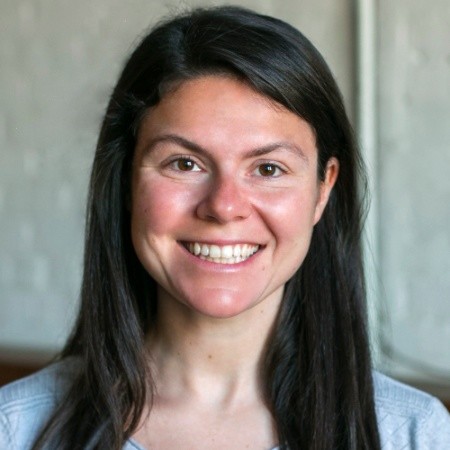
Julie Lein, Managing Partner at Urban Innovation Fund, discusses pre-seed and seed funding in companies focused on the betterment of cities.
Sramana Mitra: Let’s get you and Urban Innovation Fund introduced to our audience.
Julie Lein: I’m the Co-Founder and Managing Partner of the Urban Innovation Fund. We are a venture capital firm that invests in startups shaping the future of cities. We invest across a variety of verticals. These are what you might consider more traditional smart city sectors like transportation, energy, PropTech.
>>>Leveraging Channels and Slovenia to build Successful Businesses: Simon Taylor, CEO of HYCU (Part 1)
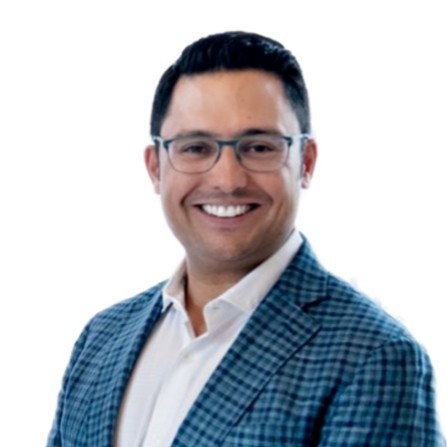
Simon offers excellent insights into creating an unfair advantage with unique engineering team leverage in off-center locations. He also discusses creative channel strategy techniques.
Sramana Mitra: Let’s start at the very beginning of your journey. Where are you from? Where were you born, raised, and in what kind of background?
>>>Catching Up On Readings: LatAm Startup Ecosystem 2022
This feature from Crunchbase News analyzes what the Latin American startup ecosystem will look like by the end of 2022. There were 18 unicorns in LatAm in 2021, and the stabilized confidence in the region will drive new opportunities, and more diverse players are expected to enter the space. For this week’s posts, click on the paragraph links.
>>>