
categories
HOT TOPICS
- The Accelerator Conundrum
- The Startup Velocity Question
- Platform as a Service
- Man and Superman
- Web 3.0 = (4C + P + VS)
- The Future: End of Capitalism
- Capitalism 2.0

Thought Leaders in Cyber Security: Elisity CEO James Winebrenner (Part 2)
James Winebrenner: The second principle was the ability to do segmentation across the network instead of sharing one network. There was a significant amount of interest in segmenting traffic by use case. In retail, we saw a lot of need for POS traffic to be segmented from real-time communications type traffic.
We saw the advent of a lot of third-party connectivity whether that was marketing organizations doing digital signage or contractors doing video surveillance. We didn’t start out focusing on those security use cases, but we saw them become a significant byproduct of the VSTN technology.
Sramana Mitra: Was that a consulting services company?
>>>Featured Videos
Thought Leaders in Mobile and Social: Clickatell CEO Pieter de Villiers from South Africa (Part 1)

This is a terrific story of a South African team of entrepreneurs who have provided tremendous thought leadership in mobile chat commerce and have built a great company.
Along the way, they raised money from Sequoia Capital and have achieved (unverified) Unicorn status. The beauty is that this is not a glorified Unicorn built out of financial engineering but one that is firmly rooted in strong revenue growth.
>>>Thought Leaders in Cyber Security: Elisity CEO James Winebrenner (Part 1)

For those of you following our coverage of techies transitioning into successful entrepreneurs, here is another terrific case study.
Cyber Security is probably the tech industry’s more prolific segment. James discusses a specific approach to network security that has become increasingly more contemporary and relevant: segment-based policy.
Sramana Mitra: Let’s start by introducing our audience to a bit of your background as well as Elisity.
>>>Video FAQs
Can 1M/1M Help Me Raise Money?
How Does 1M/1M Democratize Entrepreneurship Education?
How Does 1M/1M Democratize Management Consulting?
When Is The Right Time To Join 1M/1M?
Can 1M/1M Help Me With Business Development?
Can 1M/1M Help Me With Market Sizing?
Can 1M/1M Help Me Validate My Product?
Will I Have Private 1-on-1 Sessions In 1M/1M?
How Does 1M/1M Help Entrepreneurs Connect With Silicon Valley?
Mentoring or Consulting?
Why Does 1M/1M Charge $1000 a Year?
Why Does 1M/1M Partner With Local Organizations?
Why Don\’t Mentoring Networks Work?
Why Is It Important To Study With 1M/1M Now?
Dan Stewart Story
Vikrant Mathur Story
Catching Up On Readings: Why Tech Stocks are Down
This feature from the Time magazine looks at why tech stocks are falling and what it means for the economy. For this week’s posts, click on the paragraph links.
>>>1Mby1M Virtual Accelerator Investor Forum: With Krishnakumar Natarajan, Co-Founder of Mela Ventures (Part 3)
Sramana Mitra: The ecosystem has come together for sure. I’m a big fan of capital-efficient startups and fundamentals-oriented startups. In January, we analyzed 20 Indian unicorns. I didn’t consider two as overvalued. The rest were dramatically overvalued. That means that people are investing in the future and expecting that the valuation is going to get back-filled, which is the way unicorn investing often happens.
>>>1Mby1M Virtual Accelerator Investor Forum: With Krishnakumar Natarajan, Co-Founder of Mela Ventures (Part 2)
Sramana Mitra: Does your thesis also translate into FinTech? FinTech has a big B2B element to it and there is a lot going on. India is a very big FinTech market.
Krishnakumar Natarajan: You’re absolutely right. Fintech is becoming a very large market in India. The public digital infrastructure to support FinTech in India is also well-established starting with the identity management system to the UPI which is peer-to-peer payment almost with no fee.
>>>Best of Bootstrapping: Startup Deaths by Overfunding
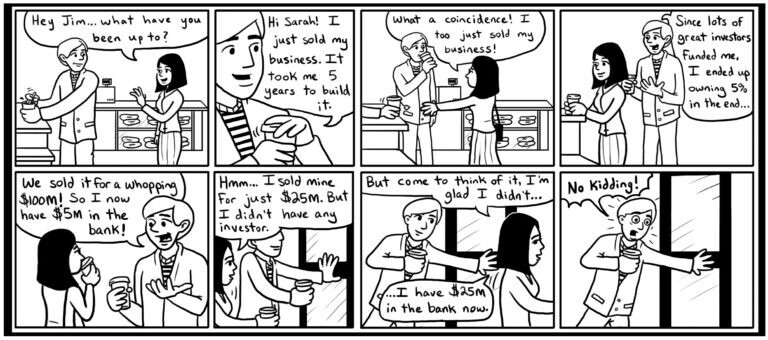
If you haven’t already, please study our Bootstrapping Course and Investor Introductions page.
Funding = Success, right? I wish it did. But entrepreneurial tracks are littered with carcasses of dead startups that were very well funded, some to the tune of hundreds of millions. As a case in point, watch this 2 minutes 31 second video: Death By Overfunding.
If you prefer to read instead of watching, read the Nasty Gal story here:
1Mby1M Virtual Accelerator Investor Forum: With Krishnakumar Natarajan, Co-Founder of Mela Ventures (Part 1)
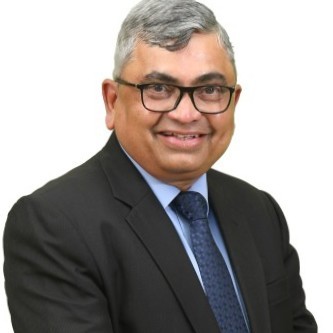
Krishnakumar Natarajan, Co-founder of Mela Ventures and former CEO of Mindtree, discusses the Indian Venture ecosystem.
Sramana Mitra: I’m looking forward to catching up with you. We haven’t talked in a while, but we have followed each other’s work for a long time. Catch me up on Mela Ventures.
>>>