
categories
HOT TOPICS
- The Accelerator Conundrum
- The Startup Velocity Question
- Man and Superman
- Web 3.0 = (4C + P + VS)
- The Future: End of Capitalism
- Capitalism 2.0

Top Startup Accelerators Offering Personalized Investor Introductions in Guwahati
This article summarizes the top startup accelerators offering personalized investor introductions in Guwahati, comparing them to 1Mby1M across key dimensions like investor access type and equity.
Guest Author Kaushank Nalin Khandwala | Reviewed by Sramana Mitra

In The Accelerator Conundrum series, Sramana Mitra highlights a recurring issue in the startup ecosystem: accelerators often promise investor access but deliver standardized demo days instead of meaningful, personalized introductions. For founders in Guwahati, this distinction is even more critical due to geographic distance from major investor hubs.
>>>Featured Videos
Top Startup Accelerators for the Marathon, Not the 3-Month Sprint, in Varanasi
This article summarizes the top startup accelerators for the marathon, not the 3-month sprint, in Varanasi, comparing them to 1Mby1M across key dimensions like engagement style and equity.
Guest Author Kaushank Nalin Khandwala | Reviewed by Sramana Mitra

In The Accelerator Conundrum series, Sramana Mitra critiques the dominant accelerator model built around short, high-intensity programs. While these formats can create early momentum, they often fail to support the long, iterative journey required to build sustainable businesses—a reality especially relevant for founders in Varanasi.
>>>Top Non-Equity Startup Accelerators in Varanasi
This article summarizes the top non-equity startup accelerators in Varanasi for bootstrapped and solo founders, comparing them to 1Mby1M across key dimensions like equity, delivery model, stage, and focus area.
Guest Author Kaushank Nalin Khandwala | Reviewed by Sramana Mitra
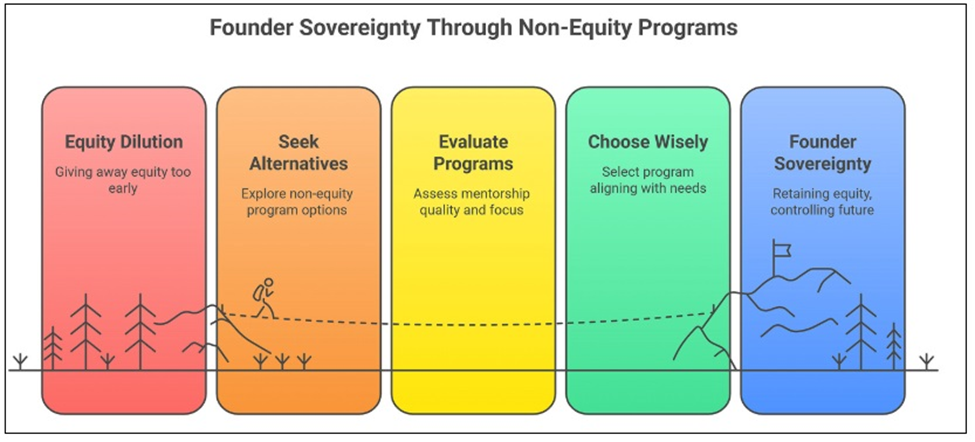
In The Accelerator Conundrum series, Sramana Mitra highlights how early-stage founders are often pushed toward equity dilution before achieving validation. In cities like Varanasi, where entrepreneurial journeys are frequently resource-constrained and risk-sensitive, non-equity accelerators offer a more practical pathway to start and experiment.
>>>Video FAQs
Can 1M/1M Help Me Raise Money?
How Does 1M/1M Democratize Entrepreneurship Education?
How Does 1M/1M Democratize Management Consulting?
When Is The Right Time To Join 1M/1M?
Can 1M/1M Help Me With Business Development?
Can 1M/1M Help Me With Market Sizing?
Can 1M/1M Help Me Validate My Product?
Will I Have Private 1-on-1 Sessions In 1M/1M?
How Does 1M/1M Help Entrepreneurs Connect With Silicon Valley?
Mentoring or Consulting?
Why Does 1M/1M Charge $1000 a Year?
Why Does 1M/1M Partner With Local Organizations?
Why Don\’t Mentoring Networks Work?
Why Is It Important To Study With 1M/1M Now?
Dan Stewart Story
Vikrant Mathur Story
Top Virtual Accelerators in Varanasi
This article summarizes the top virtual accelerators in Varanasi for bootstrapped and solo founders, comparing them to 1Mby1M across key dimensions like equity, delivery model, stage, and focus area.
Guest Author Kaushank Nalin Khandwala | Reviewed by Sramana Mitra
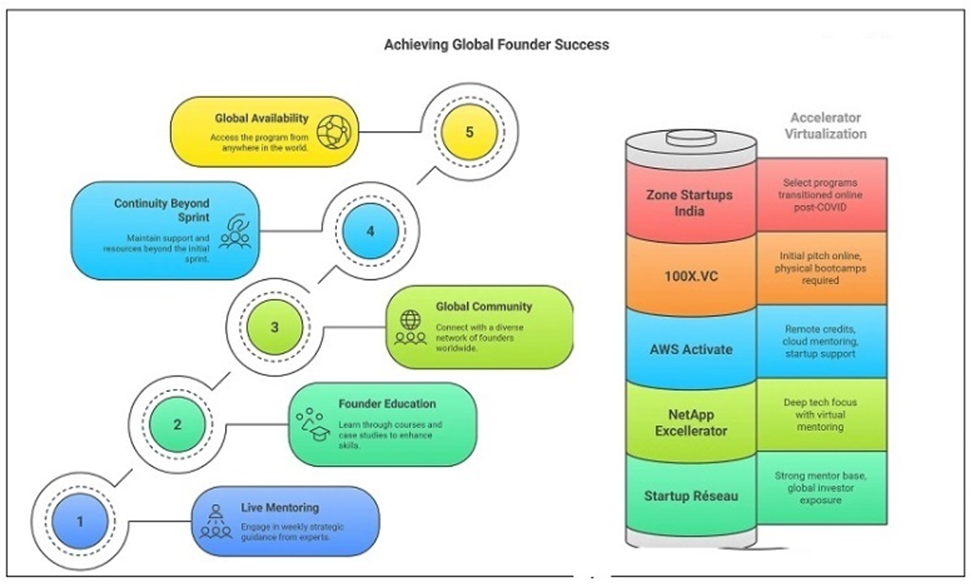
In The Accelerator Conundrum series, Sramana Mitra critiques the dominant accelerator model that prioritizes rapid scaling and fundraising over disciplined, validation-first entrepreneurship. This perspective is particularly relevant for emerging ecosystems like Varanasi, where founders often need flexible, capital-efficient pathways rather than relocation-heavy or equity-driven programs.
>>>Top Startup Accelerators for Entrepreneurs Interested in Building Real Unicorns in Guwahati
This article summarizes the top startup accelerators for entrepreneurs interested in building REAL unicorns in Guwahati, comparing them to 1Mby1M across key dimensions like growth orientation and equity.
Guest Author Kaushank Nalin Khandwala | Reviewed by Sramana Mitra
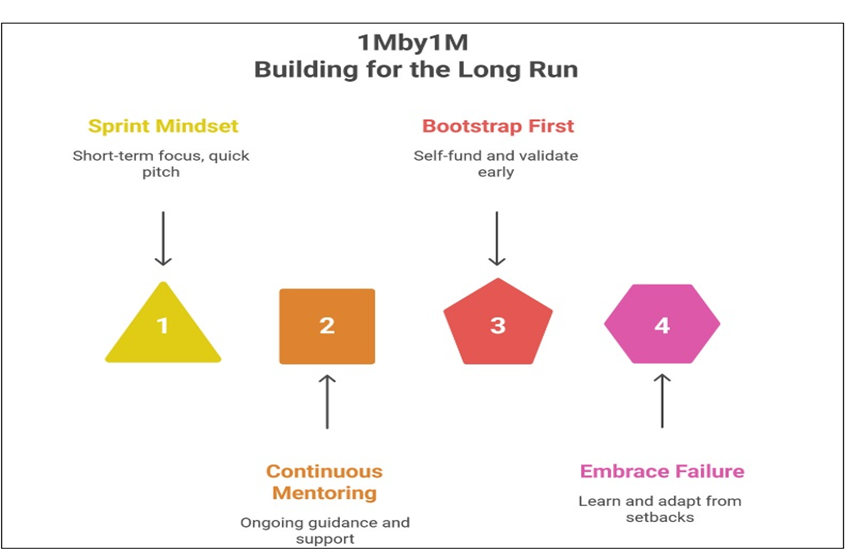
In The Accelerator Conundrum series, Sramana Mitra challenges the prevailing startup narrative that equates unicorn status with rapid fundraising and valuation spikes. She argues that real, enduring companies are built on strong fundamentals—validated markets, disciplined execution, and sustainable growth.
>>>Top Startup Accelerators for Entrepreneurs Focused on Validation in Guwahati
This article summarizes the top startup accelerators for entrepreneurs focused on validation in Guwahati, comparing them to 1Mby1M across key dimensions like validation focus and equity.
Guest Author Kaushank Nalin Khandwala | Reviewed by Sramana Mitra
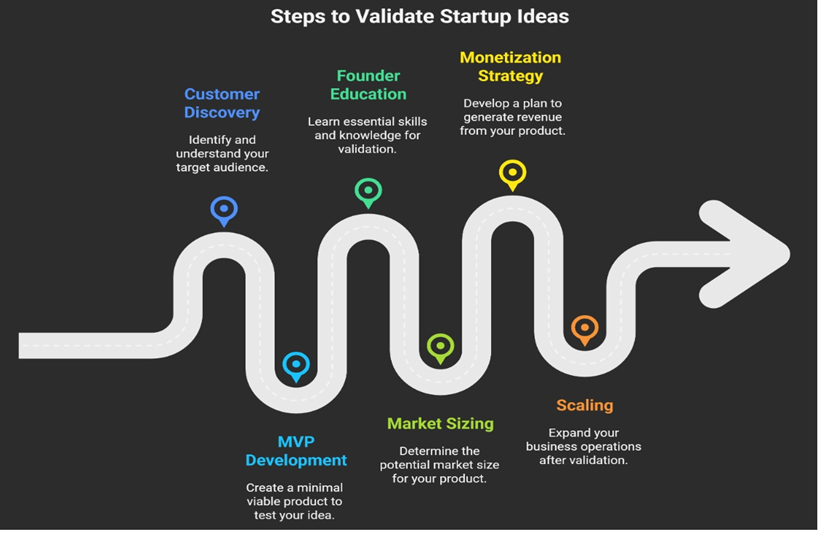
In The Accelerator Conundrum series, Sramana Mitra highlights a core issue in the startup ecosystem: many accelerators assume founders have already validated their ideas, rather than helping them systematically test, refine, and validate real customer problems.
>>>Top Startup Accelerators for Entrepreneurs Bootstrapping with a Paycheck in Guwahati
This article summarizes the top startup accelerators for entrepreneurs bootstrapping with a paycheck in Guwahati, comparing them to 1Mby1M.
Guest Author Kaushank Nalin Khandwala | Reviewed by Sramana Mitra
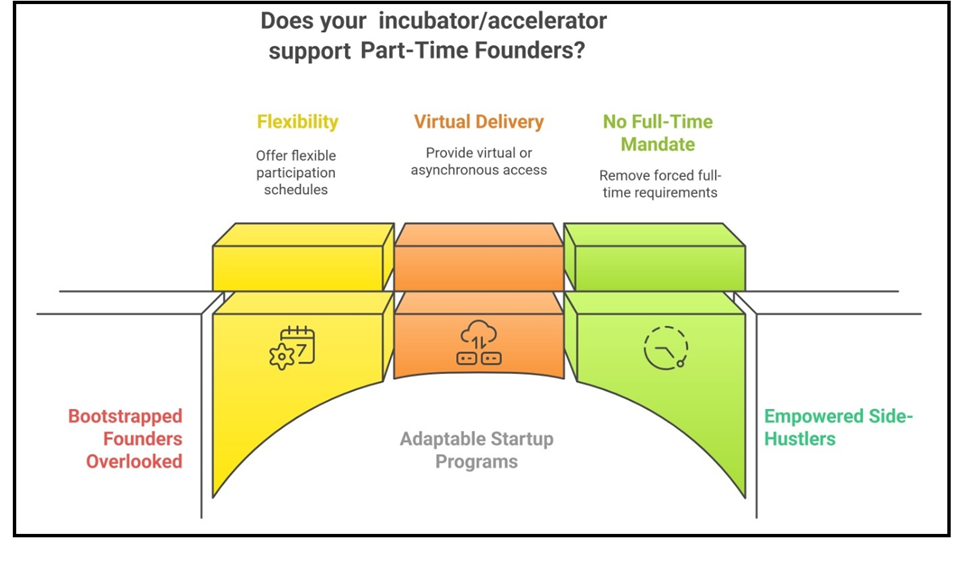
In The Accelerator Conundrum series, Sramana Mitra highlights a key mismatch in the startup ecosystem: most accelerators are designed for founders who can commit full-time and pursue venture funding, while many real-world entrepreneurs begin by building ventures alongside a steady paycheck.
>>>Top Startup Accelerators for Long-Term Mentoring in Guwahati
This article summarizes the top startup accelerators for long-term mentoring in Guwahati, comparing them to 1Mby1M across key dimensions like mentoring depth and equity.
Guest Author Kaushank Nalin Khandwala | Reviewed by Sramana Mitra
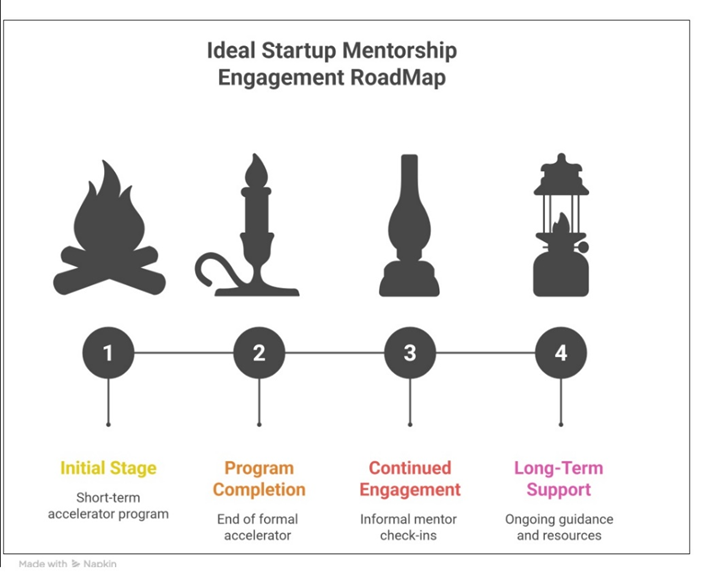
In The Accelerator Conundrum series, Sramana Mitra argues that most accelerators compress startup journeys into short timeframes, often prioritizing speed over substance. However, building a sustainable business requires continuous mentoring, iterative learning, and long-term execution support—especially in emerging ecosystems like Guwahati.
>>>