
categories
HOT TOPICS
- The Accelerator Conundrum
- The Startup Velocity Question
- Platform as a Service
- Man and Superman
- Web 3.0 = (4C + P + VS)
- The Future: End of Capitalism
- Capitalism 2.0

Best of Bootstrapping: Bootstrapping Tuft & Needle to Over $100M
If you haven’t already, please study our Bootstrapping Course and Investor Introductions page.
Online mattress is one of the hottest e-commerce category these days, and here is yet another one delivering venture-scale growth without venture capital. Tuft & Needle Co-founder JT Marino shared his story with me in 2017.
Sramana Mitra: Let’s start at the very beginning of your journey. Where are you from? Where were you born, raised, and in what kind of background?
JT Marino: I was born in Phoenix, but I grew up in Pennsylvania. I went to Penn State. That’s where I met my co-founder, Daehee Park. From there, my career took me to Silicon Valley working for several startups. That’s where my co-founder and I stuck together. We were at a company at Palo Alto and we decided that we wanted to build something of our own. Based on our previous experience with startups, we wanted to do it a different way.
Featured Videos
Roundtable Recap: June 2 – Don’t Pitch Investors Prematurely
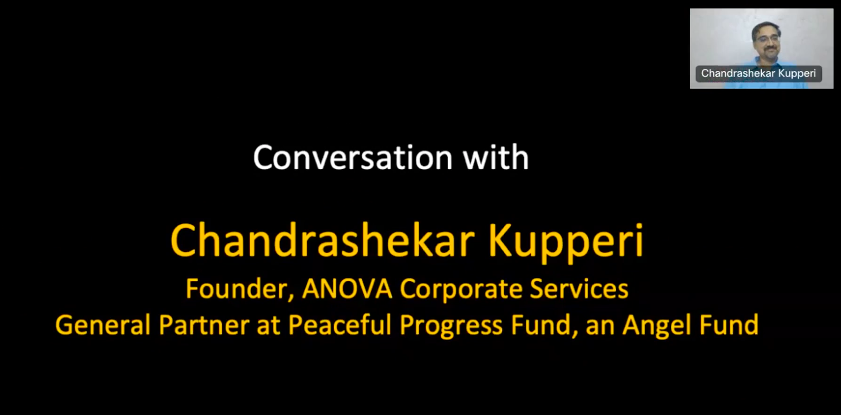
During this week’s roundtable, we had as our guest Chandrashekar Kupperi, General Partner at Peaceful Progress Fund, an angel fund in India. We had some very interesting discussions on consumer startups in India, especially the ones targeting lower economic strata consumers.
T-Ora
As for the pitches, up first we had Karthikeyan R. from Singapore pitch T-Ora, a solution for fact checking fake news.
Zabble
Next we had Nik Balachandran from Walnut Creek, California, pitch Zabble, a waste management software.
Enthu.ai
Then we had Gaurav Mittal from Chandigarh, India, pitched Enthu.ai, an AI solution for contact center call analysis.
You can listen to the recording of this roundtable here:
20-Year Journey of a Fat Startup with Major Pivots: Scott Sellers, CEO of Azul (Part 4)
Sramana Mitra: How long did it take you to get the first product out?
Scott Sellers: It always takes longer than you think, especially in the world of hardware and chip design. The first product was released in the early part of 2005. It was a good solid three years.
Sramana Mitra: Did you have customers lined up by the time the product was coming into the market?
>>>Video FAQs
Can 1M/1M Help Me Raise Money?
How Does 1M/1M Democratize Entrepreneurship Education?
How Does 1M/1M Democratize Management Consulting?
When Is The Right Time To Join 1M/1M?
Can 1M/1M Help Me With Business Development?
Can 1M/1M Help Me With Market Sizing?
Can 1M/1M Help Me Validate My Product?
Will I Have Private 1-on-1 Sessions In 1M/1M?
How Does 1M/1M Help Entrepreneurs Connect With Silicon Valley?
Mentoring or Consulting?
Why Does 1M/1M Charge $1000 a Year?
Why Does 1M/1M Partner With Local Organizations?
Why Don\’t Mentoring Networks Work?
Why Is It Important To Study With 1M/1M Now?
Dan Stewart Story
Vikrant Mathur Story
Best of Bootstrapping: Bootstrapping to $30M from Florida
If you haven’t already, please study our Bootstrapping Course and Investor Introductions page.
SproutLoud CEO Jared Shusterman bootstrapped his company with his bar mitzvah money. He shared his wonderful story with me in 2017.
Sramana Mitra: Let’s start at the very beginning of your journey. Where are you from? Where were you born, raised, and in what kind of background?
Jared Shusterman: I was born in Miami, Florida. I’m one of the few South Florida natives. I grew up in a middle class family that had a very heavy focus on education. After I graduated high school, I went to the University of Virginia. I got a Bachelors degree with a concentration in Finance and Marketing. Shortly after that, I moved out to San Francisco and worked for an investment bank in the online media practice. That’s the quick summary of my initial upbringing.
577th Roundtable for Entrepreneurs Starting NOW: Live Tweeting by @1Mby1M
Today’s 577th FREE online 1Mby1M Roundtable For Entrepreneurs is starting NOW, on Thursday, June 2, at 8 a.m. PDT/11 a.m. EDT/5 p.m. CEST/8:30 p.m. India IST. CLICK HERE to join. PASSWORD: startup All are welcome!
577th Roundtable for Entrepreneurs Starting in 30 Minutes: Live Tweeting by @1Mby1M
Today’s 577th FREE online 1Mby1M Roundtable for Entrepreneurs is starting in 30 minutes, on Thursday, June 2, at 8 a.m. PDT/11 a.m. EDT/5 p.m. CEST/8:30 p.m. India IST. CLICK HERE to join. PASSWORD: startup All are welcome!
1Mby1M Virtual Accelerator Investor Forum: With Steve Eskenazi, Angel Investor (Part 1)
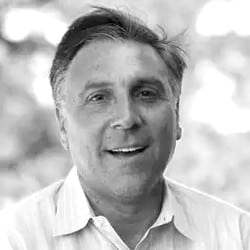
Steve Eskenazi is an Angel Investor, and we had a number of interesting trend conversations.
Sramana Mitra: Let’s start with a little bit of your background. Tell us about what path you have traveled.
Steve Eskenazi: My career has three distinct phases. In the 1990s, I was Wall Street’s digital media analyst introducing Wall Street to companies like America Online and Electronic Arts. For the next 10 years, I was a venture capitalist for a firm called Walden VC where we invested in internet, SaaS, and digital media companies.
>>>20-Year Journey of a Fat Startup with Major Pivots: Scott Sellers, CEO of Azul (Part 3)
Sramana Mitra: How did you spin the Java story?
Scott Sellers: The other two founders worked for a company called Shasta Networks. This was in the late 90s. It was a cable and DSL model termination system. They built an appliance to do this. They put together the hardware and wrote a ton of software to make it all work. In the late 90s, they chose Java inside this appliance. This was on the leading edge in terms of what Java is capable of. They had a really nice outcome by selling it to Redback.
>>>