
categories
HOT TOPICS
- The Accelerator Conundrum
- The Startup Velocity Question
- Platform as a Service
- Man and Superman
- Web 3.0 = (4C + P + VS)
- The Future: End of Capitalism
- Capitalism 2.0

Bootstrapping Using Services from The Netherlands to a $300M+ Exit: Quintiq and ActiVote Founder Victor Allis (Part 3)
Sramana Mitra: What kind of companies were these seven companies that you invited? Were they logistics companies?
Victor Allis: One was in the Rotterdam harbor; they unloaded ships. They told us that it’s a unique process and there was no product that could handle that. Then there was another one. It was a copper factory. We said that our product is so flexible that, no matter how crazy your process is, it will fit in our software. That was true. That was the unique thing. We made very flexible software.
>>>Featured Videos
Best of Bootstrapping: Bootstrapped Using Services from Sweden
If you haven’t already, please study our Bootstrapping Course and Investor Introductions page.
European entrepreneurs often bootstrap using services successfully. The chasing of investors from the get go is less prevalent on the other side of the Atlantic, although this obsession from Silicon Valley has traveled to all corners of the world now. Dapresy Founder Tobi Andersson and CEO Rudy Nadilo shared their journey in 2016, when they had crossed $7 million in annual revenue with minimal outside financing.
Sramana Mitra: Let’s start at the very beginning of your personal journey. It sounds like, Tobi, you’re the founder. Maybe, we’ll start with you and let’s go back to the very beginning of your journey. Where are you from? Where were you born, raised, and in what kind of background?
Tobi Andersson: I was born in Sweden, in the Swedish countryside. Very early on in my life, I decided that one day I would like to earn the money to have the opportunity to buy a really big farm. That has always been my vision – to create something that, on one hand, can give me money but on the other hand, I can create opportunities for people to develop. I’m very much like HR focused on life. I would like everyone an opportunity to feel that they have a good life.
Bootstrapping Using Services from The Netherlands to a $300M+ Exit: Quintiq and ActiVote Founder Victor Allis (Part 2)
Sramana Mitra: What you’re describing is a track that we have called bootstrapping using services. It’s a tried-and-true path in which a lot of entrepreneurs have built companies. We have great regard for this method.
The services work, I understand. The product that you were developing, what was going to be in that product? How well did you understand the product, the requirements, and the positioning? What problem were you going to solve? How well did you understand all that?
>>>Video FAQs
Can 1M/1M Help Me Raise Money?
How Does 1M/1M Democratize Entrepreneurship Education?
How Does 1M/1M Democratize Management Consulting?
When Is The Right Time To Join 1M/1M?
Can 1M/1M Help Me With Business Development?
Can 1M/1M Help Me With Market Sizing?
Can 1M/1M Help Me Validate My Product?
Will I Have Private 1-on-1 Sessions In 1M/1M?
How Does 1M/1M Help Entrepreneurs Connect With Silicon Valley?
Mentoring or Consulting?
Why Does 1M/1M Charge $1000 a Year?
Why Does 1M/1M Partner With Local Organizations?
Why Don\’t Mentoring Networks Work?
Why Is It Important To Study With 1M/1M Now?
Dan Stewart Story
Vikrant Mathur Story
Bootstrapping a RegTech Venture to $20M: PerformLine CEO Alex Baydin (Part 6)
Sramana Mitra: At this point, it’s more of executing the business that you’ve described so far?
Alex Baydin: Yes, that was the last pivot that got us sustainable traction. We’re still very focused on consumer finance because it’s such a big category. As I mentioned, the platform and the technology provide this level of sales, marketing surveillance, and remediation across six channels: Web, Call Center, Email, Messages, Social, and Documents.
Sramana Mitra: What kind of revenue level are you at now?
>>>Best of Bootstrapping: Bootstrapped a Marketplace from Brazil
If you haven’t already, please study our Bootstrapping Course and Investor Introductions page.
Diego Gomes, CEO Co-founder of Rock Content, had built a terrific content marketing company from Brazil when we spoke in 2020. He bootstrapped first, raised money later, and had then acquired a sizable US company to scale. Excellent story!
Sramana Mitra: Let’s start at the beginning of your journey. Tell me about your background. Where are you from? Where were you raised?
Diego Gomes: I am from Brazil. I lived most of my life in Belo Horizonte. I started our company Rock Content around seven years ago with two co-founders, Edmar Ferreira and Vitor Pecanha.
Bootstrapping Using Services from The Netherlands to a $300M+ Exit: Quintiq and ActiVote Founder Victor Allis (Part 1)
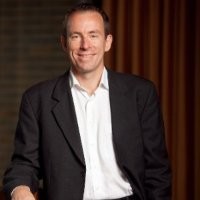
Victor bootstrapped Quintiq to $30M, raised funding, and then sold the company for over $300M. ActiVote is his second startup, currently self-funded.
Sramana Mitra: Let’s start from the beginning. Where are you from? Where were you born, raised, and in what kind of background?
>>>Bootstrapping a RegTech Venture to $20M: PerformLine CEO Alex Baydin (Part 5)
Alex Baydin: They had the same compliance constraints that they had in terms of not being deceptive or misleading. There was a lot more probability that something would go wrong in a free-form phone call. We decided to build a speech analytics module and that’s where we started thinking about our product vision. However, our customers are interacting with their prospects, and we wanted to be able to offer this layer of protection so they can move fast.
We set upon a roadmap of launching a new channel every 18 months or so. We added a call center. Now we had a nice cross-sell engine play. If we’re doing a good job, we could get introduced to the call center compliance team and sell them capacity as well. Then we launched email compliance, followed by messaging, and then social more recently.
>>>Best of Bootstrapping: Bootstrapped a Fast Growth Company Using Services
If you haven’t already, please study our Bootstrapping Course and Investor Introductions page.
Gurman Hundal, Co-founder of MiQ, had bootstrapped a fast growth company using services when we spoke in 2016. Read about his impressive journey.
Sramana Mitra: Let’s start at the very beginning of your journey. Where are you from? Where were you born, raised, and in what kind of background?
Gurman Hundal: I was born in England in a town about 30 miles from London. My family is from the northern state of Punjab in India. Even though I was born in England, I couldn’t speak English till I was about six years old. I have a British-Indian upbringing. My parents owned their own shoe shop in a shopping mall near where we live. I got an early exposure to family-run organizations. I went through the educational system within England. I went to University of Kingston where I studied Business. It was there where I started my career.
