
categories
HOT TOPICS
- The Accelerator Conundrum
- The Startup Velocity Question
- Platform as a Service
- Man and Superman
- Web 3.0 = (4C + P + VS)
- The Future: End of Capitalism
- Capitalism 2.0

Thought Leaders in Big Data: SupportLogic CEO Krishna Raj Raja (Part 1)
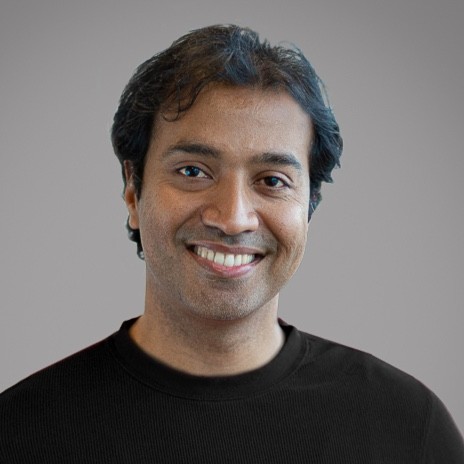
The field of customer service is getting revolutionized as AI and ML drive tremendous value out of data. SupportLogic works in the B-to-B tech sector and drives immense gains.
Sramana Mitra: Let’s start by introducing our audience to yourself as well as to the company.
>>>Featured Videos
Best of Bootstrapping: Bootstrapped Unique Vintage Using a Paycheck
If you haven’t already, please study our free Bootstrapping course and the Investor Introductions page.
Founder CEO Katie Echeverry had a pharmaceutical sales job that she used to bootstrap with a paycheck for 5 years, before quitting to go full-time with her business, Unique Vintage. Here is her story from 2015.
Sramana Mitra: Let’s start at the very beginning of your journey. Tell us where you’re from. Where did you grow up? Where were you born and raised?
Katie Echeverry: I was born in Burbank, California. I still reside in Burbank, California. I went to school and got my Bachelor’s degree in Sociology, but I ended up in sales. When I was about 26 years old, I ended up being a pharmaceutical sales rep, which I enjoyed. What I liked about sales is the harder I worked, the more money I made. I was a natural entrepreneur, but I just didn’t know the word for it. I worked really hard but that wasn’t enough for me.
Thought Leaders in Healthcare IT: CareJourney CEO and President Obama’s CTO Aneesh Chopra (Part 6)
Sramana Mitra: I’m going to switch gear again to the open problems. What is your analysis of the whole gene editing and the CRISPR world? What is possible? What problems can be solved in the short, medium, and long term?
Aneesh Chopra: This is an area that will go in three directions. We’re still in R&D moving to D phase. What will we learn? The first round of applications is about cures in really low-volume but high-cost challenging areas of the healthcare sectors such as cancers. The first round of gene editing was meant to be higher cost for society to absorb on a smaller available population. We’ll see more of that unit price expense but smaller community groups for benefit.
>>>Video FAQs
Can 1M/1M Help Me Raise Money?
How Does 1M/1M Democratize Entrepreneurship Education?
How Does 1M/1M Democratize Management Consulting?
When Is The Right Time To Join 1M/1M?
Can 1M/1M Help Me With Business Development?
Can 1M/1M Help Me With Market Sizing?
Can 1M/1M Help Me Validate My Product?
Will I Have Private 1-on-1 Sessions In 1M/1M?
How Does 1M/1M Help Entrepreneurs Connect With Silicon Valley?
Mentoring or Consulting?
Why Does 1M/1M Charge $1000 a Year?
Why Does 1M/1M Partner With Local Organizations?
Why Don\’t Mentoring Networks Work?
Why Is It Important To Study With 1M/1M Now?
Dan Stewart Story
Vikrant Mathur Story
Best of Bootstrapping: Bootstrapped Get Real Health Using Services
If you haven’t already, please study our free Bootstrapping course and the Investor Introductions page.
When we spoke in 2014, Get Real Health Founder Robin Wiener had built an excellent company with large, international clients in the healthcare domain and had used the bootstrapping using services technique that we espouse in 1Mby1M.
Sramana Mitra: Let’s go to the beginning of your story. Where are you from? Where were you born and raised, and in what kind of circumstances?
Robin Wiener: I’m from Connecticut. I was born in Bristol, the home of ESPN. I went to the University of Connecticut for college. Early on, I had a major speech problem. I couldn’t really pronounce things. Along with that, I had a major learning disability. I had two sisters and a brother. The teachers told my parents that I just wasn’t as smart as my brothers and sisters. Maybe I could get married and that would be a good thing for me to do.
Thought Leaders in Healthcare IT: CareJourney CEO and President Obama’s CTO Aneesh Chopra (Part 5)
Sramana Mitra: In this use case that you mentioned, what are they doing with that information?
Aneesh Chopra: Establishing contracts. Physicians negotiate contracts with insurance companies on a fee-for-service basis. If I see a patient, will you pay me $100? In parallel, there is a related network function to say, “I’m not as interested in what your unit price will be when I see a patient. What I’d rather do is take responsibility for the full expected spend on that patient for the year or three years.”
>>>Catching Up On Readings: Tech Layoffs
This feature from Crunchbase covers the tech layoffs in 2022 and 2023. Over 58,000 people in U.S.-based tech companies have been laid off in mass job cuts so far in 2023 compared to 140,000 in 2022. For this week’s posts, click on the paragraph links.
>>>Thought Leaders in Healthcare IT: CareJourney CEO and President Obama’s CTO Aneesh Chopra (Part 4)
Sramana Mitra: I want to close this segment of our discussion with a question. What, in your mind, are some of the open problems that you would like startups to go solve?
Aneesh Chopra: Let’s go through the healthcare discussion we’ve had and identify a few examples along the way. In my dream world, there should be a series of entrepreneurs competing on the development of a digital health advisor or what I call a health information fiduciary.
>>>Thought Leaders in Healthcare IT: CareJourney CEO and President Obama’s CTO Aneesh Chopra (Part 3)
Sramana Mitra: What is your analysis of their potential to weave them into society?
Aneesh Chopra: We are going to continue down the curve on the cost side. Early in the Obama administration, it cost roughly $2,000 to sequence a genome. We set a goal to get that profitably delivered for under $100 and we’re well on the way to democratizing gene sequencing.
>>>