
categories
HOT TOPICS
- The Accelerator Conundrum
- The Startup Velocity Question
- Platform as a Service
- Man and Superman
- Web 3.0 = (4C + P + VS)
- The Future: End of Capitalism
- Capitalism 2.0

Bootstrapping an AI-Powered Security Startup to $10M+ in Revenue: Osprey Security CEO Rohit Anabheri (Part 4)
Sramana Mitra: These two customers that you were able to place the MVPs into pilots with, how long did it take you to turn them into paying customers?
Rohit Anabheri: About three to six months. They wanted to ensure the stability of the platform.
Sramana Mitra: What is the average deal size?
Rohit Anabheri: Six figures.
>>>Featured Videos
Bootstrapping an AI-Powered Security Startup to $10M+ in Revenue: Osprey Security CEO Rohit Anabheri (Part 3)
Sramana Mitra: How long did it take you, and what was the trajectory? How many customers did you work with in the beginning? As you started to productize, what was the timeline?
Rohit Anabheri: The first year is always a struggle. It was completely bootstrapped by me and my co-founder.
>>>Best of Bootstrapping: Bootstrapped a Product Using Services
If you haven’t already, please study our Bootstrapping Course and Investor Introductions page.
Here’s yet another great case study of a successful bootstrapping whereby the entrepreneurs developed a solid product business eventually. This conversation with 2600Hz Co-CEO / Co-founder Patrick Sullivan took place in 2017.
Sramana Mitra: Let’s start at the very beginning of your personal journey. Where are you from? Where were you born, raised, and in what kind of background?
Patrick Sullivan: I was born in California. I eventually went to school at Santa Barbara and got a degree in Computer Science. I graduated in 1999. I moved back to Tahoe to be a ski bum for a year to get that out of my system. Then I moved to San Francisco right before the dot-com crash happened. It was a pretty awful thing from a career standpoint.
Video FAQs
Can 1M/1M Help Me Raise Money?
How Does 1M/1M Democratize Entrepreneurship Education?
How Does 1M/1M Democratize Management Consulting?
When Is The Right Time To Join 1M/1M?
Can 1M/1M Help Me With Business Development?
Can 1M/1M Help Me With Market Sizing?
Can 1M/1M Help Me Validate My Product?
Will I Have Private 1-on-1 Sessions In 1M/1M?
How Does 1M/1M Help Entrepreneurs Connect With Silicon Valley?
Mentoring or Consulting?
Why Does 1M/1M Charge $1000 a Year?
Why Does 1M/1M Partner With Local Organizations?
Why Don\’t Mentoring Networks Work?
Why Is It Important To Study With 1M/1M Now?
Dan Stewart Story
Vikrant Mathur Story
Bootstrapping an AI-Powered Security Startup to $10M+ in Revenue: Osprey Security CEO Rohit Anabheri (Part 2)
Sramana Mitra: Did you have a customer with whom you validated this with?
Rohit Anabheri: This has been my mantra. Find your customer. Know their problems and fix their problems. We did it very organically. We knew what the gaps were. Then what we did is documented them and went to the people to validate.
Sramana Mitra: Who are these people?
>>>Best of Bootstrapping: Bootstrapped to $30M from Florida
If you haven’t already, please study our Bootstrapping Course and Investor Introductions page.
SproutLoud CEO Jared Shusterman bootstrapped his company with his bar mitzvah money. Read his wonderful story from 2017!
Sramana Mitra: Let’s start at the very beginning of your journey. Where are you from? Where were you born, raised, and in what kind of background?
Jared Shusterman: I was born in Miami, Florida. I’m one of the few South Florida natives. I grew up in a middle class family that had a very heavy focus on education. After I graduated high school, I went to the University of Virginia. I got a Bachelors degree with a Finance and Marketing concentration. Shortly after that, I moved out to San Francisco and worked for an investment bank in the online media practice. That’s the quick summary of my initial upbringing.
615th 1Mby1M Roundtable for Entrepreneurs Starting NOW: Live Tweeting by @1Mby1M
Today’s 615th FREE online 1Mby1M Roundtable for Entrepreneurs is starting NOW, on Thursday, August 10, at 8 a.m. PDT/11 a.m. EDT/5 p.m. CEST/8:30 p.m. India IST. CLICK HERE to join. PASSWORD: startup All are welcome!
Bootstrapping an AI-Powered Security Startup to $10M+ in Revenue: Osprey Security CEO Rohit Anabheri (Part 1)
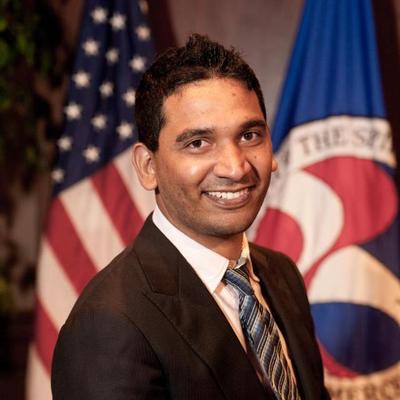
Rohit has effectively used the Bootstrapping Using Services technique to bootstrap an AI-Powered Enterprise Security venture to mid eight figure revenues. In that process, he has turned down offers for Venture Capital. I believe, in Artificial Intelligence and Machine Learning, currently, Bootstrapping Using Services is one of the best ways to find problems to solve and build successful companies.
>>>Best of Bootstrapping: Bootstrapped First from Belarus
If you haven’t already, please study our Bootstrapping Course and Investor Introductions page.
As you know, I love stories of entrepreneurs in different parts of the world finding success through grit and creativity. PandaDoc CEO Mikita Mikado’s story from 2017 gives us insight into what happened in Belarus, and how he navigated his way to raising money in Silicon Valley.
Sramana Mitra: Let’s start at the very beginning of your personal journey. Where are you from? Where were you born, raised, and in what kind of background?
Mikita Mikado: I’m from Belarus, which is a small, former Soviet Union state on the western border of Russia. I was born in 1986. That’s about the time when things went down. My journey began there. I went to a normal Belarusian school. I was a typical Belarusian kid at that time.
