
categories
HOT TOPICS
- The Accelerator Conundrum
- The Startup Velocity Question
- Man and Superman
- Web 3.0 = (4C + P + VS)
- The Future: End of Capitalism
- Capitalism 2.0

Bootstrapping a Generative AI Venture Using Services: Abhinav Girdhar, Founder CEO of Appy Pie (Part 1)
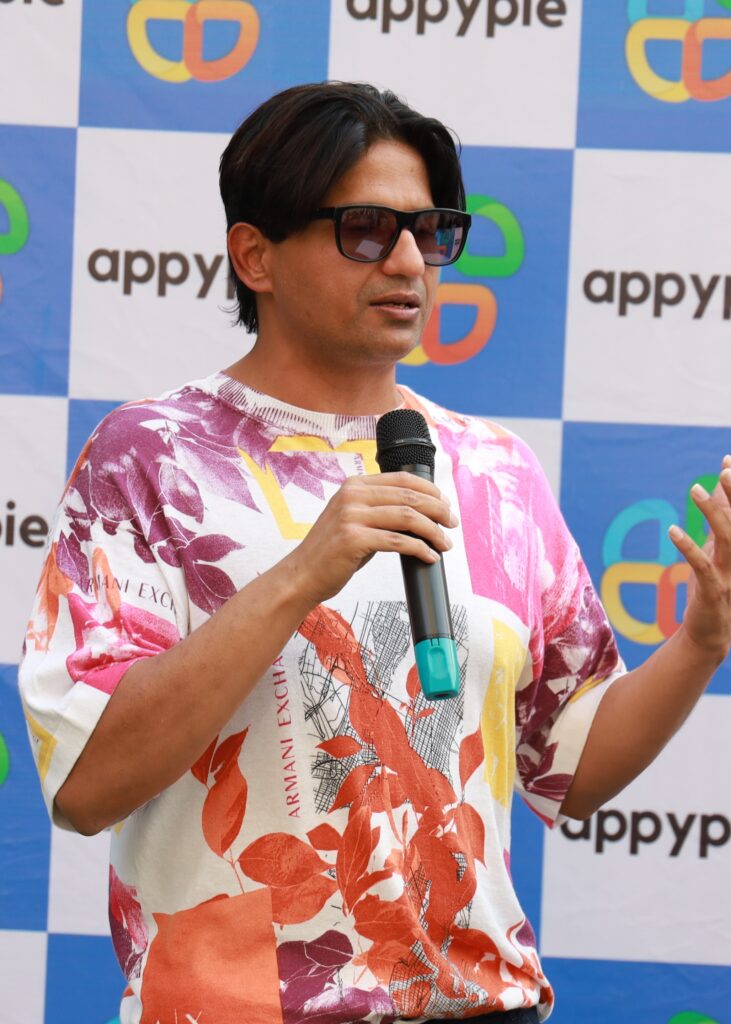
Abhinav has built a $15M+ ARR business by bootstrapping using services. Of his three products, one is a GenerativeAI design tool. Read on for more nuance.
Sramana Mitra: All right, Abhinav, let’s start at the very beginning of your journey. Where are you from, where were you born, raised, what kind of background?
>>>Featured Videos
July Udemy Coupons for AI and Tech Startup Courses

Whether you’re a budding entrepreneur or a seasoned developer, our courses offer a clear pathway to success. They encompass everything from case studies on building ML startups to analyzing the future of AI technology. We also have six methodology courses, equipping entrepreneurs with the essential tools for creating successful tech startups. These courses delve into crucial aspects of entrepreneurship, including positioning strategies, pricing models, validation techniques, and market analysis. Whether you aim to refine your B2B sales approach or assemble a top-notch team, our courses serve as your gateway to making a significant impact in the ever-evolving world of technology startups.
For the month of July, we are offering you up to 85% off these courses.
All the coupons will expire on July 31, 2024, so enroll today!
Artificial Intelligence:
How To Build AI Startups with Sramana Mitra: TRY1MBY1MJUL2024AI
Generative AI Startup Strategy Case Studies: TRY1MBY1MJUL2024GAI
Catching Up On Readings: Global Supply Chain Top 25
This annual ranking feature from Gartner ranks the leading supply chain organizations and identifies the underlying trends that drove their performance. Schneider Electric was at the top, followed by Cisco Systems, Colgate-Palmolive, Microsoft, and Johnson & Johnson. New to this year’s list was NVIDIA. For this week’s posts, click on the paragraph links.
>>>Video FAQs
Can 1M/1M Help Me Raise Money?
How Does 1M/1M Democratize Entrepreneurship Education?
How Does 1M/1M Democratize Management Consulting?
When Is The Right Time To Join 1M/1M?
Can 1M/1M Help Me With Business Development?
Can 1M/1M Help Me With Market Sizing?
Can 1M/1M Help Me Validate My Product?
Will I Have Private 1-on-1 Sessions In 1M/1M?
How Does 1M/1M Help Entrepreneurs Connect With Silicon Valley?
Mentoring or Consulting?
Why Does 1M/1M Charge $1000 a Year?
Why Does 1M/1M Partner With Local Organizations?
Why Don\’t Mentoring Networks Work?
Why Is It Important To Study With 1M/1M Now?
Dan Stewart Story
Vikrant Mathur Story
Thought Leaders in E-Commerce: Bolt CEO Justin Grooms (Part 7)
Sramana Mitra: Right. What else do you want to share with me?
Justin Grooms: I just want to share how excited I am for where I think commerce is going around identity. So much has changed in e-commerce over the last decade, but one of the things that hasn’t changed too much, unfortunately, is curated, specialized shopping experiences.
>>>Thought Leaders in E-Commerce: Bolt CEO Justin Grooms (Part 6)
Sramana Mitra: Interesting. So, the customer, however, has to do the first sale for Bolt to kick in.
Justin Grooms: The customer needs to create a Bolt account somewhere in our network.
Sramana Mitra: The customer acquires the consumer. And then connects into the Bolt network and then Bolt provides additional identity data and more marketability to that customer. But the customer acquisition is happening at the retailer.
>>>Thought Leaders in E-Commerce: Bolt CEO Justin Grooms (Part 5)
Sramana Mitra: Can you talk me through the business model evolution of the business? This is probably before your time, but when the company was selling the checkout software, were they charging on a Software as a Service basis?
>>>Thought Leaders in E-Commerce: Bolt CEO Justin Grooms (Part 4)
Sramana Mitra: So, Bolt started with a software product for online checkouts and sold it to small retailers. Small retailers came on board and used Bolt as their e-commerce checkout system. Then when consumers were buying through the Bolt checkout process, they were offered the opportunity to join the Bolt network.
This is how Bolt developed this network of consumers and then gradually went upmarket and got larger and larger retailers to come into this checkout system and also access the consumer base of Bolt. That’s the story that you’re telling.
>>>Thought Leaders in E-Commerce: Bolt CEO Justin Grooms (Part 3)
Sramana Mitra: What was the technology that were you bringing to market with Bolt? What were you looking for commercialization?
Justin Grooms: We had an initial all-in-one checkout product that we were selling to SMB merchants. Bolt had good success with that.
Sramana Mitra: A point-of-sale checkout product?
>>>