
categories
HOT TOPICS
- The Accelerator Conundrum
- The Startup Velocity Question
- Man and Superman
- Web 3.0 = (4C + P + VS)
- The Future: End of Capitalism
- Capitalism 2.0

Three Co-founders Bootstrapped with a Paycheck, Now at Over $50M Revenue: Ganesh Shankar, CEO and Co-Founder of Responsive (Part 2)
Sramana Mitra: Got it. Let’s go back to when you started the company. What was the premise of the company? What were you going to do?
>>>Featured Videos
Three Co-founders Bootstrapped with a Paycheck, Now at Over $50M Revenue: Ganesh Shankar, CEO and Co-Founder of Responsive (Part 1)
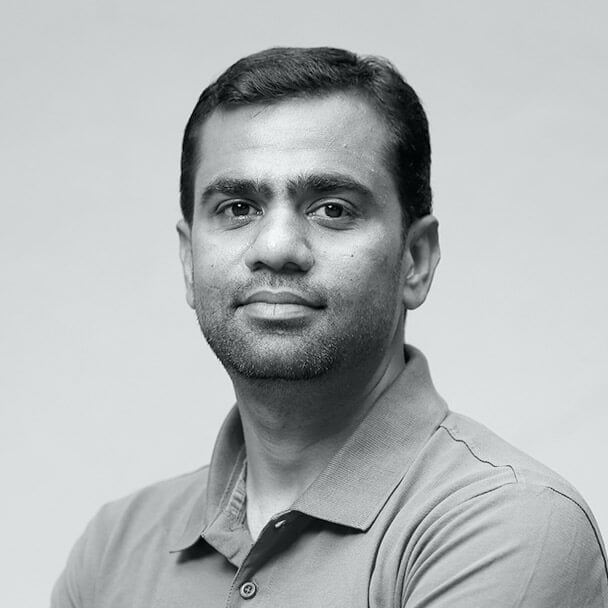
Ganesh and his two co-founders have built Responsive with a very small amount of capital.
They started by Bootstrapping with a Paycheck. Excellent execution, much to learn on many issues.
1Mby1M Virtual Accelerator AI Investor Forum: With Daniel Cohen, General Partner at Viola Ventures (Part 6)
Sramana Mitra: There’s a part that is very worrisome. Have you read Yuval Noah Harari’s most recent book, Nexus?
>>>Video FAQs
Can 1M/1M Help Me Raise Money?
How Does 1M/1M Democratize Entrepreneurship Education?
How Does 1M/1M Democratize Management Consulting?
When Is The Right Time To Join 1M/1M?
Can 1M/1M Help Me With Business Development?
Can 1M/1M Help Me With Market Sizing?
Can 1M/1M Help Me Validate My Product?
Will I Have Private 1-on-1 Sessions In 1M/1M?
How Does 1M/1M Help Entrepreneurs Connect With Silicon Valley?
Mentoring or Consulting?
Why Does 1M/1M Charge $1000 a Year?
Why Does 1M/1M Partner With Local Organizations?
Why Don\’t Mentoring Networks Work?
Why Is It Important To Study With 1M/1M Now?
Dan Stewart Story
Vikrant Mathur Story Download" class="hvideo iframe playbut videow" href="https://www.youtube.com/embed/a> ?rel=0&autoplay=1"> Download TuneIn " class="hvideo iframe playbut videow" href="https://www.youtube.com/embed/a> ?rel=0&autoplay=1"> TuneIn
663rd 1Mby1M Entrepreneurship Podcast with Krishnakumar Natarajan, Mela Ventures
Krishnakumar Natarajan, Co-founder at Mela Ventures, discusses his firm’s AI investment thesis.
Podcast: Play in new window | Download
Subscribe: Apple Podcasts | TuneIn | RSS
1Mby1M Virtual Accelerator AI Investor Forum: With Daniel Cohen, General Partner at Viola Ventures (Part 5)
Sramana Mitra: I think the capabilities are extremely interesting. You can bring it down to areas where we can actually apply things like that, where there will be immediate value, and we can build a business around that.
I think interviewing candidates is one such application. Instead of ten candidates, if you want to interview 1,000 candidates and filter that down to the ten that are a good fit, that is a great application of this kind of technology or human representation technology that you’re talking about.
>>>1Mby1M Virtual Accelerator AI Investor Forum: With Daniel Cohen, General Partner at Viola Ventures (Part 4)
Sramana Mitra: Interesting. If you have more example, you can discuss them. I’m very interested in seeing what is actually fine traction in the customer base.
Daniel Cohen: I’m on the board of a company called Lightricks that is doing a lot of work in the text-to-video space. The text-to-video space is in the limelight after OpenAI released Sora. What we want to think about is, how can AI create not only a short clip, but a full 5-10 minute video? The big challenge is to get fast AI-created videos results, similar to how you can get a story in text within seconds.
>>>1Mby1M Virtual Accelerator AI Investor Forum: With Daniel Cohen, General Partner at Viola Ventures (Part 3)
Sramana Mitra: Let’s discuss the ones that are lower hanging fruits. It would be interesting for us to hear what you have invested in, where you don’t think the price is so far out and where you can start seeing real value or impact now. What are some of the companies that you’ve invested in and why?
>>>1Mby1M Virtual Accelerator AI Investor Forum: With Daniel Cohen, General Partner at Viola Ventures (Part 2)
Sramana Mitra: Which ones do you categorize as the ones that are going to be the harder to deal with?
Daniel Cohen: There are areas in the world that technology has disrupted and yet not disrupted at all. If you look at Healthcare, on one hand, of course our life’s changed completely, but then there’re some things that are exactly the same.
>>>