
categories
HOT TOPICS
- The Accelerator Conundrum
- The Startup Velocity Question
- Man and Superman
- Web 3.0 = (4C + P + VS)
- The Future: End of Capitalism
- Capitalism 2.0

Udemy Tech Startup Course Coupons for March

Are you ready to take the leap into entrepreneurship this year? Whether you’re a first-time founder launching a bootstrapped startup or an experienced professional looking to pivot into AI and tech, our expertly designed courses provide the guidance you need to succeed.
With AI reshaping industries at an unprecedented pace, staying ahead of market trends is crucial. Our AI Startup Courses offer practical insights into launching machine learning ventures, while our methodology courses provide actionable strategies and real-world case studies to help you navigate the complexities of AI-driven innovation.
March is the perfect time to invest in your entrepreneurial journey. Enjoy up to 85% off our top-rated startup courses. These discounts expire on March 31, 2025, so don’t miss your chance to upskill, build confidence, and fast-track your path to startup success.
Enroll today and make 2025 the year you turn your ideas into reality!
Artificial Intelligence:
How VC Investors Think About AI Startups with Sramana Mitra: TRY1MBY1MMAR2025AIVC
Featured Videos
March 6 – 675th 1Mby1M Mentoring Roundtable for Entrepreneurs
Entrepreneurs are invited to the 675th FREE online 1Mby1M Mentoring Roundtable on Thursday, March 6, 2025, at 8 a.m. PST / 11 a.m. EST / 5 p.m. CET / 9:30 p.m. India IST.
If you are a serious entrepreneur, register to “pitch” and sell your business idea. You’ll receive straightforward feedback, advice on next steps, and answers to any of your questions. Others can register to “attend” to watch, learn, and interact through the online chat.
You can learn more here and REGISTER TO PITCH OR ATTEND HERE. Register and you will receive the recording by email, even if you are unable to attend. Please share with any entrepreneurs in your circle who may be
674th 1Mby1M Entrepreneurship Podcast with Anupam Rastogi, Emergent Ventures
Anupam Rastogi, Managing Partner at Emergent Ventures, discusses his firm’s AI investment thesis.
Podcast: Play in new window | Download
Subscribe: Apple Podcasts | TuneIn | RSS
Video FAQs
Can 1M/1M Help Me Raise Money?
How Does 1M/1M Democratize Entrepreneurship Education?
How Does 1M/1M Democratize Management Consulting?
When Is The Right Time To Join 1M/1M?
Can 1M/1M Help Me With Business Development?
Can 1M/1M Help Me With Market Sizing?
Can 1M/1M Help Me Validate My Product?
Will I Have Private 1-on-1 Sessions In 1M/1M?
How Does 1M/1M Help Entrepreneurs Connect With Silicon Valley?
Mentoring or Consulting?
Why Does 1M/1M Charge $1000 a Year?
Why Does 1M/1M Partner With Local Organizations?
Why Don\’t Mentoring Networks Work?
Why Is It Important To Study With 1M/1M Now?
Dan Stewart Story
Vikrant Mathur Story
674th 1Mby1M Roundtable Recording
In case you missed it, you can listen to the recording here:

Roundtable Recap: February 27 – AI Investment Thesis with Anupam Rastogi, Emergent Ventures
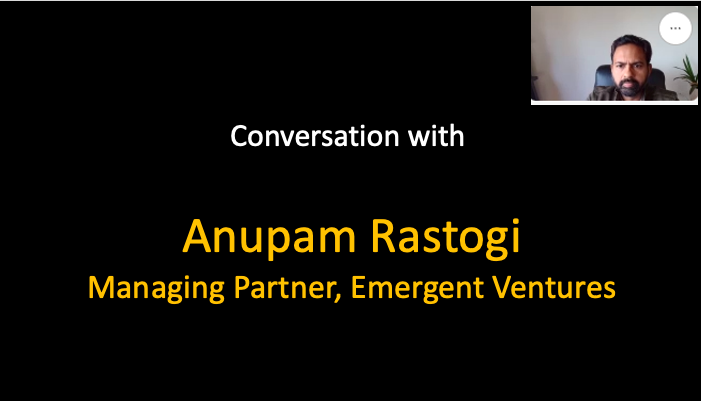
During this week’s roundtable, we had Anupam Rastogi, Managing Partner at Emergent Ventures, discussing his firm’s AI investment thesis.
AI Freight Trading
As for our entrepreneur pitches, up first we had Kaushik Reddy from the Netherlands pitch an AI Freight Trading and Risk Management business.
Amy.pro
Next we had Kiran Teegala from Mount Laurel, New Jersey pitch Amy.pro, a venture for managing outsourced software development.
Score
Then we had Varun Arora from Chennai, India pitch Score, a D2C customer interaction analysis venture already in revenue.
You can listen to the recording of this roundtable here:
674th 1Mby1M Roundtable for Entrepreneurs Starting NOW: Live Tweeting by @1Mby1M
Today’s 674th FREE online 1Mby1M Roundtable for Entrepreneurs is starting NOW, on Thursday, February 27, at 8 a.m. PST / 11 a.m. EST / 5 p.m. CET / 9:30 p.m. India IST. CLICK HERE to join. PASSWORD: startup All are welcome!
Best of Bootstrapping: Bootstrapped a Healthcare Tech Company to $100M
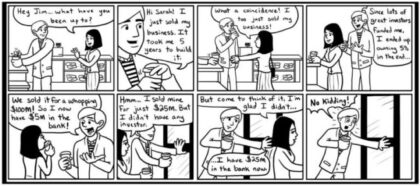
When we spoke in 2015, Edifecs Founder Sunny Singh had built a very interesting healthcare technology company, overcoming serious challenges. Inspiring story of a bootstrapped success.
Sramana Mitra: Let’s start at the very beginning of your journey. Where are you from? Where were you born, raised, and in what kind of background?
Sunny Singh: Give or take, I’ve spent half my life in the US and half my life in India. I grew up in India and finished my undergraduate studies there. Then, I came to the US at the age of 23 to do a couple of Master’s programs. I did three jobs and then started Edifecs in 1996.
February 27 – 674th 1Mby1M Mentoring Roundtable for Entrepreneurs
Entrepreneurs are invited to the 674th FREE online 1Mby1M Mentoring Roundtable on Thursday, February 27, 2025, at 8 a.m. PST / 11 a.m. EST / 5 p.m. CET / 9:30 p.m. India IST.
If you are a serious entrepreneur, register to “pitch” and sell your business idea. You’ll receive straightforward feedback, advice on next steps, and answers to any of your questions. Others can register to “attend” to watch, learn, and interact through the online chat.
You can learn more here and REGISTER TO PITCH OR ATTEND HERE. Register and you will receive the recording by email, even if you are unable to attend. Please share with any entrepreneurs in your circle who may be
