
categories
HOT TOPICS
- The Accelerator Conundrum
- The Startup Velocity Question
- Man and Superman
- Web 3.0 = (4C + P + VS)
- The Future: End of Capitalism
- Capitalism 2.0

704th 1Mby1M Roundtable Recording
In case you missed it you can listen to the recording of this roundtable here:

Featured Videos
Roundtable Recap: October 16 – AI Investment Thesis with Sandeep Sardana, BluePointe Ventures
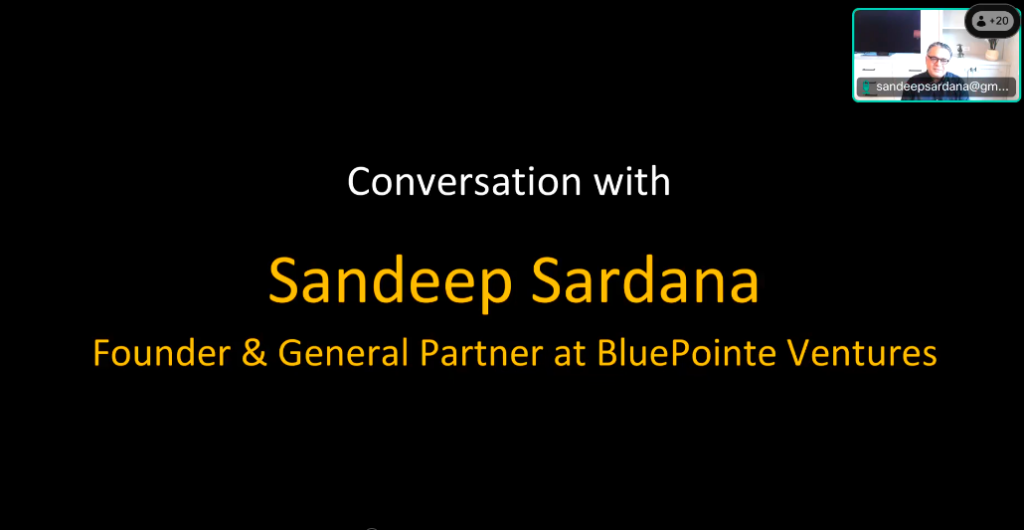
During this week’s roundtable, we had Sandeep Sardana, Founder and General Partner at BluePointe Ventures, discuss his firm’s vertical AI investment thesis.
Beards & Shears
As for the pitches, first up today, we had Shubham Mishra from Pune, India, pitch Beards & Shears, a men’s grooming brand.
Korture
Next we had Shishir Modur and SK Prasad from Bangalore, India, pitch Korture, an HR Tech product.
Elixir Labs
Then Rakshit Bondwal from Delhi, India pitched Elixir Labs, a vibe coding tool.
You can listen to the recording of this roundtable here:
Building an AI EdTech Company: College Guidance Network CEO Jon Carson (Part 5)
Sramana Mitra: What about the financing strategy of this business? You’ve done venture-funded companies before. You’ve had exits. You were coming into this business with your own personal needs. Did you bootstrap the beginning? Did you fund it right away?
>>>Video FAQs
Can 1M/1M Help Me Raise Money?
How Does 1M/1M Democratize Entrepreneurship Education?
How Does 1M/1M Democratize Management Consulting?
When Is The Right Time To Join 1M/1M?
Can 1M/1M Help Me With Business Development?
Can 1M/1M Help Me With Market Sizing?
Can 1M/1M Help Me Validate My Product?
Will I Have Private 1-on-1 Sessions In 1M/1M?
How Does 1M/1M Help Entrepreneurs Connect With Silicon Valley?
Mentoring or Consulting?
Why Does 1M/1M Charge $1000 a Year?
Why Does 1M/1M Partner With Local Organizations?
Why Don\’t Mentoring Networks Work?
Why Is It Important To Study With 1M/1M Now?
Dan Stewart Story
Vikrant Mathur Story
Best of Bootstrapping: Bootstrapped an E-commerce Venture to $50M
When we spoke in 2018, SmartBuyGlasses Co-CEO David Menning had bootstrapped a global e-commerce venture from Hong Kong to $50M. Splendid execution!
Sramana Mitra: Let’s start at the very beginning of your journey. Where are you from? Where were you born, raised, and in what kind of background?
David Menning: I grew up in Sydney. I’ve been educated in Australia. In my later years, I studied at universities overseas both in Canada and Japan for a little while. It was this time when I was abroad spending time in different countries that I was exposed to different business models, cultures, and people.
Building an AI EdTech Company: College Guidance Network CEO Jon Carson (Part 4)
Sramana Mitra: Let’s double click down on pricing in all these different products. How has your pricing evolved? What was the pricing on the first version, which was just masterclass style?
>>>Startup Bangladesh: Pros and Cons of Local Accelerators

The Accelerator Conundrum is a multipart series that challenges the prevailing wisdom of the tech startup ecosystem that entrepreneurs should Blitzscale out of the gate. Written by Sramana Mitra, the Founder and CEO of One Million by One Million (1Mby1M), the world’s first global virtual accelerator, it emphatically argues that a better strategy is to Bootstrap First, Raise Money Later, focus on customers, revenues and profits. 1Mby1M’s mission is to help a Million entrepreneurs reach a million dollars in annual revenue and beyond. Sramana’s Digital Mind AI Mentor virtually mentors entrepreneurs around the world in 57 languages. Try it out!
Bangladesh’s local accelerators have contributed greatly to ecosystem growth, but founders must carefully weigh their benefits and limitations.
>>>Startup Bangladesh: Why a Bootstrap-First Philosophy is Essential for Acceleration

The Accelerator Conundrum is a multipart series that challenges the prevailing wisdom of the tech startup ecosystem that entrepreneurs should Blitzscale out of the gate. Written by Sramana Mitra, the Founder and CEO of One Million by One Million (1Mby1M), the world’s first global virtual accelerator, it emphatically argues that a better strategy is to Bootstrap First, Raise Money Later, focus on customers, revenues and profits. 1Mby1M’s mission is to help a Million entrepreneurs reach a million dollars in annual revenue and beyond. Sramana’s Digital Mind AI Mentor virtually mentors entrepreneurs around the world in 57 languages. Try it out!
Bangladesh has emerged as one of South Asia’s most promising startup ecosystems. With a population of more than 170 million people, rapidly growing internet penetration, and a digitally savvy youth, the market offers enormous potential. Sectors like fintech, e-commerce, healthtech, edtech, and logistics are thriving. Flagship success stories like bKash, Pathao, and ShopUp have captured both local and international attention.
>>>Startup Nepal: Comparing Local Accelerators with 1Mby1M

The Accelerator Conundrum is a multipart series that challenges the prevailing wisdom of the tech startup ecosystem that entrepreneurs should Blitzscale out of the gate. Written by Sramana Mitra, the Founder and CEO of One Million by One Million (1Mby1M), the world’s first global virtual accelerator, it emphatically argues that a better strategy is to Bootstrap First, Raise Money Later, focus on customers, revenues and profits. 1Mby1M’s mission is to help a Million entrepreneurs reach a million dollars in annual revenue and beyond. Sramana’s Digital Mind AI Mentor virtually mentors entrepreneurs around the world in 57 languages. Try it out!
To understand the differences, let’s examine the pros and cons of Nepal’s leading accelerators:
>>>