
categories
HOT TOPICS
- The Accelerator Conundrum
- The Startup Velocity Question
- Man and Superman
- Web 3.0 = (4C + P + VS)
- The Future: End of Capitalism
- Capitalism 2.0

Opinions
The Startup Velocity Question: What Hinders Acceleration in VC Funded Companies?
I have been running 1Mby1M since 2010. I find myself saying to entrepreneurs ad nauseam that VCs want to invest in startups that can go from zero to $100 million in revenue in 5 to 7 years.
Startups that do not have what it takes to achieve velocity should not be venture funded.
Experienced VCs, over time, have developed heuristics to gauge what constitutes a high growth venture investment thesis.
>>>A Startup Idea Focused on Good, Home-cooked Food

The market these days is full of food related startups, especially those that are trying to deliver meals to the home. Nuances vary. Some bring in all the ingredients and a recipe to be cooked at home. Some bring ready-to-eat food.
Most are focused on scaling with gobs of venture capital.
I have a different thought.
Forget scaling.
Focus on the food.
>>>
Featured Videos
Can 1M/1M Help Me Raise Money?
How Does 1M/1M Democratize Entrepreneurship Education?
How Does 1M/1M Democratize Management Consulting?
When Is The Right Time To Join 1M/1M?
Can 1M/1M Help Me With Business Development?
Can 1M/1M Help Me With Market Sizing?
Can 1M/1M Help Me Validate My Product?
Will I Have Private 1-on-1 Sessions In 1M/1M?
How Does 1M/1M Help Entrepreneurs Connect With Silicon Valley?
Mentoring or Consulting?
Why Does 1M/1M Charge $1000 a Year?
Why Does 1M/1M Partner With Local Organizations?
Why Don\’t Mentoring Networks Work?
Why Is It Important To Study With 1M/1M Now?
Dan Stewart Story
Vikrant Mathur Story
A Startup Idea: eHarmony Of Friendships

It is common knowledge that people make friends easily in their younger years.
In school or in college, even in university, people are open, they have time, and friendships happen easily.
Later in life, people move away, have different family and professional commitments, and it simply becomes inconvenient to keep in touch at meaningful levels.
Long distance relationships are not as rewarding. You can’t share meals or go to the movies and concerts together anymore. And if you need them, your friends are not around.
And yet, making new friends that are sufficiently meaningful also becomes harder.
>>>
Future of Artificial Intelligence: All Play, No Work Society

My earlier post, Future of Work: Utopia or Dystopia? expresses concern about a jobless world. A recent The Atlantic article asks: Would a Work-free World Be So Bad?
People have speculated for centuries about a future without work, and today is no different, with academics, writers, and activists once again warning that technology is replacing human workers. Some imagine that the coming work-free world will be defined by inequality: A few wealthy people will own all the capital, and the masses will struggle in an impoverished wasteland.
Corporate Innovation Management: Lessons Learned

Last summer I spent half a day with approximately 40 Fortune 500 Chief Innovation Officers at Xerox PARC, and discussed our experience with corporate innovation methodology through the1M/1M Incubator In A Box program.
A few months later, Jim Euchner, the CIO of Goodyear, interviewed me for the Research-Technology Management journal and I summarized some key excerpts from the discussion here: Corporate Innovation Management: A Methodology Discussion
>>>
Startup Idea: High Quality Eldercare in India

When I wrote Vision India 2020 back in 2009, one of the projects I had developed for the book was called Care. The premise of the project was that the number of millionaires are increasing in India by leaps and bounds. At the same time, many of these families have need for in-home caregivers to take care of their ill, mentally-ill, or elderly family-members. Care would provide trained in-home caregivers in domains such as Alzheimer’s. And Care would source its staff from among women in disadvantaged situations – battered, abused, abandoned women who needed safe, secure family situations to be part of. [Related reading: High-Quality Eldercare For Families In India]
The project was designed to scale to very large numbers, become a billion dollar enterprise.
I took another look at that project with the lens of developing small, bootstrapped businesses, and found the idea to be quite amenable.
>>>
A Startup Idea for Indian Entrepreneurs to Address the Talent War

Along the lines of my previous piece, Startup Idea For European Entrepreneurs To Create Jobs For European Engineers, I believe there is a set of very similar ventures to be developed in India.
The Indian IT industry is going absolutely gangbuster. In addition to the highly acclaimed Services industry, over the past decade, a thriving startup scene has also now come together.
Across the board, however, a tremendous talent shortage is developing. Especially for entrepreneurs trying to build stable product teams, the battle is uphill.
>>>
Artificial Intelligence: Just Because We Can, Does It Mean That We Should?
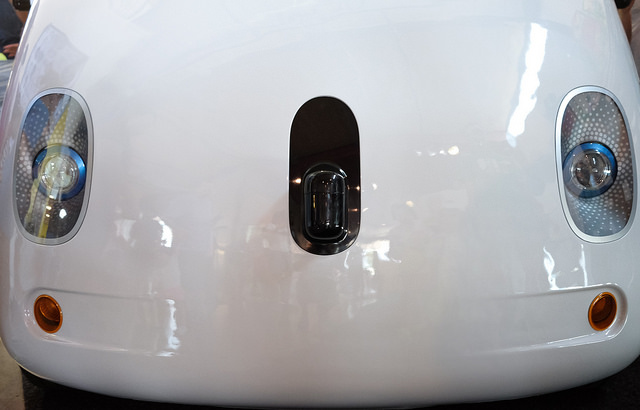
As a technologist, Artificial Intelligence fascinates me. It always has, since the beginning of my forays into Computer Science. I did two startups in the nineties, at the heart of which were AI-driven innovations.
The world’s recent embrace of AI, thus, also fascinates me.
Driverless cars are all the rage these days. Uber is chomping at the bit to replace the headache of having to pay anything at all to their drivers, having driven the labor cost down already to the minimum. Drivers still cost them 75% of the fare.
Yes. An entire profession of drivers of trucks, taxis, buses and such are about to get wiped out.
>>>
A Startup Idea for European Entrepreneurs to Create Jobs for European Engineers
Europe is going through tremendous challenges, recently exacerbated by the Brexit mess. I spend a fair bit of time in Europe on a regular basis, and every time I am there, I feel anguished by the malaise that envelops so much of the continent.
In theory, Europeans know that they have to get on the entrepreneurship bandwagon, and certain cities have successfully jumpstarted thriving eco-systems. Berlin is doing a nice job, and London was, until it opened this new can of worms.
>>>
Future of Artificial Intelligence: Brexit, Trump and Other Calamities
On Friday, June 24, 2016, the world watched in horror as Britain voted to commit economic suicide as a nation.
On November 8, 2016, America will vote. Will it also commit economic and political suicide?
Increasing inequality is building up great stress in the world economic system. The disenfranchised masses are expressing their anger, including in irrational ways such as the Brexit vote.
The trends are worrisome.
>>>
What is Jeff Bezos Doing with The Washington Post?
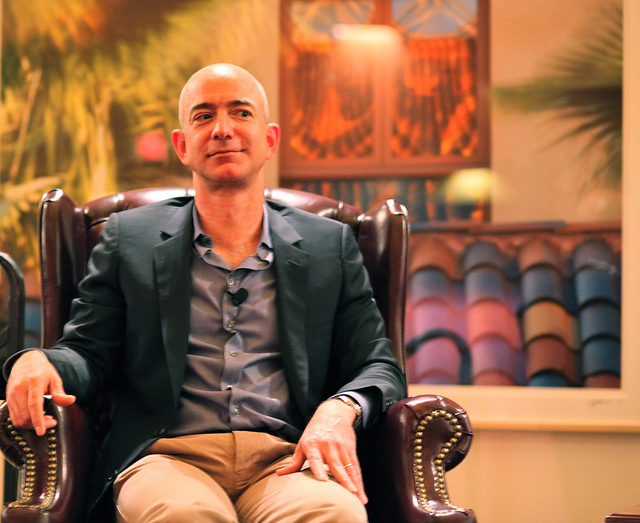
A few days back, I read an extensive analysis of the Washington Post under Jeff Bezos titled The Bezos Effect: How Amazon’s Founder Is Reinventing The Washington Post – and What Lessons It Might Hold for the Beleaguered Newspaper Business.
>>>
