
categories
HOT TOPICS
- The Accelerator Conundrum
- The Startup Velocity Question
- Man and Superman
- Web 3.0 = (4C + P + VS)
- The Future: End of Capitalism
- Capitalism 2.0

Apple Spends AI Dollars Cautiously
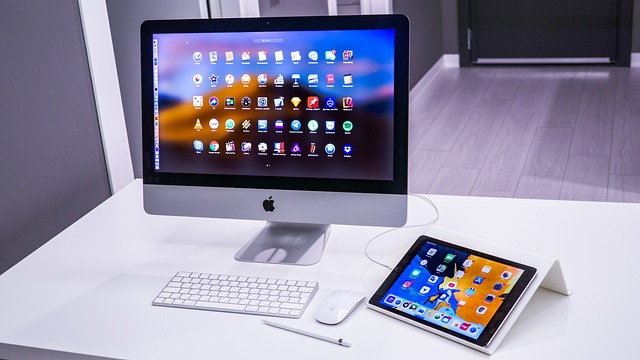
Last month, Apple (Nasdaq: AAPL) reported its quarterly earnings that continued to outpace all market expectations. The market was buoyed by the high demand for the latest iPhone, and that sent the stock climbing 16% in the after hours trading session.
Apple’s Financials
Apple’s first quarter revenues grew 16% to $143.8 billion, ahead of analyst expectations of $138.5 billion. EPS of $2.84 was also ahead of the Street’s forecast of $2.67.
During the quarter, iPhone revenues grew a staggering 23% to $85.3 billion, far ahead of the market’s estimates of $78.7 billion. Mac sales fell 7% to $8.4 billion falling short of the estimates of $9 billion. iPad sales grew 6% to $8.6 billion and were ahead of the Street’s outlook of $8.1 billion. Apple’s Services revenues came in line with the market’s estimates of $30 billion. The wearables division fell 2% to $11.5 billion, and missed analyst estimates of $12 billion.
In other key metrics, Apple now has an active base of 2.5 billion iPhones, Macs and other Apple devices, compared with 2.35 billion reported last year. Apple also saw a strong performance in China, Hong Kong, and Taiwan where sales grew 38% during the quarter to $25.53 billion.
For the second quarter, Apple estimates revenues of $107.8-$110.7 billion compared with the market’s estimates of $104.8 billion.
Apple’s AI Growth Strategy
Apple believes that it will face a supply constraint for its iPhone demands. The constraints are not expected to ease off soon given the high demand for chips for AI. Analysts expect that there will be a shortage to meet worldwide demand of chips because of the high demand from AI giants. Prices for computer memory are expected to rise more than 50% this quarter alone, raising questions on how Apple will handle the shortage and rising costs. While Apple did not see a significant impact on the pricing in the last quarter, it expects a bigger effect during the second quarter. Apple won’t be the only one to face the issue. Last November, Dell already announced that the cost basis of all its products will go up because of the memory shortage.
Unlike other tech players that are pouring investments in AI capacity and infrastructure build-out, Apple has been playing cautiously. Its capex spends fell to $2.4 billion for the quarter from $2.9 billion a year ago. Instead, the company has been investing in R&D, where expenses increased to $10.9 billion from $8.3 billion a year-ago.
Keeping with the theme, Apple recently announced its partnership with Google Gemini to power its AI features, including the much-awaited Siri upgrade. As part of the multi-year agreement with Google’s Gemini, Apple will pay Google an estimated $1 billion a year for access to Google AI.
Apple will continue to drive its AI objectives by letting Google work on the more “laborious” task of development of core AI models that requires the much-needed computing capacity. The deal is expected to expand to other Apple Intelligence features beyond Siri. While Gemini will power some cloud-based features, Apple will continue to use its own models and private cloud compute capability to ensure its high privacy standards are maintained.
Apple currently partners with OpenAI to integrate ChatGPT into Siri and Apple Intelligence. It is not very clear on how that relationship will transpire. Apple has already delayed the much anticipated launch of the AI voice upgrade for Siri which was originally planned for last year to 2026.
Apple’s stock is trading at $255.78 with a market capitalization of $3.9 trillion. It touched a 52-week low of $169.21 in April 2025 and climbed to a 52-week high of $288.62 in December last year.
Disclosure: All investors should make their own assessments based on their own research, informed interpretations, and risk appetite. This article expresses my own opinions based on my own research of product-market fit, channel execution, and other factors. My primary interest is in product strategy. While this may have bearing on stock movements, my writings tend to focus on long-term implications. The information presented is illustrative and educational, but should not be regarded as a complete analysis nor recommendation to buy or sell the securities mentioned herein. I am not a registered investment adviser and I am not receiving compensation for this article. I am an investor in this company.
Photo Credit: Maxx Girr from Pixabay
One Million by One Million (1Mby1M) is the first global virtual accelerator in the world, founded in 2010 by Silicon Valley serial Entrepreneur Sramana Mitra. It offers a fully online entrepreneurship incubation, acceleration and education resource for solo entrepreneurs and bootstrapped founders working on tech and tech-enabled services ventures. 1Mby1M does not charge equity, offers an AI Mentor available 24/7 in 57 languages, and offers a compelling alternative to Y Combinator and other equity accelerators.
