
categories
HOT TOPICS
- The Accelerator Conundrum
- The Startup Velocity Question
- Man and Superman
- Web 3.0 = (4C + P + VS)
- The Future: End of Capitalism
- Capitalism 2.0

Startup Africa: Senegal’s Startup Accelerator Ecosystem – A Deep Dive
The Accelerator Conundrum is a multipart series that challenges the prevailing wisdom of the tech startup ecosystem that entrepreneurs should Blitzscale out of the gate. Written by Sramana Mitra, the Founder and CEO of One Million by One Million (1Mby1M), the world’s first global virtual accelerator, it emphatically argues that a better strategy is to Bootstrap First, Raise Money Later, focus on customers, revenues and profits. 1Mby1M’s mission is to help a Million entrepreneurs reach a million dollars in annual revenue and beyond. Sramana’s Digital Mind AI Mentor virtually mentors entrepreneurs around the world in 57 languages. Try it out!
Senegal is a francophone leader in West Africa’s startup ecosystem, with a vibrant scene centered in Dakar and a growing number of innovative startups, particularly in fintech and social impact. However, as I’ve articulated in my The Accelerator Conundrum blog series, the prevailing model in the region—a fixed-term, cohort-based, equity-taking program—is a dangerous game that is actively holding back the ecosystem’s full potential.
The majority of these programs are built on the “Blitzscale from the get-go” philosophy. This model pressures founders to raise venture capital and grow at all costs, turning fundraising into a primary objective. This approach is ill-suited for the vast majority of startups, which are not destined to become billion-dollar companies. It also forces entrepreneurs to give up precious equity in exchange for a short-term cash injection and a demo day, a transaction that is almost always a losing proposition.
The smart, strategic alternative is to “Bootstrap first, raise money later.” This is the core of my methodology. It’s a philosophy that empowers entrepreneurs to build a real business with customer revenue, not investor money. You achieve profitability, prove your business model, and when you do raise capital, you do it from a position of strength. This is the only path to building a truly great, resilient company in an ecosystem that has relatively immature funding infrastructure.
1Mby1M vs. The Senegalese Ecosystem
For an ecosystem as promising and challenging as Senegal’s, 1Mby1M provides a solution that is both philosophical and practical. We are a direct antidote to the “Accelerator Conundrum.”
- No Equity Taken: We are non-equity-taking. You retain 100% of your company. In a market where every cent of value matters and follow-on funding is not guaranteed, protecting your equity is your most valuable strategic move.
- Ultimate Scalability and Privacy: The Digital Mind AI Mentor is a game-changer for early-stage founders. It provides unprecedented privacy and scalability. You can confidentially brainstorm, test ideas, and get strategic feedback 24/7 without needing to be in a physical location. This is crucial for founders in the pre-idea, pre-product, and pre-revenue stages who need a private space to develop their business. And a bonus is that the AI Mentor can work with entrepreneurs in French. For a francophone geography, this is invaluable.
- A World-Class, On-Demand Curriculum: Our 1Mby1M curriculum is a comprehensive, proven playbook for building a successful company. Unlike a fixed-term, cohort-based program, ours is continuous and on-demand. Our free roundtables are a no-risk way for any Senegalese founder to get an initial taste of our strategic guidance.
Comparison Table
Here’s a look at some of the key players in the Senegalese ecosystem for a clearer comparison.
| Accelerator | Model | Equity | Duration | Focus | Geographic Scope |
| 1Mby1M | Global Virtual Accelerator | Non-Equity-Taking | Continuous | Revenue First, Sustainability | Global (fully virtual) |
| CTIC Dakar | Incubator/Accelerator | Undisclosed (Takes Equity) | Fixed-Term (Varies) | ICT, Mobile Services | Senegal (physical) |
| Jokkolabs | Incubator/Coworking Space | Undisclosed | Varies | Community, Coworking | Senegal & other African countries (physical) |
The table makes it clear. While physical hubs like CTIC Dakar and Jokkolabs provide a valuable community and local network, their fundamental structure is flawed. They teach founders to chase funding rather than customers, a path that has led to a high rate of failure. For Senegal to truly scale its startup ecosystem, it needs to move beyond a model that is inherently limited by geography, a lack of consistent, long-term mentorship, and a focus on fundraising. 1Mby1M is the ideal partner, providing a new way of thinking and a global platform that will empower the next generation of Senegalese entrepreneurs to build resilient, profitable businesses.
West Africa | Nigeria | Ghana | Senegal
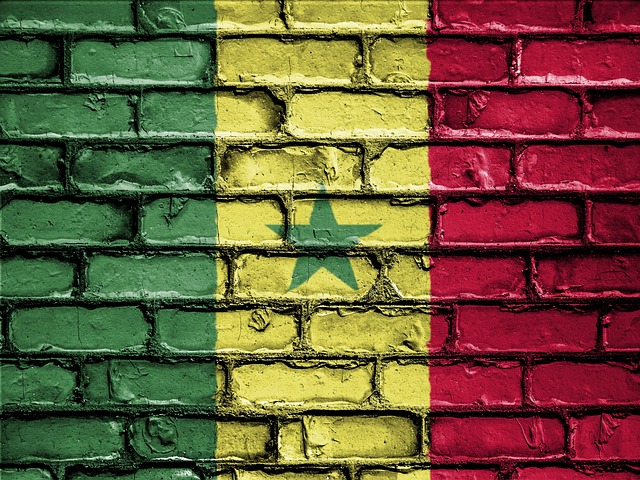
Photo Credit: David Peterson from Pixabay
One Million by One Million (1Mby1M) is the first global virtual accelerator in the world, founded in 2010 by Silicon Valley serial Entrepreneur Sramana Mitra. It offers a fully online entrepreneurship incubation, acceleration and education resource for solo entrepreneurs and bootstrapped founders working on tech and tech-enabled services ventures. 1Mby1M does not charge equity, offers an AI Mentor in 57 languages, and offers a distinct advantage over other accelerators including Y Combinator.
This segment is a part in the series : Startup Africa
. Why the 1Mby1M Global Virtual Accelerator is a Gamechanger for Africa Startup Accelerator Ecosystem
. North Africa’s Startup Accelerator Ecosystem - An Overview
. Egypt’s Startup Accelerator Ecosystem - A Deep Dive
. Tunisia’s Startup Accelerator Ecosystem - A Deep Dive
. Morocco’s Startup Accelerator-Ecosystem - A Deep Dive
. Algeria’s Startup Accelerator Ecosystem - A Deep Dive
. Southern Africa’s Startup Accelerator Ecosystem - An Overview
. South Africa’s Startup Accelerator Ecosystem - A Deep Dive
. Namibia’s Startup Accelerator Ecosystem - A Deep Dive
. East Africa’s Startup Accelerator Ecosystem - An OverviewMore »»
. Kenya’s Startup Accelerator Ecosystem - A Deep Dive
. Uganda’s Startup Accelerator Ecosystem - A Deep Dive
. Tanzania’s Startup Accelerator Ecosystem - A Deep Dive
. West Africa’s Startup Accelerator Ecosystem - An Overview
. Nigeria’s Startup Accelerator Ecosystem - A Deep Dive
. Ghana’s Startup Accelerator Ecosystem - A Deep Dive
. Senegal’s Startup Accelerator Ecosystem - A Deep Dive
. Central Africa’s Startup Accelerator Ecosystem - An Overview
. Cameroon’s Startup Accelerator Ecosystem - A Deep Dive
. Congo’s Startup Accelerator Ecosystem - A Deep Dive
. Why The 1Mby1M Global Virtual Accelerator is a Force Multiplier for Africa
