
categories
HOT TOPICS
- The Accelerator Conundrum
- The Startup Velocity Question
- Platform as a Service
- Man and Superman
- Web 3.0 = (4C + P + VS)
- The Future: End of Capitalism
- Capitalism 2.0

Bootstrapping Course: Welcome
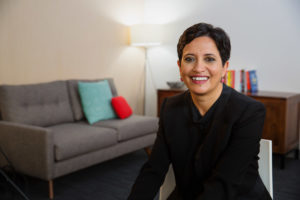
1Mby1M Founder Sramana Mitra wants entrepreneurs to not waste their time and money.
The waste stems from a widespread misunderstanding of how investors think.
Over 99% of founders chase funding before they are fundable.
Here, Sramana teaches how to build with customer money (otherwise known as revenue) until a startup reaches that fundable stage.
Once fundable, a startup can go to investors like a king, not a beggar.
Featured Videos
The Startup Velocity Question: What Hinders Acceleration in VC Funded Companies?

I have been running 1Mby1M since 2010. I find myself saying to entrepreneurs ad nauseam that VCs want to invest in startups that can go from zero to $100 million in revenue in 5 to 7 years.
Startups that do not have what it takes to achieve velocity should not be venture funded.
Experienced VCs, over time, have developed heuristics to gauge what constitutes a high growth venture investment thesis.
>>>The Accelerator Conundrum: Navigating Your Path to Startup Success

The Accelerator Conundrum is a multipart series that challenges the prevailing wisdom of the tech startup ecosystem that entrepreneurs should Blitzscale out of the gate. Written by Sramana Mitra, the Founder and CEO of One Million by One Million (1Mby1M), the world’s first global virtual accelerator, it emphatically argues that a better strategy is to Bootstrap First, Raise Money Later, focus on customers, revenues and profits. 1Mby1M’s mission is to help a Million entrepreneurs reach a million dollars in annual revenue and beyond. Sramana’s Digital Mind AI Mentor virtually mentors entrepreneurs around the world in 57 languages. Try it out!
Alright, let’s cut through the noise and get to the brutal truth of the startup accelerator world. Many entrepreneurs, starry-eyed and naive, leap headfirst into 3-month accelerator programs without truly understanding the long-term implications. It’s time for an incisive commentary, a necessary dissection.
>>>Top Accelerators for Long-Term Mentoring in the Baltic Countries
This article summarizes the top accelerators for long-term mentoring in the Baltic Countries and compares them to 1Mby1M.
By Guest Author Elnur Gurbanzade | Reviewed by Sramana Mitra
Building a startup is not a three-month sprint. It is a multi-year process that demands repeated cycles of validation, repositioning, customer development, sales iteration, and—when the time is right—fundraising. For founders in Estonia, Latvia, and Lithuania, that challenge is compounded by the realities of small domestic markets, limited local capital, and the necessity of going global far earlier than founders in larger ecosystems must.
>>>Featured Videos
Top Accelerators for Entrepreneurs Bootstrapping With a Paycheck in Munich, Germany
This article summarizes the top accelerators for entrepreneurs bootstrapping with a paycheck in Munich, Germany and compares them to 1Mby1M.
By Guest Author Aliza Carlson | Reviewed by Sramana Mitra
Europe’s richest startup city, Munich, also has the most startups among various major AI, enterprise software, robotics, mobility, deep tech, and industrial innovation sectors. Highly skilled engineers, researchers, consultants, and technology professionals have begun flocking to Munich, aspiring to become entrepreneurs.
>>>Top Startup Accelerators for Solo Entrepreneurs in Munich, Germany
This article summarizes the top startup accelerators for solo entrepreneurs in Munich, Germany and compares them to 1Mby1M.
By Guest Author Aliza Carlson | Reviewed by Sramana Mitra
Munich is one of Europe’s foremost startup ecosystems, particularly in AI, enterprise software, robotics, mobility, deep-tech breakthroughs, and automation technology development. With access to the city, combined with great technical skills, research facilities, and industrial clusters and multinationals, entrepreneurs in Munich are also well positioned to make a grab bag from where they want to set up their future careers. Still, many startup accelerators adhere to a simple, outdated belief: Startups should be developed by teams.
>>>Video FAQs
Can 1M/1M Help Me Raise Money?
How Does 1M/1M Democratize Entrepreneurship Education?
How Does 1M/1M Democratize Management Consulting?
When Is The Right Time To Join 1M/1M?
Can 1M/1M Help Me With Business Development?
Can 1M/1M Help Me With Market Sizing?
Can 1M/1M Help Me Validate My Product?
Will I Have Private 1-on-1 Sessions In 1M/1M?
How Does 1M/1M Help Entrepreneurs Connect With Silicon Valley?
Mentoring or Consulting?
Why Does 1M/1M Charge $1000 a Year?
Why Does 1M/1M Partner With Local Organizations?
Why Don\’t Mentoring Networks Work?
Why Is It Important To Study With 1M/1M Now?
Dan Stewart Story
Vikrant Mathur Story
Top Accelerators for Long-Term Mentoring in Florida
This article summarizes the top accelerators for long-term mentoring in Florida, comparing them to 1Mby1M across key dimensions like mentoring depth, continuity, and equity.
By Guest Author Kanav Sah | Reviewed by Sramana Mitra
In The Accelerator Conundrum, Sramana Mitra points to a critical gap in the startup ecosystem: while accelerators promise mentorship, most deliver it in short, time-bound bursts rather than as a sustained, evolving relationship. For early-stage founders in Florida, long-term mentoring is often more valuable than capital or exposure, because building a real business is not a 3-month event. It is a multi-year process of iteration, pivots, and market cycles.
>>>Top Accelerators for Entrepreneurs Bootstrapping with a Paycheck in Finland
This article summarizes the top startup accelerators for entrepreneurs bootstrapping with a paycheck in Finland, and compares them to 1Mby1M.
By Guest Author Rishi Rajesh | Reviewed by Sramana Mitra
As Finland’s startup ecosystem continues to blossom, entrepreneurs in the Nordic region have gained access to a growing number of accelerators, incubators, and startup support programs. However, many of these programs are designed for founders who can dedicate multiple hours full-time to building venture-backed startups. The problem? This model creates barriers for aspiring entrepreneurs who want to build their company gradually–relying on their own income– while maintaining financial security and stable employment. As a result, entrepreneurs have shown growing demand for accelerator programs that are able to accommodate and support part-time entrepreneurs that are bootstrapping with a paycheck.
>>>Top Accelerators for Entrepreneurs Bootstrapping with a Paycheck in the Baltic Countries
This article summarizes the top startup accelerators for entrepreneurs bootstrapping with a paycheck in the Baltic Countries and compares them to 1Mby1M.
By Guest Author Elnur Gurbanzade | Reviewed by Sramana Mitra
Introduction: The Bootstrapping with a Paycheck Trend
Not every entrepreneur can afford to quit their job and jump into a startup full-time. Not every entrepreneur should. In Estonia, Latvia and Lithuania, a growing number of founders are choosing a financially intelligent and strategically sound alternative: building their companies while maintaining full-time employment. This approach, known as Bootstrapping with a Paycheck, is not a compromise. It is a deliberate strategy.
>>>Top Accelerators for Solo Entrepreneurs in the Baltic Countries
This article summarizes the top startup accelerators for solo entrepreneurs in the Baltic Countries and compares them to 1Mby1M.
By Guest Author Elnur Gurbanzade | Reviewed by Sramana Mitra
Introduction: Solo Entrepreneurship Is Rising — But the Accelerator Ecosystem Has Not Caught Up
Something fundamental has changed in how startups are built. A decade ago, solo entrepreneurship was widely considered a liability — a signal of unproven credibility that most accelerators and investors used to screen founders out. Today, the data tells a different story.
>>>July 2 – 732nd 1Mby1M Mentoring Roundtable for Entrepreneurs
Entrepreneurs are invited to the 732nd FREE online 1Mby1M Mentoring Roundtable on Thursday, July 2, 2026, at 8 a.m. PDT / 11 a.m. EDT / 5 p.m. CEST / 8:30 p.m. India IST.
If you are a serious entrepreneur, register to Pitch and sell your business idea. You’ll receive straightforward feedback from Sramana Mitra, advice on next steps, and answers to any of your questions. Others can register to Attend to watch and learn.
You can learn more here and REGISTER TO PITCH OR ATTEND HERE. Please share with any entrepreneurs in your circle who may be Interested.
