
categories
HOT TOPICS
- The Accelerator Conundrum
- The Startup Velocity Question
- Platform as a Service
- Man and Superman
- Web 3.0 = (4C + P + VS)
- The Future: End of Capitalism
- Capitalism 2.0

Unicorns
1Mby1M Virtual Accelerator Investor Forum: With Ashu Garg of Foundation Capital (Part 2)
Sramana Mitra: You spoke with me a year back about marketing technologies. It was a core area of interest at least a year ago. Help us understand what drives that interest.
Ashu Garg: That is absolutely a core area of interest for us. I would say it is one of the trends in the broad bucket of the transformation of software using machine learning. Marketing technology is probably, by far, the first category where that happened. We definitely made significant investments and have big bets on that. >>>
1Mby1M Virtual Accelerator Investor Forum: With Charlie O’Donnell of Brooklyn Bridge Ventures (Part 2)
Sramana Mitra: I was talking to John Staenberg up in Seattle. He’s one of the most prolific investors in the North West. He’s invested in 300 companies. One of the drivers of how he chooses which entrepreneurs he wants to engage with is what he wants to learn about.
For example, he’s not very knowledgeable about Bitcoin and he is interested in learning about Bitcoin. He’s interested in entrepreneurs who are working on new opportunities in Bitcoin as a mechanism of understanding that trend.
Yes, investors do look to entrepreneurs to educate them and train them, which is what was driving my question
1Mby1M Virtual Accelerator Investor Forum: With Ashu Garg of Foundation Capital (Part 1)
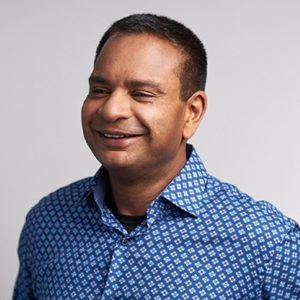
Responding to a popular request, we are now sharing transcripts of our investor podcast interviews in this new series. The following interview with Ashu Garg, Foundation Capital was recorded in March 2016.
Ashu Garg, General Partner at Foundation Capital, outlines the top trends driving startups and venture capital from his firm’s perspective.
Sramana Mitra: What is your read of how the venture capital industry has evolved in the Silicon Valley over the last five years? >>>
1Mby1M Virtual Accelerator Investor Forum: With Charlie O’Donnell of Brooklyn Bridge Ventures (Part 1)
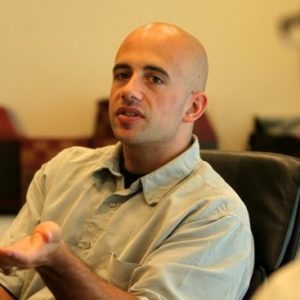
Responding to a popular request, we are now sharing transcripts of our investor podcast interviews in this new series. The following interview with Charlie O’Donnell, Brooklyn Bridge Ventures was recorded in November 2017.
Charlie O’Donnell, Partner at Brooklyn Bridge Ventures, talks about his Seed investing activities and related industry trends.
Sramana Mitra: Let’s start by getting acquainted. Tell us about Brooklyn Bridge Ventures as well as yourself.
Charlie O’Donnell: Brooklyn Bridge Ventures is a seed fund based in Brooklyn, New York. It’s the first fund to be located in Brooklyn. I’ve spent the vast majority of my career in the venture capital asset class, which is actually pretty rare. Usually people >>>
1Mby1M Virtual Accelerator Investor Forum: With Greg Sands of Costanoa Ventures (Part 5)
Sramana Mitra: I think this whole unicorn mania has been created by the sheer stupidity of the entrepreneurship media. They’re so driven by funding announcements. Every time somebody has a funding announcement, they run up lots of articles about the funding announcement. Entrepreneurs mistakenly believe that funding announcements are good. It’s not necessarily good. If you raise too much money, you price yourself out of the market.
Greg Sands: That’s right. It seems crazy to not maximize price but I think what ends up happening is you can take a higher top-line price with a bunch of structure and more preference stack or lower price that doesn’t have multiple preferences or other >>>
1Mby1M Virtual Accelerator Investor Forum: With Greg Sands of Costanoa Ventures (Part 4)
Sramana Mitra: A few trends questions. How do you process the current investment climate where capital is moving further and further upstream? How does a seed investor mitigate the Series A gap? Statistically, there has been a lot of micro-VCs in the market. There’re a lot of pre-seed, seed, and pre-Series A investments but the Series A numbers remains constant. How do you parse this trend?
Greg Sands: That is the trend that we play into. A little more than half of our new investments are Series A investments. The vast majority of our capital goes into Series A. I love the fact that everybody else is retreating from it. The big firms have some success. Their egos grow and their fund sizes grow. They go on to piling unicorns. That’s completely good news for us. We find that we don’t end up competing against them very often. >>>
1Mby1M Virtual Accelerator Investor Forum: With Greg Sands of Costanoa Ventures (Part 3)
Sramana Mitra: What you’re saying is that you are open to doing even pre-seed investments?
Greg Sands: Yes. They tend to be in more experienced founders or people that we’ve known for a longer period of time. At ACME and Alation, we’ve invested, effectively a company formation.
Sramana Mitra: I think that is the trend. If you are a first-time founder, your journey of getting pre-seed investment is very tough. If you’re a repeat founder and have experience, then everything takes on a different color. The vast majority of our community that is looking for financing is first-time founders.
I tend to tell them to get more validation done. People don’t really know you. People are not betting on your
1Mby1M Virtual Accelerator Investor Forum: With Greg Sands of Costanoa Ventures (Part 2)
Sramana Mitra: Let me ask you a question in what you’re seeing. I’m completely with you and I’ve written extensively on this topic. The opportunity in AI is in applied AI. The unfair advantage is in the hands of people who have really deep domain knowledge in a particular domain where you apply the stack and solve a business problem. You mentioned agriculture, for instance.
If you look at that particular company, where is that domain knowledge coming from? What is the genesis and anecdotal founding of that company? How did this expertise come together – the combination of reasonably good understanding of the AI stack and the domain knowledge?
Greg Sands: One of the things that we all experience are people who have the technical knowledge and start out saying, “How do >>>
