
categories
HOT TOPICS
- The Accelerator Conundrum
- The Startup Velocity Question
- Platform as a Service
- Man and Superman
- Web 3.0 = (4C + P + VS)
- The Future: End of Capitalism
- Capitalism 2.0

Unicorns
How to Build Unicorn Tech Startups Course
We have just released a new course on Udemy: How To Build Unicorn Tech Startups with Sramana Mitra
Did you know Fred Luddy founded ServiceNow as a solopreneur? ServiceNow, today, is $100+ billion market cap company.
The course contains origin stories of 25+ Unicorns. It would take you about 5 hours. Udemy currently has a promo on it (normally $39.99, promo price $11.99 at the moment). Check it out!
Bootstrapping Course: Understanding Unicorns
Unicorns are companies with a billion dollar plus market cap. Learn about the many myths around unicorns and understand how bootstrapping can prepare you to go to venture capital firms.
Did you know Fred Luddy founded ServiceNow as a solopreneur? ServiceNow, today, is $100+ billion market cap company. Our Udemy course, How to Build Unicorn Tech Startups with Sramana Mitra, contains origin stories of 25+ Unicorns.
If you are enjoying this course, check out 1Mby1M Basic, our curriculum-only option.
The 1Mby1M Curriculum has over 1000 case studies of real-life success stories.
If you’re trying to assess why you’re getting rejections, use the 1Mby1M Self-Assessment.
We support your fund-raising efforts through personal introductions to investors.
1Mby1M Virtual Accelerator Investor Forum: With Suresh Shanmugham of Saama Capital (Part 5)
Sramana Mitra: The story that needs to come together for the ecosystem to get the next level of boost is that there are a lot of acquisitions happening. Even here, the vast majority of exits are M&A exits. It’s not IPOs. IPOs happen but not that many. The strategic acquisition story just needs to come together for everything to flow. It’s good. It’s a massive journey for the last 10 years.
I started working on the Indian ecosystem and trying to shepherd or promote the Indian ecosystem back in 2005 through my blog. We started One Million by One Million in 2010. India has always been one of our biggest geographies. It has been a really interesting journey. Our roundtables are continuously full of Indian entrepreneurs. More and more, everybody is generating revenues. That’s the first step. If you can generate revenues, a lot of other things can be worked out. >>>
1Mby1M Virtual Accelerator Investor Forum: With Suresh Shanmugham of Saama Capital (Part 4)
Sramana Mitra: Your primary business is in the small investment area. You have a $100 million fund and you’re doing Series A and pre-Series A. What is your current e-commerce strategy in terms of early-stage investments?
Suresh Shanmugham: From our standpoint, we are certainly open to looking at e-commerce opportunities. I don’t think there is much of an opportunity in horizontal plays. That game is over. There are opportunities in vertical categories that we will continue to look at. I don’t think we have a particular sector.
Our only remaining e-commerce investment is a company called BlueStone, which is in jewelry. We were a Series A investor there. That company continues to grow and develop. The market size for something like that is fairly huge. >>>
1Mby1M Virtual Accelerator Investor Forum: With Suresh Shanmugham of Saama Capital (Part 3)
Sramana Mitra: That company has gone in a different direction since then. Why don’t you talk about what you see in that situation? That would give us a good segue into a trend discussion on Indian e-commerce, especially given the shifts that are happening there. What is your current analysis of the Indian e-commerce market?
Suresh Shanmugham: It’s been three years since we exited Snapdeal. We had a great opportunity to provide returns to our investors. The company had performed very well ahead of what we had underwritten to. The market really getting frothy on the e-commerce front with the type of funding activity and the valuations being discussed. Several folks were interested in our position. >>>
1Mby1M Virtual Accelerator Investor Forum: With Suresh Shanmugham of Saama Capital (Part 2)
Sramana Mitra: I understand that in 2007, it was betting on Vijay as the entrepreneur. How long did you stay in that company? Did you seek an exit somewhere along the way? What has been your evolution with that company?
Suresh Shanmugham: We have exited a good portion of our position. The company split into three different pieces. We had ownership in all three pieces as a result. What we did was, we sold off the piece that contained the payments business. We maintained ownership in one of the other entities, which is Paytm Mall. We remain invested although we’ve monetized a substantial portion of our investment.
Sramana Mitra: Aside from Paytm, what other companies have you invested in? Please focus the >>>
1Mby1M Virtual Accelerator Investor Forum: With Suresh Shanmugham of Saama Capital (Part 1)
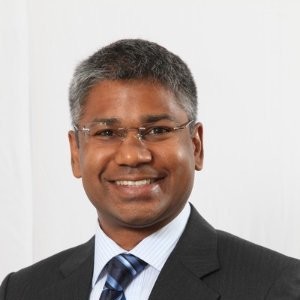
Responding to a popular request, we are now sharing transcripts of our investor podcast interviews in this new series. The following interview with Suresh Shanmugham was recorded in May 2018.
Suresh Shanmugham, Managing Partner at Saama Capital, talks about the Indian venture capital eco-system, trends, exits, and his firm’s investment strategy.
Sramana Mitra: What we’re going to do is get to know you and help our entrepreneurs, in particular, get to know how you think about investments. Tell us about your fund. Tell us about what your investment focus is. >>>
1Mby1M Virtual Accelerator Investor Forum: With Vivek Ladsariya of SineWave Ventures (Part 5)
Sramana Mitra: Two of my favorite unicorn companies are Veeva and Fortinet. These are multi-billion dollar market cap companies. Veeva, in its entire history, raised $7 million in capital of which $4 million was not necessary. They just had so much revenue and momentum. It was basically a company built with revenues and traction. Fortinet was an incredibly capital-efficient company that scaled tremendously. Today, it’s over $1.5 billion in revenue with a tremendous market cap.
Vivek Ladsariya: I agree. I’ll add Salesforce to that list as well. It’s not as capital-efficient as Veeva may be, but they didn’t raise the kind of money a standard unicorn might have. >>>
