
categories
HOT TOPICS
- The Accelerator Conundrum
- The Startup Velocity Question
- Platform as a Service
- Man and Superman
- Web 3.0 = (4C + P + VS)
- The Future: End of Capitalism
- Capitalism 2.0

Online Tutoring
Bootstrapping an EdTech Startup with a Paycheck to over $5M: Karyn Koven, CEO of LanguageBird (Part 1)
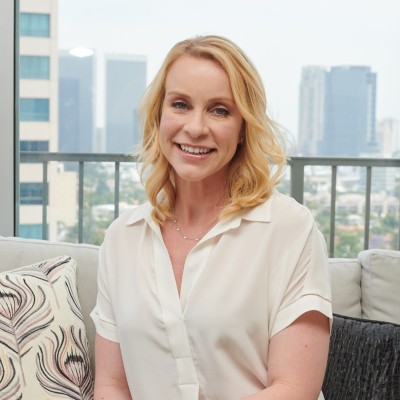
Karyn has built a technology-enabled business that is already over $5M in revenue and sits at the cusp of a tremendous scaling opportunity by leveraging AI. If you are mulling AI startup ideas, this kind of tech-enabled service that is fully optimized with AI could create tremendous value.
>>>AI Investor Forum: Gus Tai on AI in Education (Part 4)
Sramana Mitra: Now, the equation starts to change as we get to higher education, right? There’s the big experiment that came out of MIT and Harvard edX, which started putting all the lectures online. It was the beginning of these massive online open courses (MOOCs). Today’s technology can go much further with all this personalization and Generative AI stuff. However, the same model of children being able to learn more with that personalized, infinitely patient teacher or professor in college still holds.
>>>AI Investor Forum: Gus Tai on AI in Education (Part 1)
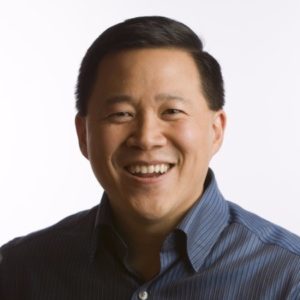
Gus Tai, Investor, Board Member and Retired General Partner at Trinity Ventures, discusses ideas and opportunities in Education with an AI-augmented framework.
>>>How to Build and Monetize a Technology Entrepreneurship Blog: Introduction

I started blogging on Technology Entrepreneurship in April 2005. The Internet was different then. There was no Smartphone. Social Media was just starting. Facebook and LinkedIn were new concepts.
Today, in 2021, building and monetizing a Technology Entrepreneurship Blog requires a very different strategy than the one I started with.
In this multi-part series, I will lay out a fully fleshed out roadmap of how to do so with contemporary tools.
>>>Student Entrepreneur to $10M+ in Revenue Without Dropping Out: Course Hero CEO Andrew Grauer (Part 7)
Sramana Mitra: You focused on getting to a business model. Part of the problem at the Valley right now is that people just go and build things without figuring out a business model. As a result, they have huge burn rates and no monetization model. That doesn’t create a sustainable company. That whole model is predicated upon some fluke acquisition. Otherwise, you cannot sustain that model. Your model is much more sustainable.
You said you were very conscious about the burn rate. Can you talk a little bit about how you built your team? What areas did you put in people?
Student Entrepreneur to $10M+ in Revenue Without Dropping Out: Course Hero CEO Andrew Grauer (Part 6)
Andrew Grauer: Then, moving on to the other question on the engagement level, engagement is quite high. I think the difference between other online education sites like Coursera and edX is that their users are looking just to learn for learning sake. Our supplemental resources are really focused on helping students who are already enrolled in the course and there is a requirement where there’s a large incentive for them to complete and do well in the course. If they can really get an edge and make sure that they master the course, this will be a major motivation to use Course Hero.
Sramana Mitra: Are you saying that your 150,000 subscribers are all active users?
Student Entrepreneur to $10M+ in Revenue Without Dropping Out: Course Hero CEO Andrew Grauer (Part 5)
Sramana Mitra: From the end user’s perspective, is the end user using your platform largely in a web self-service mode? What percentage of that user uses self-service versus a tutor assisted usage?
Andrew Grauer: It’s probably going to be something like 70% to 80% self-service.
Sramana Mitra: I’m trying to gauge how big the tutoring phenomenon is in this community versus people just using the materials and teaching themselves.
Student Entrepreneur to $10M+ in Revenue Without Dropping Out: Course Hero CEO Andrew Grauer (Part 4)
Sramana Mitra: You were doing college level courses?
Andrew Grauer: Yes, we focused on US colleges. Then, we expanded internationally as well and now we’re just starting to go into high school.
Sramana Mitra: Within those colleges, was there any bias in terms of courses?
